.svg)
.svg)
.svg)
.svg)


.svg)


Garden leave has no statutory definition under UK employment law but is widely recognized and enforceable through the courts, provided a garden leave clause is expressly included in the employment contract.
For global employers, it's worth knowing upfront that garden leave is primarily a UK and Commonwealth concept. In the United States and many other jurisdictions, at-will employment means employers can typically terminate employment immediately, making garden leave largely unnecessary and, in some cases, legally complex to implement.
You're most likely to come across garden leave when a senior or commercially sensitive employee hands in their notice and you need time to protect your business.
For example, let's say a sales director in the UK resigns to join a rival. Rather than having them work out their notice period with access to your clients, strategies, and team, you invoke the garden leave clause in their contract. They stay home, continue receiving their full salary and benefits, and remain legally bound by their confidentiality obligations until their notice period ends. That's less risk for your business, a cleaner handover for your team, and a legally enforceable buffer while you get things in order.
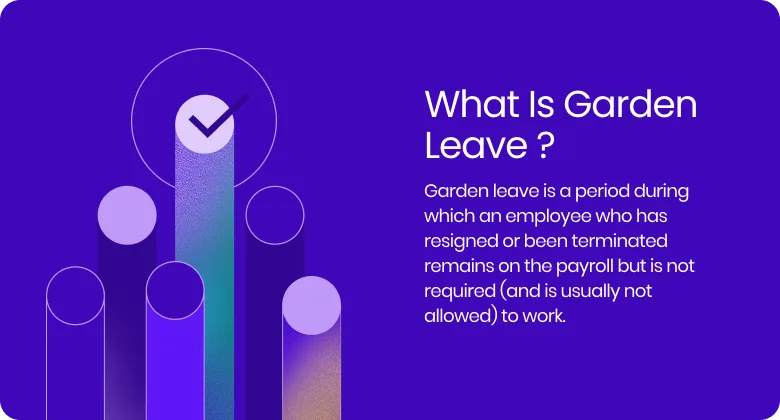
When Should Employers Use Garden Leave?
Garden leave isn't a one-size-fits-all tool; it's most effective when you have a genuine business interest to protect. You'd typically consider it in one or more of these situations:
- The departing employee has access to trade secrets, confidential information, or sensitive commercial data that could negatively impact your business if passed on too quickly to a new employer.
- They have strong client relationships that need time to be carefully transitioned to your team.
- You have reason to believe they're planning to join a competitor.
UK courts have consistently upheld garden leave in these circumstances, but only where the employer can point to a legitimate and proportionate reason for using it. One thing to keep in mind: garden leave isn't a disciplinary measure, and applying it indiscriminately can backfire. If you put someone on garden leave without a valid business reason or without the contractual right to do so, you could find yourself on the wrong side of an Employment Tribunal claim.
Does Garden Leave Need to Be in the Employment Contract?
Yes, but only if your employment contract includes an express garden leave clause granting you that right. Without one, preventing the employee from coming into work could be treated as a breach of contract, potentially giving them grounds for a constructive dismissal claim.
A well-drafted garden leave clause should cover three things:
- Your right to require the employee to stay away from the workplace during their notice period.
- That their usual contractual obligations, including confidentiality, remain fully in force throughout.
- That they're not permitted to take up outside work or make contact with clients or colleagues during that time.
If your company is hiring senior or commercially sensitive talent in the UK, building garden leave clauses into those employment contracts should be standard practice. It's a relatively simple step that gives you significant protection if things don't go to plan.
What Are Employees Entitled to During Garden Leave?
When an employee is on garden leave, your obligation to pay them in full doesn't change. They continue to receive their full contractual salary and benefits ( including pension contributions, health insurance, and any car allowances) for the entire duration. Annual leave continues to accrue, and the time counts toward their continuous employment for statutory purposes.
What you get in return is continued legal protection. Employees on garden leave remain bound by their implied duties of good faith and fidelity, meaning they can't actively work against your interests, solicit your clients, or share your sensitive information.
How Long Can Garden Leave Last?
Garden leave can only last as long as the employee's notice period. Once that notice period is up, their employment ends, and so does the garden leave. In practice, most garden leave arrangements run somewhere between one and six months. For senior executives with longer notice periods, it can stretch further (but that's the exception rather than the rule).
That said, longer isn't always better. UK courts will only enforce garden leave for as long as they consider it fair and proportionate, and if you're following up garden leave with additional restrictions on what the employee can do next, they'll look at the total picture. Think of it this way: if you've already kept someone on the bench for six months, asking a court to then enforce a twelve-month non-compete on top of that is going to raise some eyebrows. You may find the court cuts back your restrictions to compensate.
Garden Leave vs. Payment in Lieu of Notice (PILON)
These two often get confused, so let's clear it up. Garden leave and PILON are both ways of handling the notice period when someone leaves, but they work very differently, and the choice between them matters more than most employers realize.
With garden leave, the employee remains employed for their full notice period, off-site but still contractually bound to you. With PILON, you pay out the notice period as a lump sum, and the employment ends immediately, which is quicker but comes with a trade-off.
The moment you end the employment contract, your post-departure protections get weaker. Garden leave keeps your employee bound to their contractual obligations, including confidentiality and restrictions on joining competitors, right up until the last day of their notice period. Unless your restrictive covenants are explicitly drafted to survive termination, PILON could leave your business more exposed than you'd expect. If protecting your business interests is the priority, garden leave is usually the stronger play.
What Are the Risks of Getting Garden Leave Wrong?
The biggest risk is also the most avoidable one: placing someone on garden leave without the contractual right to do so. If an employee takes it to an Employment Tribunal and wins, you could be looking at a compensation award of up to a year's gross pay, plus your own legal costs. For a fast-growing company still building out its HR infrastructure, that's a bill nobody wants. Get the contracts right before you ever need to rely on them.
The risk runs the other way too. If an employee breaches their garden leave obligations and starts work with a competitor early, you'll need to move fast. Your main option is to apply to the High Court for an injunction (and courts have granted these in clear-cut cases), but delay kills such applications. If you think there's a breach, get legal advice the same day.
Garden Leave: Key Takeaways
Let’s recap the key points about Garden Leave in the UK:
- Applies to: Senior, client-facing, or commercially sensitive roles in the UK (but only where an express contractual clause is in place).
- Required by: It’s not mandated by UK law, meaning that it’s your call, but you need the contractual right to use it.
- Enforced by: UK civil courts through High Court injunctions and Employment Tribunals for constructive dismissal claims.
- Risk of non-compliance: Compensation awards, injunction proceedings, damages, and reputational complications you really don't need.
Effective since: Established through UK common law, so there’s no single statutory start date.
See how Playroll makes it easy to hire globally and manage all your employee benefits from a single platform.
Learn More
Garden Leave FAQs

.png)
Garden leave is a contractual arrangement that is recognized under UK common law, where a departing employee is required to stay away from the workplace during their notice period while continuing to receive their full pay and benefits. It's enforceable through the civil courts, but only if your employment contract includes an express clause giving you that right. Without it, you're exposed to a constructive dismissal claim.
No, it's totally up to you, and you can only use it if your contracts are set up to allow it. A lot of employers only discover the clause is missing when they actually need it. If you're hiring senior or commercially sensitive talent in the UK, take a look at your contracts now rather than later.
No. While on garden leave, your employee is still technically employed and still fully bound by their contractual obligations. That includes confidentiality duties and the implied duty of good faith, which means they can't start work with a competitor, reach out to your clients, or do anything else that could negatively impact your business before their garden leave period comes to an end.
Courts factor in the time already served on garden leave when deciding whether post-termination restrictions (PTRs) are fair. If you've had someone off-site for six months and then want to enforce a twelve-month non-compete on top of that, a court may well decide the total restriction is excessive and cut it back.
No regulator is watching over this; garden leave is a matter of contract law, and if something goes wrong, it's your responsibility as an employer to act. If an employee breaches their obligations, you'll need to apply to the High Court for an injunction and move quickly. And if you've placed someone on garden leave without the contractual right to do so, expect to hear from them.

ABOUT THE AUTHOR
Milani Notshe
Milani is a seasoned research and content specialist at Playroll, a leading Employer Of Record (EOR) provider. Backed by a strong background in Politics, Philosophy and Economics, she specializes in identifying emerging compliance and global HR trends to keep employers up to date on the global employment landscape.

.svg)




















.svg)