.svg)
.svg)

.svg)


.svg)

.svg)
.svg)
.svg)
.svg)
.svg)
.svg)
.svg)
.svg)
Minimum Wage: The statutory minimum wage in Jersey is £13.00 per hour, up from £11.64.
Working Hours: In Jersey, there are no specific daily work-hour limits for employees, but employers must adhere to health and safety legislation, safe practices, and any industry-specific guidelines.
Payroll Taxes: In Jersey, employers contribute about 6.5% in payroll taxes, which typically cover social security, health care, and other statutory benefits.
Average Salary: The average gross monthly salary in Jersey is approximately JEP 3,300–3,600 (about USD 4,200–4,600) as of early 2026.
Hiring independent contractors has boomed in popularity because of the cost savings and flexibility they offer. It can be a great option if you require niche skills or short-term project support. Contractors allow businesses to access specialized skills quickly, without the time and cost of setting up a local entity.
However, it’s important to know the limits of this model: contractors are not a substitute for full-time employees. Relying on them for ongoing, long-term roles can create serious compliance risks, including employee misclassification, which can lead to fines, back taxes, and reputational damage.
Playroll’s contractor management solutions make it simple to compliantly engage, onboard, and pay contractors around the world. We provide clear visibility into agreements, streamline payments, and reduce compliance risks – so you can focus on getting the work done. And when you’re ready to take the next step, we can help seamlessly convert contractors into full-time employees through our global Employer of Record service.
From compliant contracts to competitive benefits, Playroll’s EOR services keep you aligned with local labor laws and regulations, safeguarding your business, so you can focus on growth.
Book a Demo
Businesses can only operate smoothly in Jersey if they comply with local labor laws including drafting compliant employment contract agreements and meeting taxation and payroll obligations. Learn more about the employment laws and regulations in Jersey below, to avoid any compliance issues.
Employment Contract Requirements
Understanding Jersey's employment laws is vital when hiring local talent, as these laws are specifically tailored to the country's way of life. A customary contract an employer may provide should include:
- Identification of both parties
- Start date of employment
- Job responsibilities and duties
- Employee's compensation and other benefits.
Onboarding Process
We can help you get a new employee started in Jersey quickly, with a minimum onboarding time of just 1-2 working days. The timeline starts once the employee submits all required information onto the Playroll platform and completes any necessary local authority registrations. For non-nationals, the Right to Work assessment (if applicable) may add up to three extra days. Additional time may be needed for follow-ups on this assessment. Please note, payroll cut-off dates can impact the actual start date. Playroll's payroll cut-off date is the 10th of each month unless otherwise specified.
Working Hours in Jersey
In Jersey, there are no specific daily work-hour limits for employees, but employers must adhere to health and safety legislation, safe practices, and any industry-specific guidelines. Additionally, employees are entitled to a continuous 24-hour rest period within each 7-day working period.
Overtime in Jersey
Provisions for overtime should be included in employment contracts in Jersey.
Probation Period in Jersey
In Jersey, the probationary period for employees must not exceed six months.
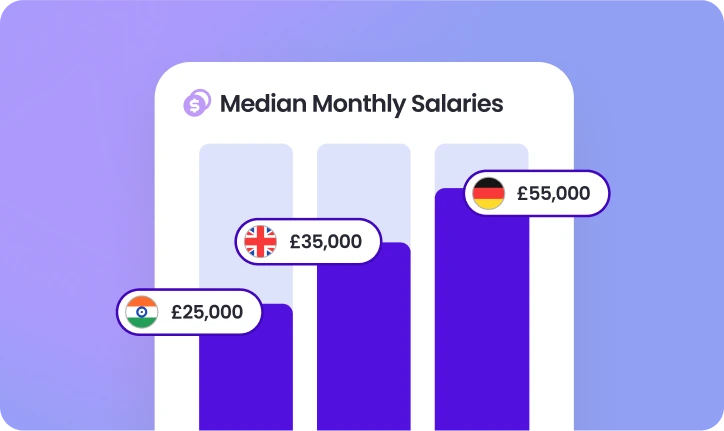
In early 2026, the average gross monthly salary in Jersey is around JEP 3,300–3,600 (roughly USD 4,200–4,600), which serves as a useful benchmark as you budget for your team. Actual pay varies significantly by experience, role, and sector, with higher salaries typically found in financial services, information technology, and professional services. Wages in major economic centres such as St Helier tend to be above the island average, so your company may need to offer higher pay there to attract and retain skilled employees.
As you plan compensation for your workforce, you can expect wage dynamics to be shaped by relatively low but positive inflation of about 2–3% annually, alongside moderate real GDP growth projected at roughly 1.5–2.5% for 2025–2026. Unemployment in Jersey remains low at around 3–4%, which means a relatively tight labour market and more competition for qualified candidates. In this environment, moderate inflation helps you plan stable wage increases, but the low unemployment rate means you may need to budget for competitive offers to secure and keep the talent your company needs.

In Jersey, you should treat working hours and overtime primarily as contractual matters and ensure written terms clearly define expectations. In 2026, enforcement focuses on whether employees receive compliant written statements, statutory rest days, and accurate wage payments.
- Standard Working Hours: No statutory standard – set by contract.
- Overtime Thresholds: No statutory overtime trigger – define contractually.
- Overtime Pay Rates: No statutory overtime premium – rates must be specified in writing if offered.
- Daily And Weekly Rest Requirements: Employees are entitled to at least one uninterrupted 24-hour rest period each week.
- Night Work Restrictions: No general statutory night-work regime – manage through policy and health-and-safety controls.
- Penalties For Non-Compliance: Exposure includes tribunal claims and enforcement for deficient written terms or unpaid wages.

In 2026, Jersey's minimum wage is set by the Government of Jersey, requiring employers to comply with the latest rate and regulations.
- The current minimum wage is GBP 13.59 per hour (USD 16.50).
- Pay frequency is hourly.
- The effective date is 1 April 2026.
- The Government of Jersey sets the minimum wage.
- The review cycle is annual, considering inflation and cost of living.
- Key exemptions include trainee rates and accommodation offsets.
- Penalties for non-compliance can include fines and back-pay claims.
- Employer contribution rates include social security obligations.
Global expansion shouldn't mean losing time to paperwork or dealing with complicated, country-specific HR systems. An Employer of Record helps you keep your focus on talent by handling the operational side of employment in Jersey. That includes onboarding, contract management, payroll processing, and statutory compliance, all aligned with local laws and best practices. The EOR guarantees that employees are legally employed and properly supported from day one.
This streamlined setup allows you to prioritize recruiting the best people and integrating them into your company culture. Your team stays lean, and you avoid getting caught up in the details of local processes or shifting regulations. For founders, global hiring managers, or HR teams working across borders, an EOR multiplies your impact, reducing admin time, preventing errors, and helping ensure that new hires have a smooth experience from the get-go.

If you’re running payroll in Jersey, there are a few key employer contributions to stay on top of. You’ll need to withhold income tax through the ITIS effective rate system and pay Class 1 Social Security contributions. These payments — covering both employer and employee portions — must be included in a monthly combined return to Revenue Jersey within 15 days of month-end. Missing deadlines can mean fines, estimated assessments, or even legal action. Employers also need to factor in additional obligations such as withholding for certain labour-only subcontractors who don’t have exemption cards.
Here’s what employers are responsible for:
- Employer Class 1 contribution: around 6.5% of each employee’s salary
- Employee Class 1 contribution: approximately 6% (deducted from pay)
- Income tax (ITIS): deducted based on each employee’s effective rate (default 22% if not provided)
- Payment schedule: due within 15 days after month-end
Lastly, keep an eye on wages — as of April 1, 2025, Jersey’s minimum wage is £13.00 per hour, reflecting an 11.6% rise and moving closer to the living wage target of £14.13 by 2026. Employers should ensure payroll systems are updated to reflect this increase to stay compliant and support fair pay.
Using payroll management software or a payroll provider can significantly simplify the process by automating withholding calculations, generating returns, and tracking due dates, helping employers stay compliant and focused on running their business in Jersey.
Hiring in Jersey means taking on local payroll obligations, which often include unique tax rates, contribution rules, and strict documentation. If you're not familiar with the system, or don't have a local entity, it’s easy to make mistakes. That’s where an Employer of Record ccomes in. The EOR manages payroll for your team on your behalf, ensuring every process is accurate, timely, and legally compliant.
Key Ways an EOR Supports Payroll in Jersey:
- Full Legal Compliance: Ensures all payments, deductions, and filings meet country-specific requirements.
- Payroll Setup & Processing: Handles salary calculations, tax withholdings, and local reporting obligations.
- Statutory Benefit Contributions: Pays into required social programs and manages country-mandated benefits.
- Employee Documentation: Generates compliant contracts and manages hiring and termination paperwork.
- Local Currency Payouts: Delivers salaries in local currency, avoiding delays or exchange rate issues for employees.
Make better business decisions by consolidating global payroll data, while seamlessly syncing your existing payroll operations.
Book a Demo
Jersey operates its own immigration and work control systems, separate from the UK, combining immigration permission (visas) with local employment and housing status rules. Most non-British and non-Irish nationals will need both immigration permission under the Jersey Immigration Rules and, in many cases, a work permit issued via the Jersey Customs and Immigration Service before they can start work.
Common routes include the Skilled Worker visa (under the UK immigration framework as extended to Jersey), temporary work permissions for specific sectors, and short-term business visitor permissions. Employers must usually be licensed or registered in Jersey, demonstrate that the role cannot readily be filled from the local workforce, and ensure that the employee’s immigration status, work permit, and residential status (for example, Licensed or Registered status under Jersey’s Control of Housing and Work Law) are aligned.
Mandatory Leave Entitlement in Jersey
The annual leave entitlement in Jersey is 15 days for a full time worker. These can include public holidays on top of that or within those days, which would otherwise be unpaid.
Public Holidays In Jersey
In Jersey, there are 11 recognized public holidays:
Paid Time Off in Jersey
Employees in Jersey are entitled to paid leave for 3 weeks or longer as stipulated in the employment agreement.
Parental Leave In Jersey
New parents have the right to 52 weeks of parental leave, with 6 weeks as paid leave. To be eligible, the new parent must notify their employer 15 weeks before the expected childbirth week.
Maternity Leave In Jersey
For birth mothers, the 6 weeks of paid leave must commence immediately after childbirth. The remaining 46 weeks is unpaid leave.
Paternity Leave In Jersey
There is no separate paternity leave in Jersey, as it has been integrated into parental leave.
Sick Leave In Jersey
An employment contract outlines an employee's sick leave entitlement in Jersey. Although statutory sick leave isn't guaranteed, protection against unfair dismissal exists. Some employers offer support during sickness through the Short Term Incapacity Allowance (STIA).
Employee benefits in Jersey combine a strong statutory foundation with plenty of room for you to differentiate your offer as an employer. Core protections around leave, rest, and social security are well defined, while market practice increasingly favors enhanced paid leave, health cover, and flexible working arrangements.
When you hire in Jersey, you need to understand which benefits are legally required, what is driven by custom and competition, and how each element affects your total employment cost. Getting this right helps you stay compliant with Jersey law, while also building a benefits package that supports retention, productivity, and your employer brand.
- Key mandatory benefits: Participation in Jersey Social Security (including sickness, maternity and other benefits), statutory annual leave and public holidays, statutory maternity leave and pay (where eligible), minimum daily and weekly rest, and certain health and safety protections related to working time.
- Key supplemental benefits: Enhanced paid annual leave and public holidays, private medical or dental insurance, employer pension or retirement savings contributions, and flexible or hybrid working arrangements.
- Key legal and tax considerations: Compliance with the Employment (Jersey) Law 2003 and Social Security (Jersey) Law 1974, correct payment and reporting of social security contributions, proper documentation of benefits in contracts and handbooks, and awareness that many non-cash benefits may be treated as taxable “benefits in kind” for Jersey income tax purposes.
When hiring across multiple countries, maintaining consistency in how you deliver employee benefits quickly gets tricky. Each country, including Jersey, has its own legal rules, cultural norms, and contribution systems. An Employer of Record helps you strike the right balance between global structure and local compliance. They take over the complexity of delivering benefits that are aligned with Jersey’s legal requirements and competitive with local market expectations.
From ensuring statutory benefits are in place to managing local onboarding timelines and enrollment systems, the EOR provides a seamless experience for both employer and employee. This makes it easier to grow your team across borders without reinventing your benefits process in each new location. You stay in control of your overall benefits strategy, while the EOR takes care of executing it in a way that works legally and culturally in Jersey. It’s a smarter way to scale benefits globally without losing local relevance.
Termination Process in Jersey
To establish the fairness or unfairness of an employee's dismissal, the employer must show that the reasons for the action are justified. These reasons might include:
- Incapability of job role
- Misconduct
- Redundancy
- Legal obligations
Notice Period in Jersey
For employees on a permanent contract, who have worked eight hours or more weekly, the employer's minimum notice period is as follows based on continuous employment:
- 1 week's notice: For service under 2 years.
- 2 weeks' notice: For service of 2 to less than 3 years.
- 3 weeks' notice: For service of 3 to less than 4 years.
- 4 weeks' notice: For service of 4 to less than 5 years.
- 5 weeks' notice: For service of 5 to less than 6 years.
- 6 weeks' notice: For service of 6 to less than 7 years.
- 7 weeks' notice: For service of 7 to less than 8 years.
- 8 weeks' notice: For service of 8 to less than 9 years.
- 9 weeks' notice: For service of 9 to less than 10 years.
- 10 weeks' notice: For service of 10 to less than 11 years.
- 11 weeks' notice: For service of 11 to less than 12 years.
- 12 weeks' notice: For service of 12 years or more.
Severance in Jersey
In Jersey, employees with at least two years’ service are entitled to a redundancy payment of one week’s pay for each full year of service (12 calendar months), including service before age 16 and with no upper service limit, subject to a weekly pay cap that rose from £920 to £1,000 as of 24 September 2024; these payments are made in addition to any statutory or contractual notice period, and certain elements—such as payments in lieu of notice or redundancy sums above £50,000—may be subject to income tax.
Disclaimer
THIS CONTENT IS FOR INFORMATIONAL PURPOSES ONLY AND DOES NOT CONSTITUTE LEGAL OR TAX ADVICE. You should always consult with and rely on your own legal and/or tax advisor(s). Playroll does not provide legal or tax advice. The information is general and not tailored to a specific company or workforce and does not reflect Playroll’s product delivery in any given jurisdiction. Playroll makes no representations or warranties concerning the accuracy, completeness, or timeliness of this information and shall have no liability arising out of or in connection with it, including any loss caused by use of, or reliance on, the information.

ABOUT THE AUTHOR
Jesse Weisz
Jesse is an experienced R&D Analyst at Playroll, a leading Employer of Record (EOR) provider. With a strong background in data analysis and market research, Jesse specializes in identifying emerging trends and driving innovation in global HR solutions. She is an all-rounder, critical thinker and success-seeker (often inextricably linked to being a late-night tea drinker).

.svg)


.png)

















.webp)




.svg)