.svg)
.svg)

.svg)


.svg)
.svg)
.svg)
.svg)

.svg)
.svg)
.svg)
.svg)
Classifying Your Workers Correctly
In Washington, you must correctly distinguish employees from independent contractors under both IRS common law tests and state agency rules, including the Department of Labor & Industries and Employment Security Department. State unemployment and workers’ compensation laws apply their own multi‑factor tests that focus on your right to control the work, the worker’s independence, and whether the service is part of your usual business.
Misclassification can trigger back wages, unpaid overtime, retroactive unemployment and workers’ compensation premiums, civil penalties, and interest. Your company should review roles against federal guidance and Washington’s contractor criteria and document why each worker is treated as an employee or contractor – this misclassification guide can help.
Verify Employee Work Eligibility
You must complete federal Form I‑9 for every employee working in Washington within 3 business days of hire. Employees may choose which acceptable documents to present from Lists A, or B and C, and you must physically examine originals and record the details on the form.
Washington does not have a statewide E‑Verify mandate, though some federal or state contracts may require you to use the federal E‑Verify system. You must retain I‑9s for the longer of 3 years after the hire date or 1 year after termination and store them separately from general personnel files so you can easily respond to audits.
Create an Employee Onboarding Process
Your onboarding process in Washington should include a written offer letter, federal Form W‑4, any state benefit enrollment forms, and direct deposit authorization if the employee opts in. You should also provide your handbook, obtain signed acknowledgments of key policies, and issue required state notices such as wage rate, pay schedule, and information about paid sick leave and Paid Family and Medical Leave.
Make sure you also register the new hire with the Washington State Support Registry within 20 days and set them up in your payroll and timekeeping systems. Clear documentation of pay, benefits, and policies will help you control hiring costs and keep full visibility into your total employment spend in Washington.
Calculate the true cost of hiring employees in Washington
Get a clear breakdown of employee costs, payroll taxes, benefits, and fees across 50+ states.
Calculate Costs
Pay Frequency & Methods
Washington requires you to establish regular paydays and pay employees at least monthly, though many employers choose weekly or semimonthly schedules. Final wages are generally due by the next regular payday, and late or unpaid wages can lead to interest, double‑damage awards, and enforcement actions by the Department of Labor & Industries.
Payment Methods (How You Can Pay)
You can choose from several payment methods in Washington, but you must always ensure employees receive full, timely wages and a detailed written pay statement each pay period.
- Payroll Check: You may pay by check as long as employees can access full face value in cash without fees within a reasonable distance.
- Cash: You may pay wages in cash, but you must provide a written wage statement and maintain accurate payroll records for at least 3 years.
- Direct Deposit (EFT): You may use direct deposit only if the employee voluntarily authorizes it and can choose the financial institution receiving the funds.
- Paycards: You may use paycards if employees have fee‑free access to their full wages at least once per pay period and receive clear disclosures of any card fees.
- Outsourced Payroll: You may outsource payroll to a third‑party provider, but your company remains legally responsible for correct and timely payment and tax filings.
Washington does not levy a traditional state income tax, but you still have several payroll‑related obligations, including federal tax withholding, unemployment insurance, Paid Family and Medical Leave, and workers’ compensation premiums. Your company must register with the appropriate state agencies before running payroll.
Employer Tax Contributions
As a Washington employer, you fund federal payroll taxes plus state unemployment insurance, workers’ compensation, and part of the Paid Family and Medical Leave program. You must register with the Employment Security Department and Department of Labor & Industries and file reports and payments on their prescribed schedules.
Employee Payroll Tax Contributions
Your payroll system must also withhold employees’ share of federal income tax, Social Security and Medicare, and Washington Paid Family and Medical Leave premiums. You must remit these withholdings on time and show them clearly on pay statements.
Run compliant, on-time payroll in Washington
We cut payroll processing time by 80%, ensure full compliance, and provide hands-on support for both employers and employees.
Explore Payroll Services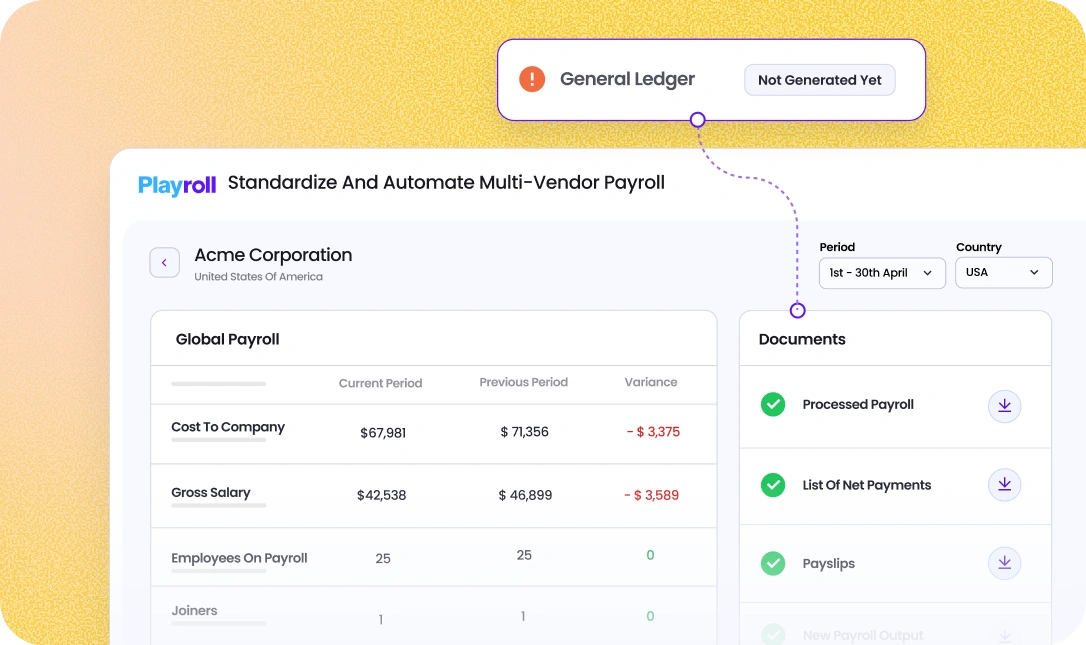
Minimum Wage in Washington
Washington’s statewide minimum wage is $17.13 per hour in 2026 for most non‑exempt employees, with higher local minimums in cities such as Seattle and SeaTac. Your company must always pay the highest applicable rate and track any local ordinances where your employees physically perform work.
Working Hours in Washington
Washington does not cap the number of hours adults may work, but you must pay at least the minimum wage for all hours worked and provide paid rest breaks and unpaid meal periods under state rules. You also must track actual hours worked each day and week for non‑exempt employees to correctly calculate overtime.
Overtime in Washington
Non‑exempt employees in Washington earn overtime at 1.5 times their regular rate for all hours worked over 40 in a workweek. Exempt status is governed by both duties tests and a state minimum salary threshold that is higher than the federal level, so you should confirm that any salaried exempt roles meet Washington’s stricter standards.
In Washington, offering competitive benefits helps you attract talent on top of complying with mandatory programs like Paid Family and Medical Leave and workers’ compensation. If you average 50 or more full‑time employees across the U.S., federal ACA rules also require you to offer affordable health coverage to full‑time staff or face potential penalties.
Mandatory Leave Policies in Washington
Paid Time Off in Washington
Washington law does not require general vacation or PTO, but many employers offer it to stay competitive. If your company provides PTO, you must follow your written policy on accrual, carryover, and payout, and you cannot retroactively change terms to avoid paying earned time.
Some Washington cities have additional paid leave ordinances, so you should review local rules before designing a single statewide PTO policy. Clear written PTO rules and consistent administration will reduce disputes and help you forecast leave‑related costs.
Maternity & Paternity Leave in Washington
Washington’s Paid Family and Medical Leave program can provide up to several weeks of partially paid leave for bonding with a new child, funded by employer and employee premiums. Separately, pregnancy‑related disability leave and, for eligible employers, federal FMLA may provide job‑protected unpaid leave and benefits continuation.
Your company must coordinate these programs with any employer‑provided parental leave so employees receive the correct pay and job protection without double‑counting time. You should communicate eligibility, notice requirements, and how benefits interact well before an employee’s expected due date or placement.
Sick Leave in Washington
Most non‑exempt employees in Washington must accrue at least 1 hour of paid sick leave for every 40 hours worked, with unused time carrying over each year up to a statutory minimum. You must allow use of this leave for the employee’s or a family member’s illness, injury, or preventive care, as well as certain domestic violence and public health reasons.
Your company cannot require employees to find replacements as a condition of using sick leave or retaliate for lawful use. You may set reasonable notice and documentation rules, but they must comply with state law and be clearly explained in your policies.
Military Leave in Washington
Washington follows federal USERRA protections and adds some state‑level rights for members of the National Guard and organized militia. You must provide unpaid leave for qualifying service and training and reinstate returning employees to the same or equivalent position if they meet eligibility criteria.
Benefits such as health coverage continuation and pension service credit must be handled consistently with federal requirements. Make sure your HR team understands documentation and timing rules so service members are not disadvantaged by their military obligations.
Jury Duty in Washington
You must allow employees time off to serve on a jury in Washington and may not threaten or discipline them for complying with a summons. State law does not require you to pay for this time, but many employers choose to provide some paid jury leave as a benefit.
You may request proof of jury service, such as a court notice or attendance slip, and you can adjust schedules around service where feasible. Any policy you adopt should be applied consistently to avoid discrimination claims.
Voting Leave in Washington
Washington conducts elections primarily by mail, so there is no general statewide requirement for paid voting leave. However, if your operations or schedules make it difficult for employees to vote or drop off ballots, offering flexible scheduling or informal time off can support participation.
You should also watch for any local ordinances or collective bargaining agreements that may create additional voting‑related obligations. Clear communication before major elections can help employees plan without disrupting operations.
Bereavement Leave in Washington
Washington law does not mandate bereavement leave, but many employers provide 1–5 days of paid or unpaid time off following the death of an immediate family member. Offering bereavement leave can support employee well‑being and retention at a relatively low cost.
If you choose to offer bereavement leave, define eligibility, covered relationships, and documentation expectations in your policy. Apply the policy consistently and consider reasonable flexibility for cultural or extended‑family observances.
Termination Process
Washington is an at‑will employment state, so you may generally terminate employment at any time for a lawful, non‑discriminatory reason. To reduce risk, your company should document performance issues, follow internal progressive discipline policies, and provide the employee with their final pay and required notices at separation.
Notice Period
Washington law does not require advance notice of termination or resignation for most private‑sector employees, unless a contract or collective bargaining agreement says otherwise. However, giving reasonable notice where possible can ease transitions and help you recover company property and information.
Severance
Severance pay is not required under Washington law, but you may offer it by contract or policy, often in exchange for a release of claims. Any severance agreement should comply with federal and state rules on age discrimination waivers, pay timing, and non‑competition or non‑solicitation clauses.

ABOUT THE AUTHOR
Jaime Watkins
Jaime is a content specialist at Playroll, specializing in global HR trends and compliance. With a strong background in languages and writing, she turns complex employment issues into clear insights to help employers stay ahead of the curve in an ever-changing global workforce.
How do you set up payroll processing in Washington?

.png)
To set up payroll processing in Washington, you must first obtain a federal EIN, then register your business with the Washington Employment Security Department for unemployment and Paid Family and Medical Leave, and with the Department of Labor & Industries for workers’ compensation. Next, choose a pay frequency that meets Washington’s at‑least‑monthly rule, implement a system to track hours worked and leave accruals, configure federal tax and state premium calculations, and create compliant pay statements that show hours, rates, gross pay, deductions, and net pay for every Washington employee.
How does an Employer of Record help you hire in Washington?
An Employer of Record helps you hire in Washington by acting as the legal employer for your local staff, so you do not need to form a Washington entity or open separate state tax accounts. The EOR handles Washington‑compliant employment contracts, payroll, unemployment and Paid Family and Medical Leave reporting, workers’ compensation coverage, and required notices, while you manage the employee’s role, performance, and day‑to‑day responsibilities.
Is there a minimum wage requirement for employees in Washington?
Yes, there is a minimum wage requirement for employees in Washington, and it is higher than the federal rate. As of 2026, most workers must be paid at least $17.13 per hour statewide, and if your employees work in a city with a higher local minimum wage, such as Seattle or SeaTac, you must pay the higher local rate for all hours worked there.
How much does it cost to employ someone in Washington?
The cost to employ someone in Washington includes their gross wages at or above the state or local minimum wage, plus your share of federal payroll taxes, Washington unemployment insurance premiums, Paid Family and Medical Leave contributions, and workers’ compensation premiums. You should also budget for any health insurance, retirement contributions, PTO, and other benefits you choose to offer, as well as administrative costs for compliance with Washington’s leave, wage, and safety laws.

.svg)

















































.svg)