.svg)
.svg)

.svg)


.svg)
.svg)
.svg)
.svg)

.svg)
.svg)
.svg)
.svg)
Classifying Your Workers Correctly
Your company must distinguish properly between employees and independent contractors using IRS common law control tests and Nevada’s wage and hour standards. You should look at who controls how work is done, who supplies tools, and whether the worker can realize profit or loss from the relationship.
Nevada enforces minimum wage, overtime, and benefit rules only for employees, so misclassifying workers can trigger back wages, unpaid taxes, penalties, and interest. You can review federal guidance and resources such as Playroll's misclassification guide to reduce risk and document your classification decisions.
Verify Employee Work Eligibility
For every Nevada hire, you must complete federal Form I‑9 within 3 business days of the employee’s start date and inspect original identity and work authorization documents. You must keep I‑9s for the longer of 3 years after hire or 1 year after termination and store them separately from general personnel files.
Nevada does not currently mandate E‑Verify statewide, but you may choose to use it voluntarily or be required by certain federal contracts. You should apply the same verification process consistently for all new hires to avoid discrimination claims and ensure your records are ready for a potential audit.
Create an Employee Onboarding Process
When you hire in Nevada, you should issue a written offer letter outlining position, pay rate, exempt or nonexempt status, and work schedule. At or before the first day, have employees complete Form W‑4, any applicable Nevada new hire forms, direct deposit authorization if used, and acknowledgments for your handbook and key policies.
Your company must also provide required notices, such as wage and hour information and workers’ compensation postings, and report new hires to the Nevada New Hire Reporting Center within 20 days. Building a consistent onboarding checklist helps you stay compliant while giving you clear visibility into each hire’s total cost.
Calculate the true cost of hiring employees in Nevada
Get a clear breakdown of employee costs, payroll taxes, benefits, and fees across 50+ states.
Calculate Costs
Pay Frequency & Methods
In Nevada, you must pay employees at least semi‑monthly, with paydays scheduled so no more than 15 days elapse between them. If you discharge an employee, you generally must pay all wages immediately; if an employee resigns, final wages are due within 7 days or by the next regular payday, whichever is earlier, and late payment can lead to waiting‑time penalties.
Payment Methods (How You Can Pay)
Your company can choose among several payment methods in Nevada, but you must always ensure employees receive full wages on time along with an accurate itemized wage statement.
- Payroll Check: You may pay by check drawn on a Nevada bank, and you must ensure employees can cash it at full face value without fees.
- Cash: You can pay wages in cash, but you must provide a written wage statement showing hours, rates, deductions, and net pay each pay period.
- Direct Deposit (EFT): You may use direct deposit only with the employee’s voluntary written consent and must offer an alternative method if they opt out.
- Paycards: You can pay via paycards if employees have fee‑free access to their full wages at least once per pay period and receive clear disclosures of any card fees.
- Outsourced Payroll: You may outsource payroll to a provider, but your company remains responsible for Nevada wage, tax, and recordkeeping compliance.
When you hire employees in Nevada, you must handle federal payroll taxes plus state‑level employer taxes, even though Nevada has no state personal income tax. You will need to register with the Nevada Department of Employment, Training and Rehabilitation and the Nevada Department of Taxation to stay compliant.
Employer Tax Contributions
Your company must pay federal Social Security and Medicare taxes, federal unemployment tax, and Nevada unemployment insurance and modified business tax on wages. You must register for Nevada unemployment before paying wages and file returns and remit contributions on the schedules assigned by the agencies.
Employee Payroll Tax Contributions
You must withhold federal income tax and the employee share of Social Security and Medicare from Nevada employees’ paychecks. Because Nevada has no state personal income tax, you do not withhold state income tax from employee wages.
Run compliant, on-time payroll in Nevada
We cut payroll processing time by 80%, ensure full compliance, and provide hands-on support for both employers and employees.
Explore Payroll Services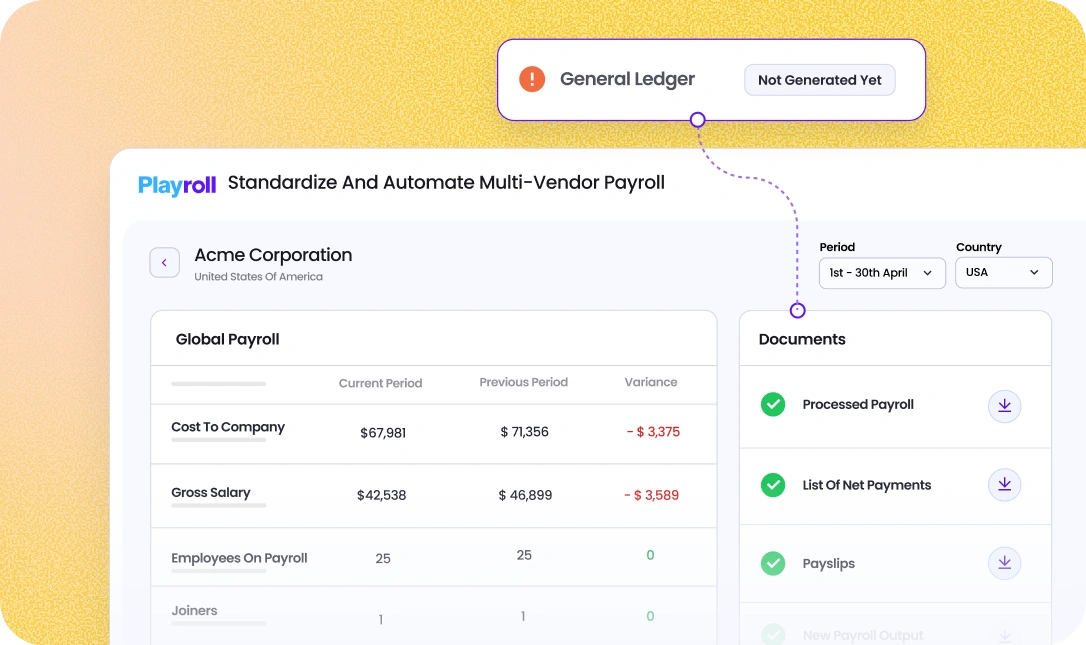
Minimum Wage in Nevada
As of July 1, 2024, Nevada’s minimum wage is a single rate of $12.00 per hour for all employees, regardless of health benefits. Your company must ensure all nonexempt employees earn at least this rate for every hour worked, including for training time and certain on‑call periods.
Working Hours in Nevada
Nevada does not cap daily or weekly hours for most adult employees, but you must pay for all hours suffered or permitted to work and provide required rest and meal periods in certain industries, such as a 30‑minute meal period for an 8‑hour shift in many private‑sector roles. You should track hours accurately and avoid off‑the‑clock work to stay compliant.
Overtime in Nevada
Nevada generally follows the federal rule of 1.5 times the regular rate for hours worked over 40 in a workweek for nonexempt employees. In addition, Nevada has a daily overtime rule for certain employees earning less than 1.5 times the minimum wage, requiring overtime pay for over 8 hours in a 24‑hour period unless an alternative schedule exception applies.
In Nevada, you must comply with federal benefit laws such as the Affordable Care Act if you average 50 or more full‑time employees, which may require you to offer health coverage or face penalties. Beyond legal minimums, offering competitive benefits like health insurance, retirement plans, and paid leave can help your company attract and retain talent in a tight labor market.
Mandatory Leave Policies in Nevada
Paid Time Off in Nevada
Nevada law requires many private employers with 50 or more employees in the state to provide paid leave that employees can use for any reason, subject to accrual and usage rules. Your company can go beyond this minimum by offering a broader PTO bank or separate vacation and personal days, but you should clearly define accrual, carryover, and payout rules in writing.
Nevada does not generally require payout of unused PTO at termination unless your policy or contract promises it, so you should draft your policy carefully. Whatever structure you choose, apply it consistently and track balances accurately in your payroll or HR system.
Maternity & Paternity Leave in Nevada
While Nevada does not mandate separate paid maternity or paternity leave, eligible employees may qualify for up to 12 weeks of unpaid, job‑protected leave under the federal FMLA for birth, adoption, or foster placement. Your company must continue group health coverage during FMLA leave on the same terms as active employment.
Nevada also has pregnancy‑related anti‑discrimination and accommodation protections, requiring reasonable accommodations for pregnancy, childbirth, or related medical conditions unless doing so would cause undue hardship. Many Nevada employers choose to supplement these protections with paid parental leave to remain competitive.
Sick Leave in Nevada
Under Nevada’s paid leave law, covered employers must allow employees to use accrued paid leave for illness, medical appointments, or to care for family members, without requiring them to disclose the specific reason. You may set reasonable notice requirements for foreseeable absences, but you cannot retaliate against employees for using their entitled leave.
Smaller employers not covered by the statewide paid leave mandate should still consider offering at least a modest sick leave benefit to support workforce health and reduce turnover. Make sure your policy explains accrual rates, waiting periods, and any documentation requirements for extended absences.
Military Leave in Nevada
Your company must comply with federal USERRA, which provides job‑protected leave and reinstatement rights for employees who perform covered military service. Nevada law also offers additional protections for members of the Nevada National Guard and certain reserve components.
You are not generally required to pay employees during military leave, but you must allow them to use accrued paid time off if they choose. Maintaining clear procedures for notice, documentation, and reinstatement will help you manage these absences smoothly.
Jury Duty in Nevada
Nevada employers must allow employees time off to serve on a jury and may not threaten, coerce, or terminate an employee because of jury service. State law does not require you to pay employees for this time, but many employers choose to provide some paid jury leave as a benefit.
You can request proof of jury service, such as a summons or attendance slip, and you may adjust schedules to minimize disruption while still honoring the employee’s legal obligation. Any policy you adopt should be applied consistently across your Nevada workforce.
Voting Leave in Nevada
Nevada law requires you to provide paid time off to vote if an employee cannot reasonably vote before or after work, with 1 to 3 hours of leave depending on the distance between the workplace and polling place. Employees must generally request this time off before Election Day, and you may specify when during the workday the leave is taken.
You cannot discipline or deduct from an employee’s wages for authorized voting leave within the statutory limits. Including voting leave details in your handbook helps managers respond correctly during election periods.
Bereavement Leave in Nevada
Nevada does not mandate bereavement leave for private employers, so whether leave is paid or unpaid is up to your company’s policy. Some employers provide a set number of paid days for the death of an immediate family member and allow additional unpaid time as needed.
Clearly defining eligibility, duration, and any documentation requirements will help you administer bereavement leave fairly. Offering compassionate flexibility can also strengthen employee loyalty during difficult times.
Termination Process
Nevada is an at‑will employment state, so you or the employee may generally end the relationship at any time for any lawful reason, but you should still document performance issues and reasons for termination. At separation, you must provide final wages within Nevada’s deadlines and comply with any contractual obligations, such as accrued but unpaid commissions.
Notice Period
Nevada law does not require you to provide advance notice of termination or layoff in most cases, though federal WARN rules may apply to large workforce reductions. If your company uses employment contracts or policies that promise notice or pay in lieu of notice, you must follow those terms.
Severance
Severance pay is not required under Nevada law, but many employers offer it in exchange for a signed release of claims, especially in layoffs or higher‑level separations. If you adopt a severance plan, apply your criteria consistently and ensure any agreements comply with federal and state wage, age discrimination, and release requirements.

ABOUT THE AUTHOR
Jaime Watkins
Jaime is a content specialist at Playroll, specializing in global HR trends and compliance. With a strong background in languages and writing, she turns complex employment issues into clear insights to help employers stay ahead of the curve in an ever-changing global workforce.
How do you set up payroll processing in Nevada?

.png)
To set up payroll processing in Nevada, you must obtain a federal EIN, register with the Nevada Department of Employment, Training and Rehabilitation for unemployment insurance, and register with the Nevada Department of Taxation for the modified business tax if you meet the thresholds. Then you should choose a payroll system, collect W‑4s and new hire information, configure Nevada‑specific rules for minimum wage, overtime, and paid leave, and establish at least semi‑monthly pay schedules that meet Nevada’s timing requirements for regular and final pay.
How does an Employer of Record help you hire in Nevada?
An Employer of Record helps you hire in Nevada by acting as the legal employer for state purposes, handling Nevada registrations, payroll, unemployment insurance, modified business tax filings, and required employment notices on your behalf. You still manage the employee’s role and performance, while the EOR ensures offers, contracts, pay practices, and benefits follow Nevada wage, hour, and leave laws so you can expand into the state quickly without building in‑house compliance expertise.
Is there a minimum wage requirement for employees in Nevada?
Yes, there is a minimum wage requirement for employees in Nevada, and as of July 1, 2024, it is a single statewide rate of $12.00 per hour for all employers. Your company must ensure every nonexempt Nevada employee earns at least this amount for all hours worked, and you should monitor state updates because Nevada periodically reviews and adjusts its minimum wage rate.
How much does it cost to employ someone in Nevada?
The cost to employ someone in Nevada includes their gross wages, employer payroll taxes (Social Security, Medicare, federal unemployment, Nevada unemployment insurance, and modified business tax where applicable), plus the cost of any benefits you offer such as health insurance or retirement contributions. You should also budget for paid leave required under Nevada law, potential overtime premiums, and administrative or EOR fees if you use outside providers, then model these items together to estimate the true fully loaded cost of a Nevada hire.

.svg)













.svg)