.svg)
.svg)

.svg)
.svg)

Copied to Clipboard

Ready to get Started?

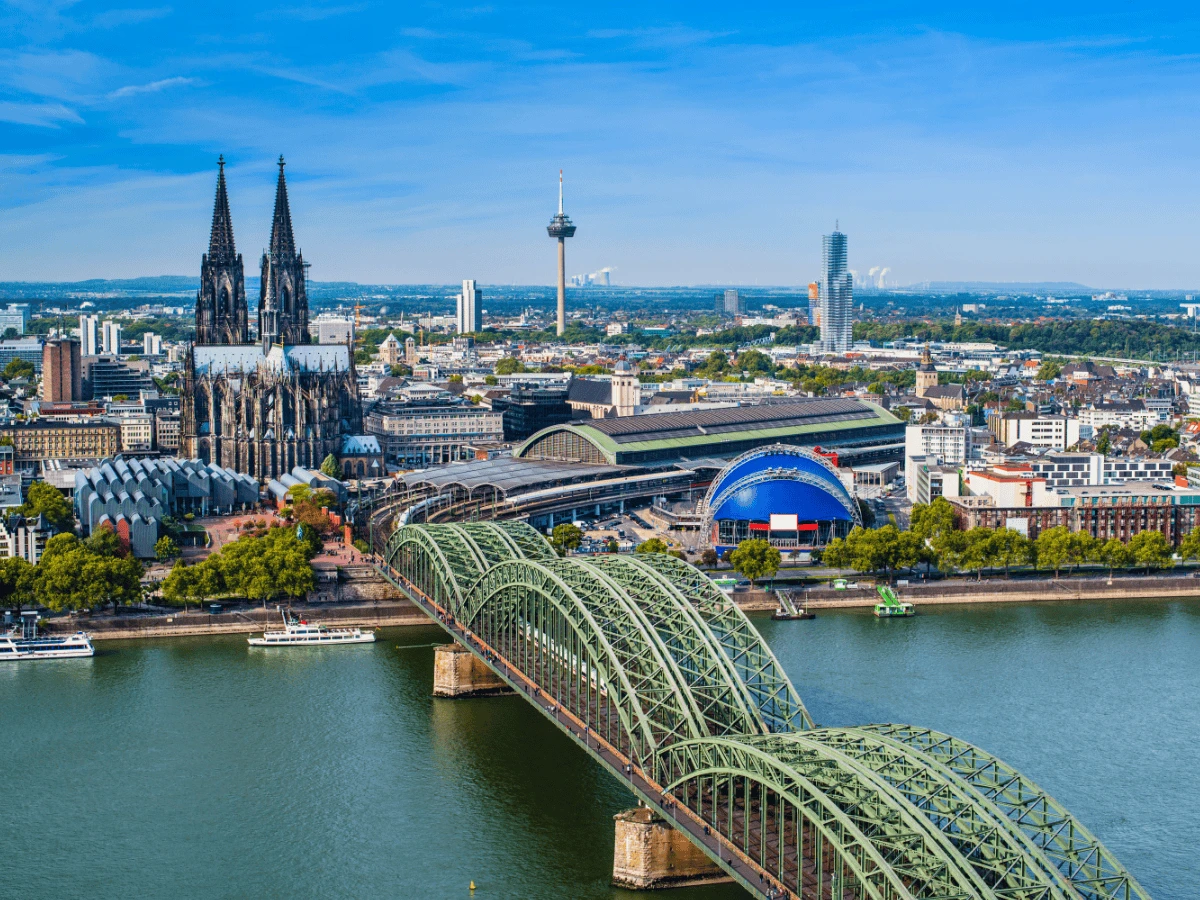
Germany stands as a pivotal hub for businesses seeking a highly skilled and efficient workforce. With a population exceeding 83 million, the country boasts a diverse talent pool across sectors such as technology, finance, engineering, and healthcare. German professionals are renowned for their technical expertise, strong educational background, and proficiency in multiple languages, making them invaluable assets to global employers.
As Europe's largest economy, Germany offers competitive salary structures that reflect its advanced industrial landscape. However, compensation packages can vary significantly based on industry, experience, and region. For businesses aiming to scale their operations in Germany, understanding these salary benchmarks is the first step to offer fair compensation packages that help attract and retain top-tier talent.
This article delves into the current salary trends across key industries in Germany, providing insights for employers and job seekers alike. Whether you're planning to hire in Germany or exploring career opportunities, understanding the nuances of wage variations by role, experience level, and location will help you to make informed decisions in the German labor market.
What Is the Average Salary in Germany in 2026?
As of 2026, the average annual gross salary in Germany is estimated at approximately €53,000, equating to around $57,000 per year. This figure reflects continued economic stability and sustained demand for skilled professionals.
Income levels in Germany vary based on factors such as industry, experience, education, and location, with urban centers like Munich, Frankfurt, and Stuttgart typically offering higher salaries than rural areas.
Comparative Profession Salary Earnings in Germany
Here’s a general breakdown of monthly and annual salary ranges in Germany:
Note: USD equivalents are approximate, based on an exchange rate of 1 USD = 0.93 EUR.
Industry-Specific Salary Earnings
Salaries in Germany differ by industry, with highly skilled sectors such as IT and finance offering significantly higher compensation.
Note: Salaries are based on estimates from the latest salary surveys and job postings.
Benchmark Salaries For Your Roles
Set competitive salaries by comparing salary data for your roles globally, with real-time compensation benchmarking data.
Benchmark Salaries
Labor Market Overview in Germany
Germany’s labour market in 2026 remains broadly stable, though growth has softened compared to previous years. Employment levels are largely flat, with some regions experiencing slight declines, while the national unemployment rate is expected to hover around 6%, varying notably by region. Despite this moderation, labour demand remains resilient in key shortage sectors such as healthcare, IT, education, and skilled trades, highlighting persistent skills mismatches across the economy.
At the same time, Germany continues to face structural challenges, including an aging workforce, regional disparities, and ongoing adjustments in traditional manufacturing industries. Wage growth is expected to continue at a moderate pace, supported by collective bargaining agreements and minimum wage increases, though real gains may be tempered by inflation. Overall, while economic uncertainty persists, targeted fiscal measures and sustained demand for skilled talent are expected to support labour market stability throughout 2026.
Benefits of Hiring Employees in Germany
Germany's robust economy and highly skilled workforce make it an attractive destination for businesses seeking to expand their operations. Here are some key reasons why companies choose to hire German talent:
- Highly Skilled Workforce: Germany has a strong education system, producing professionals in IT, finance, healthcare, and engineering who are globally competitive. The country consistently ranks among the top nations for individuals holding university degrees.
- Strong English Proficiency: While German is the official language, a significant portion of the population is proficient in English, facilitating seamless communication for international businesses. This linguistic capability is particularly prevalent in urban centers and multinational corporations.
- Competitive Labor Costs: Compared to Western markets, Germany offers competitive salaries that reflect the high skill level of its workforce. This balance allows businesses to optimize labor costs and payroll taxes without compromising quality.
- Thriving Tech and Innovation Ecosystem: Cities like Berlin and Munich are renowned for their vibrant startup scenes and technological advancements, providing access to a pool of innovative professionals in tech, finance, and creative industries. Berlin, in particular, has become a hub for entrepreneurs and tech startups, attracting talent from around the world.
- Cultural Compatibility: German professionals are known for their strong work ethic, punctuality, and commitment to quality, making them excellent collaborators in global teams. The emphasis on work-life balance and structured work environments contributes to high productivity and job satisfaction.
Factors Influencing Salaries in Germany
The salary landscape in Germany is shaped by various economic and market-driven factors. Employers aiming to hire talent in the country must consider these elements to offer competitive compensation packages.
1. Experience & Skill Level
Experience plays a crucial role in salary determination. Professionals with several years in a field command significantly higher wages than entry-level employees. Typically, those with 0-2 years of experience earn lower salaries, while mid-career professionals (3-5 years of experience) can see earnings increase by 50% or more.
Senior-level professionals and specialists (10+ years of experience) can demand salaries that are often double or even triple the national average, particularly in technical fields.
2. Industry Demand
The industry in which a professional works heavily influences salary levels. The IT, finance, healthcare, and engineering sectors generally offer higher-than-average wages due to talent shortages and global demand for skilled professionals. For example, software developers and cloud engineers are increasingly in demand as companies shift toward digital transformation.
Similarly, healthcare professionals, particularly registered nurses and medical technologists, are seeing higher salaries due to international demand and the growing healthcare sector in Germany.
3. Location
Location is a major determinant of salary levels in Germany. Major cities like Munich, Frankfurt, and Hamburg offer higher salaries compared to smaller towns and rural areas. For example, professionals in Munich might earn up to 20% more than their counterparts in eastern cities like Leipzig or Dresden.
However, the cost of living is also higher in these metropolitan areas, which should be factored into any salary considerations.
4. Educational Background & Certifications
Higher education and specialized certifications significantly impact salary levels in Germany. University graduates typically earn 20-50% more than individuals without degrees. Certain degrees, such as computer science, engineering, finance, and healthcare, lead to higher salaries due to industry demand. In contrast, some graduates in liberal arts or education may find it more challenging to secure high-paying positions unless they specialize further.
Additionally, professional certifications can give employees a competitive edge in the job market. For example:
- Certified Public Accountants (CPA) often earn 30-60% more than non-certified accountants.
- Project Management Professionals (PMP) can earn salaries 25-40% higher than non-certified project managers.
- Google, AWS, or Cisco IT certifications can lead to better-paying roles in tech and network administration.
Employers should consider offering sponsorships for professional development programs to enhance their workforce’s capabilities while boosting retention rates.
5. Foreign vs. Local Employers
Foreign companies operating in Germany often offer higher salaries, better benefits, and more career growth opportunities compared to local firms. This is especially true in industries like business process outsourcing (BPO), IT services, and finance, where multinational corporations actively hire German professionals.
For example, a foreign IT company hiring a software developer in Munich may offer €80,000 per year, whereas a local company might offer €60,000 per year for the same role. Similarly, customer service representatives working for global companies may earn 20-30% more than their counterparts in locally owned businesses.
Hiring Trends and Future Salary Outlook in Germany in 2026
Germany’s labour market in 2026 continues to evolve under the influence of digital transformation, economic uncertainty, and shifting workforce expectations. While hiring activity has moderated compared to peak years, demand remains strong in specific high-skill sectors. Understanding these trends is essential for businesses and professionals navigating the German employment landscape.
1. Continued Growth in Remote Work and Global Hiring
Remote and hybrid work models remain firmly embedded in Germany’s labour market, particularly across IT, customer support, engineering, and digital marketing roles. In 2026, companies increasingly combine remote work with international hiring and outsourcing strategies to address talent shortages and manage costs. Highly skilled remote professionals, especially in software development and digital roles, often command salaries that match or exceed traditional office-based positions.
2. AI, Automation, and Skills-Driven Wage Growth
The adoption of AI, automation, and data-driven technologies continues to reshape industries such as manufacturing, finance, logistics, and customer service. As routine tasks become automated, demand has increased for professionals with expertise in AI engineering, machine learning, data analytics, and system integration. In 2026, candidates with these skills can command significant salary premiums, with many mid-to-senior roles exceeding €70,000 annually.
3. Strong Demand in Finance, Tech, and Cybersecurity
Technology-driven sectors, including fintech, cybersecurity, cloud computing, and blockchain, remain among the fastest-growing employment areas in Germany. Professionals in these fields often earn 20-50% above the national average, reflecting both skills scarcity and growing regulatory and security requirements. Cybersecurity specialists, in particular, continue to see strong compensation growth as organizations prioritize digital resilience.
4. Wage Adjustments and Labour Cost Pressures
Government-mandated wage increases and collective bargaining agreements continue to support income growth. Following recent adjustments, the statutory minimum wage remains at historically high levels in 2026, contributing to rising labour costs, especially in retail, logistics, and service industries. While these measures improve living standards, they also encourage employers to focus on productivity, automation, and selective hiring.
5. More Cautious Hiring Environment
Hiring intentions in 2026 remain measured, with many companies prioritising efficiency and targeted recruitment rather than broad workforce expansion. Economic uncertainty, structural changes in manufacturing, and demographic pressures have led employers to focus on critical roles and future-proof skills, rather than volume hiring. This cautious approach is expected to continue throughout the year, particularly outside high-growth sectors.

Get Free Hiring Guides
Explore our country hiring guides for 180+ regions, covering everything from leave and benefits to payroll.
Explore Guides.png)
Key Takeaways
Understanding salary trends in Germany is essential for businesses aiming to attract top talent and for professionals seeking fair compensation. By considering industry benchmarks, location, experience, and cost-of-living factors, both employers and employees can make well-informed decisions.
If you're planning to hire in Germany, ensure you offer competitive salaries, provide benefits that align with industry standards, and stay updated on local labor laws to facilitate a smooth and successful hiring process. Look for free resources such as Playroll's salary benchmarking tool and employee cost calculator to easily benchmark your offering across the globe.
Want to simplify the process of hiring in Germany? Playroll offers leading EOR services to make global hiring a breeze – let us handle legal employment, compliance, payroll and benefits management, so you freely explore new markets and focus on team growth. Book a chat with our team to find out how we can help scale your team in Germany in 2026.

ABOUT THE AUTHOR
Milani Notshe
Milani is a seasoned research and content specialist at Playroll, a leading Employer Of Record (EOR) provider. Backed by a strong background in Politics, Philosophy and Economics, she specializes in identifying emerging compliance and global HR trends to keep employers up to date on the global employment landscape.
Germany Average Income: Detailed Salary Insights for 2026 FAQs
What is the difference between average and median salary in Germany?

.png)
Average salary can be skewed by higher earners, while median salary better reflects the midpoint worker, so both should be reviewed together for compensation planning.
Why do salary levels vary significantly by German region?
Regional wage differences reflect industry concentration, labor demand, and local productivity patterns, so location-specific benchmarking is more reliable than national averages alone.
Should international employers benchmark gross or net pay in Germany?
Employers usually benchmark gross salary for offer design, then model tax and social contributions separately to estimate realistic net take-home outcomes.
How do collective agreements influence salary benchmarks in Germany?
Collective agreements can define sector pay floors and progression structures, so compensation benchmarks should account for applicable bargaining coverage.
Which official datasets are best for validating German pay ranges?
Use Destatis, Eurostat, and Federal Employment Agency statistics together to triangulate market ranges by region, role family, and industry segment.

Back to Top
.svg)










.svg)