.svg)
.svg)

.svg)
.svg)

Copied to Clipboard

Ready to get Started?


There's a specific kind of Sunday night dread that comes with scaling a global team that you can only understand if you've experienced it firsthand.
You've got a brilliant engineer in Brazil who accepted your offer on Friday. A customer success lead in Germany starting in six weeks. Two more roles open in the Philippines. And somewhere in a Notion doc, a founder's note that says "figure out entity strategy", written six months ago and touched exactly zero times since.
You're not doing anything wrong. This is just what fast growth looks like. But the compliance reality underneath it is genuinely complicated, and getting it wrong (misclassifying an employee, missing a payroll filing, issuing a non-compliant contract) can cost you far more than the hire itself.
This is the moment most scaling companies discover the Employer of Record model. Not through a sales call. Through a Reddit thread, a Slack community, a frantic Google search at 11pm.
So let's talk about it honestly, what it actually feels like to use an EOR across multiple countries at once, where it works brilliantly, where it gets messy, and what the questions are that nobody remembers to ask until it's too late.
What "Employer of Record" Actually Means When You're Hiring Across Borders
Most EOR explainers are written for a single-country use case. You're expanding into the UK, you don't want to set up a Ltd company yet, an EOR handles it. Clean. Simple.
The multi-country reality is more interesting, and more nuanced.
When you use an EOR to hire across multiple countries simultaneously, the EOR becomes the legal employer of your team members in each jurisdiction. They handle local employment contracts written to that country's labour law, in-country payroll and tax filings, statutory benefits and contributions, and offboarding and termination compliance. You retain full control over the work (what the person does, how they're managed, what they're paid) but the legal and administrative weight sits with the EOR.
The practical effect of this is significant. You can hire a full-time, properly employed team member in South Africa on Monday and have them onboarded within a week or two, without incorporating a local entity, without a local bank account, without a local HR team. For a company in year two or three of growth, that's not a nice-to-have. It's often the only viable path.
Here's how the three main options actually compare:
The contractor row is where most companies start, and where most companies eventually run into trouble. Misclassification risk is real and country-specific. In Germany, in Brazil, in the Philippines, the threshold for what constitutes an employment relationship is lower than most founders expect.
What It's Actually Like Running a Multi-Country Team Through an EOR
The experience of using an EOR is not uniform across countries. Some markets are fast and frictionless; the UK, Canada, and the Philippines have standardized contracts and mature payroll infrastructure. Others require more patience:
- Germany: thorough contract review, works council considerations, strong employee protections. Getting it right takes longer, but matters more.
- Brazil: high statutory costs, detailed labour law, and off-boarding complexity that can be more expensive than the entire salary tenure if mishandled.
This isn't a reason to avoid these markets. It's a reason to go in with accurate expectations and a provider with genuine in-country infrastructure.
A few other realities worth knowing before you start:
- Benefits vary wildly by country: What's standard in the Netherlands would be considered generous in Malaysia. Get ahead of those conversations with your team before they come up organically.
- Currency movements compound: When you're running payroll in six local currencies, small FX shifts add up. Build this into your headcount budget from day one.
- Notice periods will surprise you: Germany's can stretch to several months depending on tenure. Factor termination timelines into workforce planning, not just hiring plans.
- Payroll cut-off dates are non-negotiable: A late first payslip is one of the fastest ways to damage trust with a new hire. Ask any EOR partner exactly how they manage multi-jurisdiction cut-offs before you sign.
Start Eliminating Complex Multi-Hiring Strategies
Say goodbye to fragmented vendors, inconsistent compliance processes, and cross-border payroll headaches.
Speak to an Expert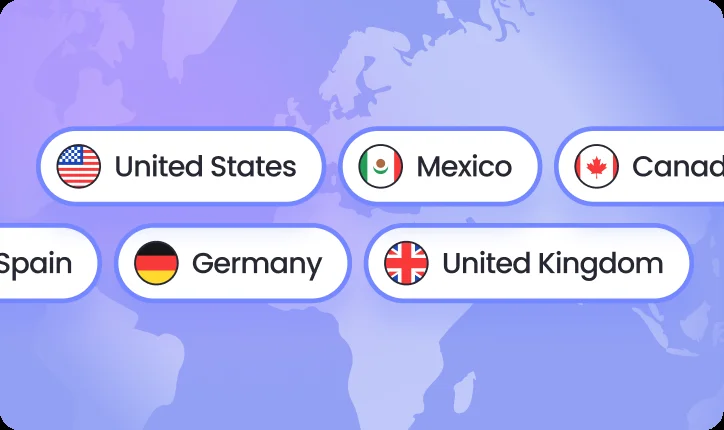
Where EOR Works Well and Where to Tread Carefully
Not all markets are created equal when it comes to the EOR model. Here's a practical read on some of the most common hiring destinations:
High-functioning EOR markets: countries where infrastructure is mature, onboarding is relatively fast, and compliance risk is manageable with a good provider:
- United Kingdom: straightforward employment law, strong payroll infrastructure, fast onboarding
- Canada: province-by-province nuance exists but the system is well understood
- Australia: clear statutory framework, excellent EOR coverage
- Philippines: one of the most popular EOR markets globally, fast and cost-effective
- Mexico: strong EOR infrastructure, growing tech talent base
- South Africa: increasingly well-served by EOR providers, strong English-language talent pool
Markets that require more care:
- Germany: employment law is detailed and employee protections are strong; get a provider with genuine local expertise, not a reseller
- Brazil: high employer costs (often 60-70% on top of gross salary in social contributions), complex termination rules; worth it for the right hire, but budget and plan accordingly
- India: regulatory complexity and state-level variation; the talent pool is exceptional but the compliance landscape rewards patience
- China: EOR is technically possible but structurally complex; some multinationals prefer a Representative Office or WFOE for anything beyond very early-stage hiring
Markets where EOR may not be available or appropriate: Some smaller or higher-risk jurisdictions have limited EOR coverage. If your hiring needs take you somewhere unusual, validate coverage before you make an offer.
EOR vs. Setting Up a Local Entity: When Does the Math Actually Change?
This is the question every founder eventually asks, usually around the time their EOR fees start looking meaningful on a P&L.
The honest answer is that there's no universal threshold, but there are useful rules of thumb. In many markets, the cost and operational overhead of incorporating and maintaining a local entity (legal fees, accountants, registered address, local director requirements, annual filings) starts to approach or exceed EOR costs somewhere between five and fifteen full-time employees in a single country. The range is wide because it varies significantly by country. Setting up in the UK is relatively simple. Setting up in Brazil is not.
The subtler consideration is time and attention. A local entity doesn't just cost money at setup: it creates ongoing compliance obligations that someone in your team needs to own. For a company at 50 people total, dedicating meaningful finance and legal bandwidth to three separate foreign entities is a real trade-off against other priorities.
A reasonable framework: use EOR to validate a market and build a team. Move to an entity when the headcount in that country justifies it, when you have local leadership who can own the operational relationship, or when the nature of your business in that market requires it (client contracts, regulated activity, etc.).
Your Multi-Country EOR Hiring Checklist
Before you make an offer to an international hire, run through this list. It won't cover every edge case, every country has its own wrinkles, but it'll stop you from learning the expensive lessons.
Before You Choose an EOR Provider
- Confirm they have genuine in-country infrastructure (not third-party resellers) in every market you're hiring in
- Ask specifically about their payroll cut-off process across multiple jurisdictions
- Understand who carries termination liability, you or the EOR
- Clarify their escalation and support process for urgent out-of-hours issues
- Request references from companies hiring in your specific target countries
Before You Make an Offer
- Confirm the EOR is active and compliant in that country
- Understand the total employer cost; statutory contributions can add 30-70% on top of gross salary depending on the market
- Check local notice period norms and factor them into your hiring timeline
- Understand probation period rules, length and termination rights vary significantly by country
- Align on currency and how FX exposure will be managed
Before the Employee Starts
- Confirm the locally compliant employment contract has been reviewed and signed
- Ensure statutory benefits (pension, healthcare, leave entitlements) are set up correctly
- Brief your new hire on why their employment contract looks different from colleagues in other countries, proactively
- Confirm their first payroll date and that they're on the correct payroll cycle
- Make sure your internal team knows who manages the day-to-day relationship vs. what the EOR handles
Ongoing
- Review headcount costs per country quarterly; statutory costs and FX shift over time
- Track tenure in high-notice-period markets so termination timelines never catch you off guard
- Revisit entity vs. EOR trade-off as headcount in individual markets grows
- Stay across local labour law changes; a good EOR partner should flag these, but don't rely on it entirely
Key Takeaways
An Employer of Record isn't a magic solution. It won't eliminate complexity, it redistributes it. The compliance risk, the payroll administration, the local contract expertise, that moves to a partner who is built to carry it. What stays with you is the thing that actually matters: the work, the culture, the management relationship with your team.
For companies that want to hire globally without betting their runway on a multi-entity legal strategy in year two or three, EOR is one of the most practical tools available. The companies that use it well go in with clear expectations, choose a provider with genuine in-country depth, and treat it as a deliberate part of their international expansion strategy rather than a stopgap.
If you're at the point where you've got open roles in multiple countries and no clear answer on how to employ those people compliantly, that's exactly what we help with. You can book a call with our team to talk through your specific countries and hiring timeline; no pitch deck required.

ABOUT THE AUTHOR
Jaime Watkins
Jaime is a content specialist at Playroll, specializing in global HR trends and compliance. With a strong background in languages and writing, she turns complex employment issues into clear insights to help employers stay ahead of the curve in an ever-changing global workforce.
Honest Guide to Using an Employer of Record to Hire Across Multiple Countries FAQs
Can one EOR contract cover employees in multiple countries?

.png)
Some providers offer master agreements, but legal employment terms still need to be localized country by country to satisfy labor and payroll requirements.
How does an EOR help manage permanent establishment risk?
An EOR can reduce operational complexity, but companies still need tax analysis because business activity and authority levels can create permanent establishment exposure.
Should benefits be standardized globally when using an EOR?
Use a global benefits philosophy, but localize plan design to statutory minimums and market norms so offers remain compliant and competitive.
What should be planned for terminations across countries under an EOR?
Plan country-specific notice, final pay, documentation, and consultation rules early because termination obligations vary substantially across jurisdictions.
How can companies monitor multi-country EOR compliance over time?
Establish recurring compliance reviews with country-level checklists, documented controls, and escalation paths to catch regulatory changes before they create liabilities.

Back to Top
.svg)










.svg)