.svg)
.svg)


Who Is This Template For?
This template is for HR managers, founders, and legal teams who hire employees in the United States, from your first U.S. hire to a distributed team across multiple states. It works for both exempt and non-exempt roles, on either permanent or fixed-term contracts.
Here's how it helps your team:
- Flags where state law overrides federal baseline rules, so you can localize before signing.
- Covers FLSA-mandated classification language to help you avoid the most common and expensive misclassification mistakes.
- Includes optional clauses for confidentiality, IP assignment, and non-solicitation, with honest guidance on what's actually enforceable in which states.
- Saves your legal team time by starting from a compliant framework rather than a blank page.
What's Included in Our Employee Contract for the United States?
Our U.S. employment contract template covers everything you need to legally hire an employee in the United States, including federal compliance language, state-specific localization notes, and the optional clauses most employers want to include.
- At-will employment statement and termination provisions
- FLSA classification (exempt vs. non-exempt) and compensation details
- Leave entitlements referencing federal FMLA and state paid leave laws
- State-specific localization notes for California, New York, Illinois, Texas, and Florida
- Optional clauses: confidentiality, IP assignment, non-compete guidance, arbitration, and expense reimbursement
Free United States Employee Contract Template
Our U.S. employment contract template is built for employers hiring across the United States, with localization notes covering California, New York, Illinois, Texas, and Florida. It reflects U.S. federal and state employment law as of 2026 and has been reviewed by Playroll's legal and compliance team.
This template is a solid starting point, but U.S. employment law varies significantly by state, so we recommend having a local employment attorney review it before use.
What Law Governs Employment Contracts in the United States?
Also referred to as an employment agreement, a U.S. employee contract sits on top of a layered mix of federal and state law – there is no single statute that covers everything. Federal rules set the baseline; the state where your employee works decides what applies on top.
Four legal layers shape every U.S. employment contract:
- Federal baseline: The Fair Labor Standards Act (FLSA) of 1938 governs minimum wage, overtime, and classification. The federal minimum wage is $7.25/hour, but most states set a higher rate that takes precedence. The Family and Medical Leave Act (FMLA) gives eligible employees up to 12 weeks of unpaid leave at employers with 50 or more staff.
- Anti-discrimination laws: Title VII of the Civil Rights Act (1964), the Americans with Disabilities Act (1990), and the Age Discrimination in Employment Act (1967) protect employees from discrimination in hiring and on the job. A contract can't waive these protections.
- At-will employment: In every state except Montana, either side can end the working relationship at any time, for any lawful reason, unless a contract says otherwise. Montana is the exception: after an employee finishes their probationary period (12 months by default), employers need a valid, job-related reason to dismiss them.
- State law adds another layer: California, New York, Illinois, Washington, and others have their own wage rules, paid leave entitlements, and non-compete restrictions that often go beyond federal law. The state where your employee works is the one whose rules apply.
For official reference, see the U.S. Department of Labor and EOC.
What Must Be Included in Your Employee's Contract: Mandatory Contract Clauses
No single federal law mandates specific contract clauses for private-sector workers, but leaving key terms out creates real legal exposure. At a minimum, every employment contract in the United States should cover:
- At-will statement: Explicitly confirms that employment is at-will and that neither party has made any contrary promise. Essential in all states except Montana.
- Compensation and payment schedule: Must state the base salary or hourly rate, pay frequency, and payment method. State laws in California, New York, and New Jersey add extra pay statement requirements.
- FLSA classification: Employees must be classified as exempt or non-exempt. Non-exempt employees are entitled to overtime at 1.5x their regular rate for hours over 40 per workweek.
- Leave entitlements: Reference FMLA eligibility and any applicable state-paid leave laws. Most U.S. states now have some form of paid sick leave requirement.
What Optional Clauses Do U.S. Employers Commonly Include?
Beyond the mandatory terms, most U.S. employers add a handful of optional clauses to protect company interests and set clear expectations. Enforceability varies significantly by state, especially for non-competes.
- Non-disclosure/confidentiality: Enforceable in all 50 states. Recommended for any employee with access to trade secrets, customer data, or proprietary information.
- Non-compete: The most variable area of U.S. employment law. Non-competes are banned in California, North Dakota, and Oklahoma. In states that allow them, such as Florida and Texas, and others, they must be reasonable in scope, duration, and the business interest they protect. Illinois bans them for employees earning below $75,000/year. Always get local legal sign-off before including one.
- Intellectual propertThis template is provided for informational purposes only and does not constitute legal advice. Playroll recommends consulting a qualified employment attorney in the United States before using any contract template.y assignment: Worth including so anything your employee creates on the job belongs to the company. A few states, including California, Washington, Minnesota, Illinois, Delaware, and North Carolina, draw a clear line. Employees can't be forced to sign over IP they made on their own time, with their own equipment, and unrelated to their work.
- Arbitration agreement: Common in U.S. contracts, but restricted in some states. The Ending Forced Arbitration of Sexual Assault and Sexual Harassment Act (2022) prohibits mandatory arbitration for those claims federally.
- Expense reimbursement: Mandatory in California, Illinois, Iowa, Montana, and several other states. Best practice to include regardless of where your employee is based.
Fixed-Term vs. Permanent Contracts: Which Should You Use?
Both fixed-term and permanent contracts are valid in the U.S., and no federal law specifically governs fixed-term agreements. The key difference: permanent contracts default to at-will employment, while a fixed-term contract's end date can be read as overriding at-will — making early termination harder without cause. To keep that flexibility, always include an explicit early termination clause.
Montana is the one exception. Under the Wrongful Discharge from Employment Act, employees who complete their probationary period are protected from dismissal without just cause, regardless of which contract type they're on.
Common Mistakes Employers Make With United States Contracts?
The most common U.S. contract mistakes come from misapplying foreign templates, misclassifying workers, or ignoring the state where the employee actually works. The five we see most often:
- Using a foreign or generic template: Contracts drafted for the UK or Australia usually miss the essentials for the US, such as FLSA classification, at-will language, and state-specific leave disclosures. The wrong wording can lock you into terms you didn't intend.
- Misclassifying employees as independent contractors: The IRS, the Department of Labor, and most state agencies each apply their own test, and the penalties can include back taxes, fines, and wage claims. California's ABC test (under AB5) is the strictest in the country, so tread carefully there.
- Adding an unenforceable non-compete: Non-competes are a state-by-state question. For example, California bans them outright. Since January 2024, employers there are also required to notify any affected employees that their non-compete clause is void.
- Ignoring where the employee actually works: Wage rules, leave entitlements, and non-compete enforceability are all governed by the state where the employee does the work – not where your company is based. If your New York business has someone working remotely in California, California law applies.
- Treating accrued vacation as forfeitable: In California, Colorado, and Illinois, unused vacation counts as earned wages. "Use it or lose it" policies and any clause that wipes vacation on termination won't hold up in those states.
Hire Anywhere in the United States, Compliantly
Playroll acts as your Employer of Record across all 50 states, so you can hire in the U.S. compliantly without entity setup. We handle classification, leave disclosures, payroll, and tax withholding. You focus on the business.
Get Started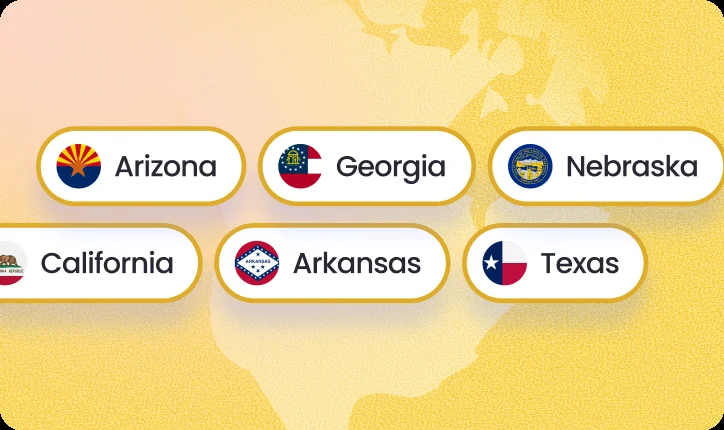

about the author
Milani Notshe
Milani is a seasoned research and content specialist at Playroll, a leading Employer Of Record (EOR) provider. Backed by a strong background in Politics, Philosophy and Economics, she specializes in identifying emerging compliance and global HR trends to keep employers up to date on the global employment landscape.

Back to Top
.svg)


.png)








.svg)