.svg)
.svg)

Thousands of global businesses can't be wrong.
Sign up for free and explore global hiring with Playroll.


Can You Pay Remote Employees in Madagascar Without a Local Entity?
It depends. You generally need a registered entity in Madagascar to run payroll directly, unless using an Employer of Record (EOR) to employ them on your behalf — and all payments must be made in Malagasy Ariary (MGA) via compliant methods such as bank transfer.

Thousands of global businesses can't be wrong.
Sign up for free and explore global hiring with Playroll.
Step-by-Step Process for Paying Remote Employees in Madagascar
- Verify that the worker is correctly classified as an employee under Madagascar's Labor Code and not as an independent contractor.
- Register your company with the Economic Development Board of Madagascar (EDBM) to obtain the necessary business permits and licenses.
- Obtain a Tax Identification Number (TIN) from the Malagasy Tax Administration for tax reporting purposes.
- Register with the Caisse Nationale de Prévoyance Sociale (CNAPS) for social security contributions.
- Collect required documentation, including employment contracts, employee identification, and banking details.
- Set a compliant pay schedule based on Madagascar's labor laws, typically monthly or bi-monthly.
- Process payroll ensuring correct tax withholdings, including income tax and social security contributions.
- Pay employees via compliant methods such as bank transfer in MGA and issue itemized payslips as required by law.
- Remit payroll taxes to the Malagasy Tax Administration and social security contributions to CNAPS on a monthly basis.
- File annual tax returns and provide employees with annual income statements for tax purposes.
What Are The Legal Ways To Pay Madagascar-Based Employees From Another Country?
Local Bank Transfer
- Best for: Employers with a registered entity in Madagascar paying employees via domestic bank transfers in MGA.
- Pros: Secure and widely accepted, with straightforward compliance for local transactions.
- Limitations: Requires local bank accounts and registration with Malagasy authorities; cross-border funding may incur FX costs.
- Compliance note: Payroll must comply with Malagasy tax and labor laws; wages must be paid in MGA and reported to local authorities.
Direct Payroll Services
- Best for: Companies with a Malagasy entity that want to outsource payroll calculations, filings, and compliance.
- Pros: Ensures accurate tax withholding, automated filings with Malagasy authorities, and reduces administrative burden.
- Limitations: Still requires entity setup and oversight of local compliance.
- Compliance note: Subject to Malagasy tax regulations and social security contributions; no restrictions on paying in MGA, but strict reporting schedules apply. Playroll's Global Payroll services manage this end-to-end.
Employer of Record Platform Disbursement
- Best for: Foreign companies hiring Madagascar-based employees without establishing a local entity.
- Pros: The EOR becomes the legal employer, handling payroll, tax filings, benefits, and compliance with Malagasy authorities.
- Limitations: Higher cost than direct payroll and less direct control over employment contracts.
- Compliance note: EOR providers manage registration, tax remittance, and reporting obligations with Malagasy authorities. Explore Playroll's Employer of Record services.
Contractor Payment Platforms
- Best for: Paying Madagascar-based independent contractors for project-based or flexible work arrangements.
- Pros: Simplified onboarding, cross-border payments, and reduced administrative overhead.
- Limitations: Does not cover employee benefits, tax withholding, or labor law protections; higher misclassification risk.
- Compliance note: The Malagasy Labor Code enforces strict classification rules; contractor platforms do not assume employer obligations. Explore Playroll's Contractor Management Platform.
What Taxes Do I Need To Handle for Madagascar Employees?
- Income Tax (Malagasy Tax Administration): Withheld from employee wages with progressive rates up to 20%.
- Social Security Contributions (CNAPS): Employer and employee contributions totaling approximately 13% of gross salary.
- Health Insurance Contributions: Employer-paid contributions to the national health insurance scheme.
- Vocational Training Tax: Employer-paid tax to support workforce development initiatives.
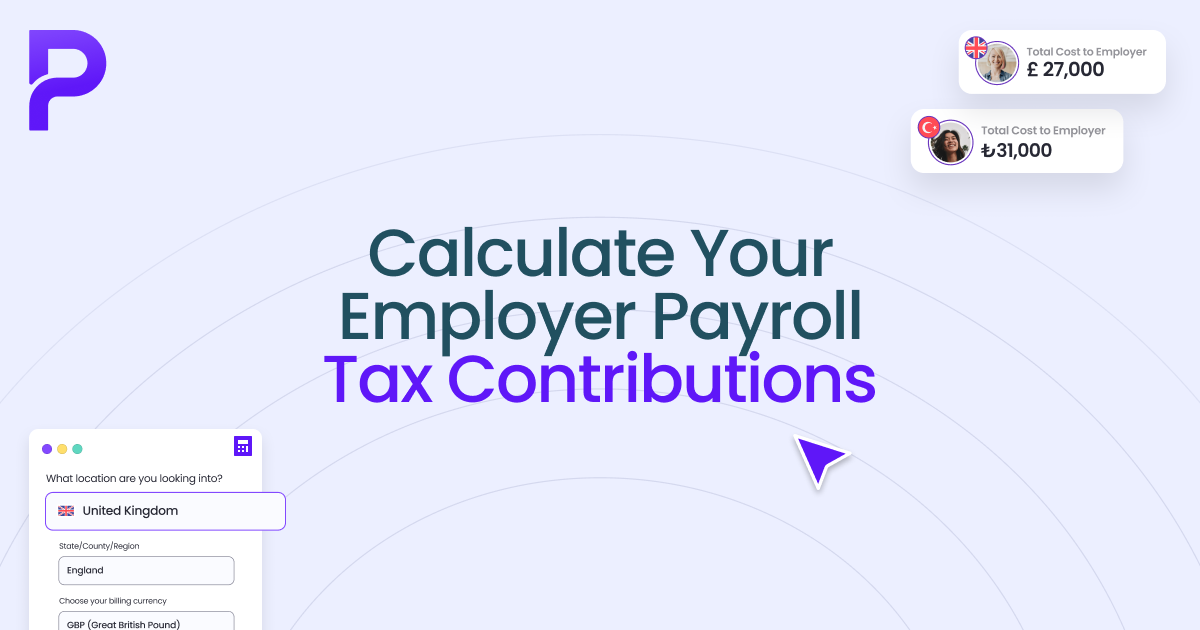
Use Playroll's payroll tax calculator to estimate your total employer costs in Madagascar.
What Are the Biggest Compliance Risks When Paying Employees in Madagascar?
- Worker misclassification (Malagasy Labor Code): Misclassifying employees as contractors can result in back taxes, penalties, and liability for unpaid benefits under Malagasy law.
- Payroll tax errors (Malagasy Tax Administration): Incorrect or late tax payments can incur penalties and interest charges.
- Permanent establishment risk (Malagasy Tax Administration): Employing workers in Madagascar may create taxable presence for foreign companies, triggering corporate tax obligations.
- Late filings and reporting penalties (Malagasy Tax Administration): Missing deadlines for tax returns and social security filings can result in fines and interest charges.
- Wage law violations (Malagasy Labor Code): Non-compliance with minimum wage or overtime laws can lead to back pay claims and penalties.
- Social security non-compliance (CNAPS): Failure to register or remit contributions can result in significant penalties and legal action.
Pay Your Remote Employees in Madagascar
Pay your remote employees compliantly in Madagascar, without the heavy lifting. We support local payroll where you have your own entity or for international hires with Playroll’s EOR services.
- Accurate payroll processing: Gross-to-net processing, compliant payslips, and on-time payments — aligned with Madagascar's labor laws and reporting requirements.
- Taxes & contributions covered: Registrations, filings, and remittances to the Malagasy Tax Administration and CNAPS, ensuring compliance across all relevant jurisdictions.
- Built for local compliance: We handle statutory obligations and year-end reporting, including income tax returns and social security filings, in accordance with Malagasy regulations.
Book a demo to run payroll in Madagascar with confidence.

Pay Globally Without Setting Up a Local Entity
01
Compliant onboarding
We confirm the right employment setup for your remote hire's country and role.
02
Accurate payroll and contributions
We pay your remote employees accurately and on time, with all local taxes and contributions handled.
03
Ongoing compliance
We handle local payroll laws, benefits, and filings as your remote team grows.
04
Dedicated support
Our team is always on hand to support you and your remote employees.


.svg)







.svg)