.svg)
.svg)

Thousands of global businesses can't be wrong.
Sign up for free and explore global hiring with Playroll.




Can You Pay Remote Employees in Brazil Without a Local Entity?
It depends. You generally need a registered entity in Brazil to run payroll directly, unless you hire workers as independent contractors or use an Employer of Record (EOR) to employ them on your behalf — and all payments must be made in BRL via compliant methods such as bank transfer or boleto bancário.

Thousands of global businesses can't be wrong.
Sign up for free and explore global hiring with Playroll.
Step-by-Step Process for Paying Remote Employees in Brazil
- Verify that the worker is correctly classified as an employee under Brazilian labor laws, specifically the Consolidation of Labor Laws (CLT).
- Register your company with the Cadastro Nacional da Pessoa Jurídica (CNPJ) to obtain a federal tax identification number.
- Open a local bank account to facilitate payments in Brazilian Real (BRL) and comply with local banking regulations.
- Collect required documentation, including the employee's Carteira de Trabalho e Previdência Social (CTPS) and CPF (Cadastro de Pessoas Físicas).
- Set a compliant pay schedule based on Brazilian laws, typically monthly, and ensure adherence to the 13th salary requirement.
- Process payroll ensuring correct deductions for INSS (social security) and FGTS (severance fund) contributions.
- Pay employees via compliant methods such as bank transfer or boleto bancário, and issue itemized payslips as required by law.
- Remit payroll taxes and contributions to the Receita Federal and Caixa Econômica Federal on a monthly basis.
- File annual returns and reports, including the DIRF (Declaração do Imposto de Renda Retido na Fonte) and RAIS (Relação Anual de Informações Sociais).
- Issue annual income statements to employees for tax purposes by the end of February each year.
What Are The Legal Ways To Pay Brazil-Based Employees From Another Country?
Local Bank Transfer
- Best for: Employers with a registered Brazilian entity paying employees via domestic bank transfers in BRL.
- Pros: Cost-effective, fast settlement, and widely accepted by Brazilian employees and banks.
- Limitations: Requires a Brazilian bank account and compliance with local banking regulations.
- Compliance note: Payroll must comply with Brazilian labor laws and taxes, including INSS and FGTS contributions.
Direct Payroll Services
- Best for: Companies with a Brazilian entity that want to outsource payroll calculations, filings, and compliance.
- Pros: Ensures accurate tax withholding, automated filings with Receita Federal, and reduces administrative burden.
- Limitations: Still requires entity setup and oversight of local compliance.
- Compliance note: Subject to Brazilian labor laws and tax regulations; no restrictions on paying in BRL. Playroll's Global Payroll services manage this end-to-end.
Employer of Record Platform Disbursement
- Best for: Foreign companies hiring Brazil-based employees without establishing a local entity.
- Pros: The EOR becomes the legal employer, handling payroll, tax filings, benefits, and compliance with Brazilian authorities.
- Limitations: Higher cost than direct payroll and less direct control over employment contracts.
- Compliance note: EOR providers manage registration, tax remittance, and reporting obligations with Receita Federal and local labor departments. Explore Playroll's Employer of Record services.
Contractor Payment Platforms
- Best for: Paying Brazil-based independent contractors for project-based or flexible work arrangements.
- Pros: Simplified onboarding, cross-border payments, and reduced administrative overhead.
- Limitations: Does not cover employee benefits, tax withholding, or labor law protections; higher misclassification risk.
- Compliance note: Brazilian labor laws strictly regulate worker classification; contractor platforms do not assume employer obligations. Explore Playroll's Contractor Management Platform.
What Taxes Do I Need To Handle for Brazil Employees?
- INSS (Instituto Nacional do Seguro Social): Employer contribution rates vary from 20% to 28% of the employee's salary.
- FGTS (Fundo de Garantia do Tempo de Serviço): Employer contributes 8% of the employee's salary to a severance fund.
- IRRF (Imposto de Renda Retido na Fonte): Withheld from employee wages with progressive rates from 7.5% to 27.5%.
- PIS/PASEP (Programa de Integração Social): Employer contributions at 1% or 1.65% depending on the industry.
- ISS (Imposto Sobre Serviços): Municipal tax on services, rates vary by municipality, typically 2% to 5%.
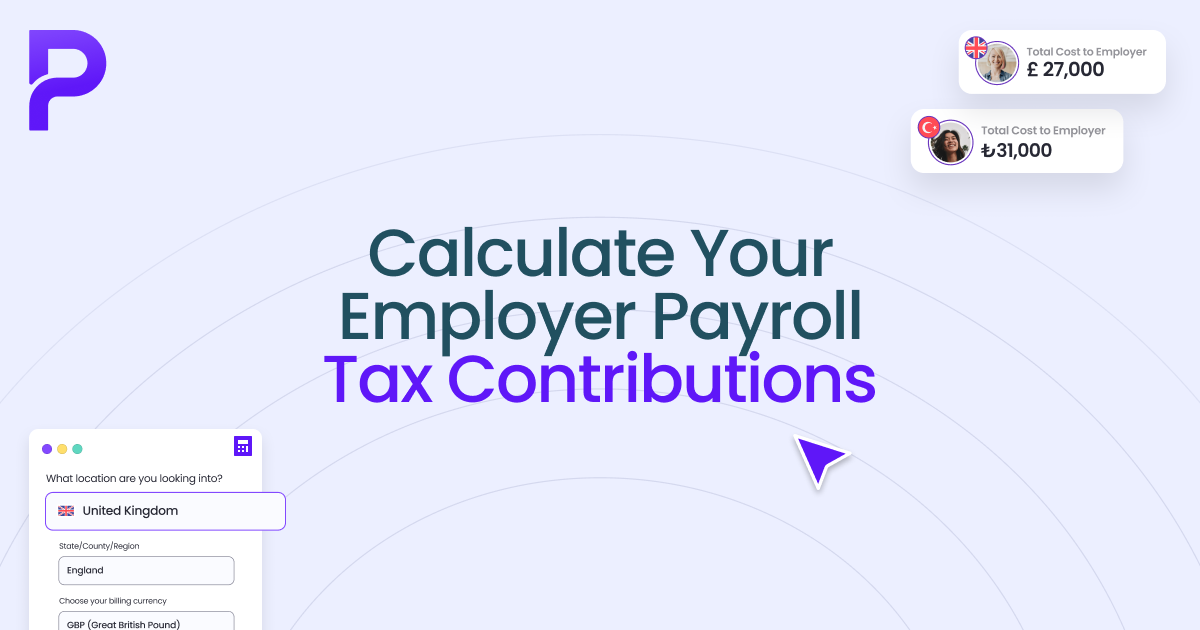
Use Playroll's payroll tax calculator to estimate your total employer costs in Brazil.
What Are the Biggest Compliance Risks When Paying Employees in Brazil?
- Worker misclassification (Ministério do Trabalho): Misclassifying employees as contractors can lead to fines and back payments under CLT regulations.
- Payroll tax errors (Receita Federal): Incorrect tax calculations or late payments can incur penalties and interest charges.
- Permanent establishment risk (Receita Federal): Employing workers in Brazil may create a taxable presence, triggering corporate tax obligations.
- Late filings and reporting penalties (Receita Federal): Missing deadlines for DIRF or RAIS can result in significant fines.
- Wage law violations (Ministério do Trabalho): Non-compliance with minimum wage, overtime, or 13th salary can lead to legal action and penalties.
- Social security non-compliance (INSS): Failure to remit correct contributions can result in audits and financial penalties.
Pay Your Remote Employees in Brazil
Pay your remote employees compliantly in Brazil, without the heavy lifting. We support local payroll where you have your own entity or for international hires with Playroll’s EOR services.
- Accurate payroll processing: Gross-to-net processing, compliant payslips, and on-time payments — aligned with Brazilian pay frequency requirements and itemized payslip obligations under CLT.
- Taxes & contributions covered: Registrations, filings, and remittances to Receita Federal, INSS, and Caixa Econômica Federal across all relevant jurisdictions.
- Built for local compliance: We handle statutory obligations and year-end reporting, including DIRF and RAIS filings in every state where your employees work.
Book a demo to run payroll in Brazil with confidence.

Pay Globally Without Setting Up a Local Entity
01
Compliant onboarding
We confirm the right employment setup for your remote hire's country and role.
02
Accurate payroll and contributions
We pay your remote employees accurately and on time, with all local taxes and contributions handled.
03
Ongoing compliance
We handle local payroll laws, benefits, and filings as your remote team grows.
04
Dedicated support
Our team is always on hand to support you and your remote employees.


.svg)







.svg)