.svg)
.svg)

.svg)
.svg)

Copied to Clipboard

Ready to get Started?


Key Takeaways
Relocating employees out of Dubai requires ending the UAE employment relationship and setting up a new, compliant structure in the destination country to avoid tax and legal risks.
Short-term remote work can act as a temporary bridge, but anything beyond a few weeks introduces complexity around tax residency, payroll, and permanent establishment exposure.
Using an Employer of Record is the most practical long-term solution, allowing you to retain talent, ensure compliant local employment, and maintain continuity without setting up a new entity.
During this time of geopolitical conflict and uncertainty, more of your employees in the UAE may be asking the same question: “Can I spend some time back home, and keep my job?”
In many cases, this isn’t a permanent move. People want to be closer to family, deal with personal priorities, or ride out this period of uncertainty. And often, they fully intend to return to Dubai once things settle.
That puts you in a difficult position. You don’t want to lose strong talent, but you also can’t afford to get compliance wrong.
This challenge is particularly common in the UAE, where the workforce is overwhelmingly international. Foreign nationals make up close to 90% of the population and the vast majority of private-sector employees, meaning many of the people you rely on already have lives and ties elsewhere.
When they need to leave, even temporarily, the default outcome doesn’t have to be resignation. In this guide, I’ll break down how to support and retain your team in the UAE.
The Legal Reality of Relocating Employees From Dubai
Let’s start with the challenges that many companies run into when attempting to relocate an employee from Dubai. If an employee leaves the UAE and starts working from another country, you generally can’t just keep operating as normal. In most cases, it requires a total legal reset.
Once the employee is no longer working in the UAE under your sponsorship, the UAE employment relationship needs to end. From there, a new employment setup begins in the destination country under local labour laws.
Handled properly, this is a clean transition. Done incorrectly, it can create tax exposure, compliance risk, and employee uncertainty.
Here’s what that transition typically involves:
- End-of-Service Gratuity: If your employee has at least one year of service, they are entitled to gratuity based on basic salary (not total compensation), 21 days per year for the first five years, and 30 days thereafter. Final dues, including gratuity, unused leave, and any outstanding payments, must be settled within 14 days of termination.
- Notice Period: Your contractual notice period, typically 30–90 days depending on the employment contract, still applies. Many employers use this time for handover while the employee is still in the UAE.
- Visa and Work Permit Cancellation: As the sponsor, you’re responsible for cancelling your employee’s visa and work permit. This is usually straightforward once final payments are made.
- Repatriation Considerations: under Article 131 of UAE law, you’re required to cover your employee’s repatriation costs, such as flights to their destination country. You might negotiate this into a separation agreement or let an EOR coordinate payment.
- New Local Employment: If you’re retaining the employee, they’ll need a new contract that complies with local laws in their destination country.
So yes, there’s a legal break. But that doesn’t mean the working relationship has to end.

How to Compliantly Relocate Your Employees from Dubai
Most UAE-based expatriates who relocate are returning to their destination countries, where they already have the right to work. That makes re-employing them significantly simpler. There are three practical ways to approach this, depending on how permanent the move is.
Option 1: Temporary Relocation (Short-Term Stabilisation)
If the move is clearly temporary, you can allow the employee to work remotely under their existing UAE contract for a limited period. But this comes with constraints.
There’s no universal “safe” number of days. Tax residency and permanent establishment risks depend on where the employee is going and how long they stay.
- Some countries offer short-term flexibility: For example around 60 days. For example, if a UAE-based employee temporarily relocates to Italy for four to eight weeks due to regional instability, local authorities will often tolerate this as a short-term presence without immediately triggering payroll or corporate tax obligations, provided the employment remains clearly tied to the UAE and the stay doesn’t extend.
- Many apply a 183-day threshold for tax residency: For instance, if that same employee ends up staying in Italy for more than six months within a 12-month period, they may become tax resident there. At that point, the employer could be required to run local payroll, withhold income tax, and potentially register as an employer in Italy, even if the move was initially intended to be temporary.
- OECD guidance suggests lower risk if remote work is under 50% of annual working time, but local rules always override this: As a practical example, if an employee spends two to three months working remotely from Spain while continuing to report into a UAE entity and not engaging in local revenue-generating activities, the risk of creating a permanent establishment is generally lower. However, if they begin negotiating or signing contracts while in Spain, or their stay becomes more regular, local authorities may still view this as creating a taxable presence regardless of time thresholds.
In practice, anything beyond a few weeks starts to introduce real complexity. This option works as a short-term bridge, buying you time while you decide what to do next. It’s not a long-term solution.
Option 2: Transfer via Employer of Record (Primary Retention Path)
For anything longer-term, this is where most employers land. Instead of losing the employee, or trying to stretch a UAE contract beyond what’s compliant, you transition them properly.
You end their employment in the UAE, and rehire them in their destination country through an Employer of Record.
From your perspective, very little changes:
- They stay in the same role
- They report to the same manager
- They remain part of your team
But legally, everything is now aligned with the country they’re working from. This is where an EOR acts as a retention bridge. It allows you to support employees through a period abroad without forcing a permanent decision too early.
In practice:
- The EOR handles the UAE offboarding, including gratuity and visa cancellation.
- They onboard the employee locally with a compliant contract.
- Payroll, tax, and benefits are managed in-country from day one.
- There are no gaps in pay, and no disruption to day-to-day work.
Most EOR engagements run for a minimum of around six months. It gives both you and the employee time to figure out what comes next. And importantly, it keeps your options open.
If the employee returns to Dubai, you can transition them back. Alternatively, if they stay abroad longer-term, you already have a compliant structure in place.
Your Retention Bridge For Global Teams
When employees need to leave Dubai, Playroll helps you keep them. Seamless transitions, full compliance, and no need for new entities.
Speak to an Expert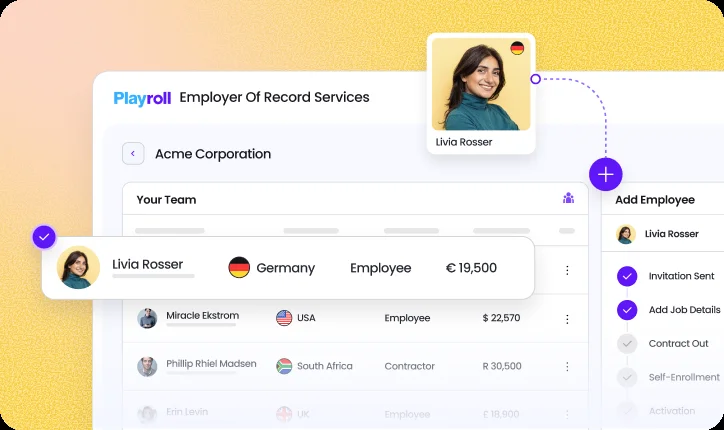
Option 3: Hire Contractors Compliantly
Contractor arrangements are common in the UAE, particularly for expatriates working with a degree of independence. But once that individual relocates, especially to their home country or a new jurisdiction, the risk profile can change quickly.
What may have been compliant in the UAE doesn’t automatically carry over. Many countries apply stricter tests around control, economic dependence, and integration into the business.
- Misclassification Risk Increases Post-Relocation: A contractor moving to countries like France or Germany may be reclassified as an employee if they work full-time for you, follow set hours, or report into your management structure.
- Local Compliance Requirements Shift: The new country may impose different rules on contracts, invoicing, tax treatment, and social security, regardless of how the arrangement was structured in the UAE.
- Exposure Can Escalate Quickly: Misclassification can lead to back taxes, social contributions, penalties, and potential employment claims.
Leverage Centralised Contractor Management
Rather than managing this risk manually across multiple jurisdictions, you can use a contractor management solution to:
- Assess classification risk in each country before and after relocation
- Standardise compliant contracts aligned with local laws
- Ensure correct invoicing, payments, and documentation
- Maintain visibility over where contractors are based and how they’re engaged
Platforms like Playroll allow you to manage global contractors within a single framework, reducing administrative overhead while keeping compliance in check during periods of movement and uncertainty.
When To Convert To Employment
If your team member no longer meets contractor criteria under local law, conversion to a full-time employee via an EOR ensures the relationship remains compliant without disrupting continuity.
What Happens To Payroll During Relocation?
One of the biggest concerns, for both you and your employees, should be continuity of payroll runs. On the UAE side, you’ll need to settle all final payments within the required 14-day window, including gratuity where applicable.
From there, payroll shifts to the employee’s destination country:
- Setting Up Compliant Local Payroll: The employee must be paid through a locally compliant payroll in their new country, not the UAE.
- Paying salary in local currency: Compensation needs to be processed in the local currency, aligned with local market and legal expectations.
- Handling Taxes And Social Contributions Correctly: Income tax, employer taxes, and social security obligations must be calculated and withheld according to local laws.
- Applying Statutory Benefits And Protections: This includes mandatory benefits such as pensions, healthcare, paid leave, and other country-specific entitlements.
How An Eor Simplifies This
An Employer of Record takes on these requirements end-to-end, setting up compliant local payroll, managing deductions and contributions, and ensuring the employee is paid accurately and on time in their new country.
This removes the need to establish a local entity while avoiding gaps or errors during the transition. Costs will vary depending on the country, particularly due to differences in employer taxes and benefits, but in most cases, this is significantly simpler, and often more cost-effective, than building and maintaining your own local payroll infrastructure.
Visa and Right-To-Work Considerations
This is one of the first things to check, but how complex it is depends on where your employee is going.
If they’re returning to their home country as a citizen or permanent resident, everything is usually straightforward. They already have the right to work, so there’s no need for visa sponsorship. The focus is simply on setting up compliant local employment.
That said, it’s still worth confirming their status rather than assuming everything is in place, especially if they’ve been abroad for a long time.
If they’re relocating to a third country, it’s a different story.
In Most Cases:
It’s important to remember that employment and immigration are often linked. In many countries, you can’t legally employ or pay someone locally until the right work authorization is in place.
- Work Authorisation is Required: The employee may need a visa or permit before they can legally work.
- Sponsorship Rules Vary: Some countries require a local entity, while others allow an Employer of Record to support the process.
- Timelines Aren’t Immediate: Processing can take weeks or even months depending on the country.
- Eligibility Matters: Salary thresholds, quotas, and skill requirements can all affect approval.
In practice, this means third-country relocations need more planning. Short-term remote work can sometimes act as a bridge, but longer-term arrangements should be structured properly from the outset.
Need Visa Support?
Playroll sponsors work visas in 95+ countries, so you can move talent compliantly without setting up local entities.
Explore our Visa Page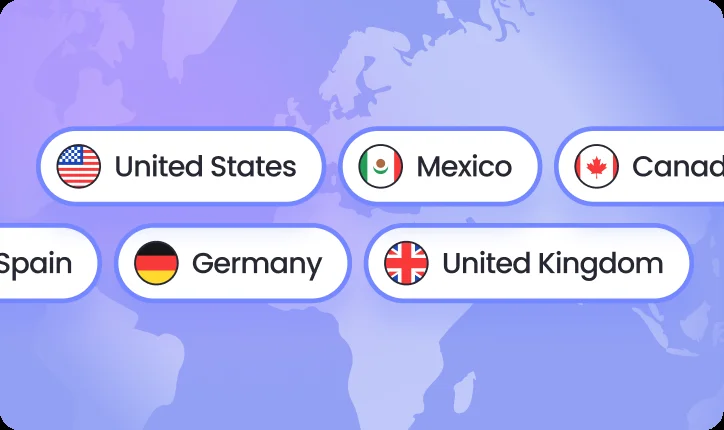
Key Takeaways for Employers Navigating Talent Movement
It’s easy to treat relocation as a loss. Someone leaves Dubai, and you assume they’ll eventually leave the company too. That might have been the case a couple of years ago, but with the rise of remote work, you have a different option.
An Employer of Record gives you a way to bridge the gap. You can retain people you’ve already invested in, support them through real-life changes, and stay compliant without overcommitting to new markets
And crucially, it gives both you and your employee time. Time for things to stabilize and for you to plan your long-term structure. Understanding your options early, and having a clear path in place, makes these transitions far smoother.
If you’re starting to see this trend in your Dubai-based team, now is the time to put that structure in place. Get in touch with our team and we’ll help you retain your talent through compliant global employment, so you can support relocation without losing the people behind it.

ABOUT THE AUTHOR
Jacqueline Ostrov
Jacqueline Ostrov is Head of Marketing & Partnerships at Playroll, where she leads brand, content, and go-to-market strategy. With a passion for simplifying global hiring, she helps companies discover how Playroll’s Employer of Record model makes building borderless teams compliant, transparent, and seamless. A U.S. native, she has lived around the world – from the UK to South Africa and Hong Kong – and is proud to have made borderless work her reality.
Can You Legally Relocate Employees Out of Dubai FAQs
Is it legal for an employee to leave Dubai and keep working for the same company remotely?

.png)
Yes, an employee can leave Dubai and continue working remotely for the same company in the short term. However, for longer-term arrangements, it’s usually necessary to formally end the UAE employment and set up compliant local employment to avoid tax and compliance risks.
Are employers required to support employee relocation?
No, employers are not legally required to support employee relocation. That said, many choose to do so because supporting relocation can significantly improve retention and strengthen your employer brand.
What if the employee doesn’t have the right to work in their home country?
If an employee doesn’t have the right to work in their home or destination country, the situation becomes more complex. In most cases, returning nationals or permanent residents already have work rights, but if they don’t (or if they’re relocating to a third country) visa requirements will need to be assessed separately.
How long does it take to set this up?
Setting up compliant employment in a new country can typically be done within days to two weeks when using an established EOR, although the exact timeline depends on the country and local requirements.
Does the UAE employment contract automatically end when they relocate?
Yes, the UAE employment contract typically ends when an employee relocates and stops working in-country. At that point, final dues are settled, and a new local employment contract begins in the destination country.

Back to Top
.svg)









.svg)