.svg)
.svg)

.svg)


.svg)

.svg)
.svg)
.svg)
.svg)
.svg)
.svg)
.svg)
.svg)
Minimum Wage: The statutory minimum wage in St. Vincent & Grenadines is XCD 9.00 per hour for industrial workers and XCD 8.
Working Hours: Legal working week is 40 hours with 8-hour workdays; overtime is paid at 1.5 times the regular rate on weekdays and double time on rest days.
Payroll Taxes: In St. Vincent & Grenadines, employers contribute 5.5% of employee earnings to the National Insurance Services (NIS).
Average Salary: The average gross monthly salary in Saint Vincent and the Grenadines is approximately XCD 2,200–2,500 (about USD 810–920) as of early 2026.
Hiring independent contractors has boomed in popularity because of the cost savings and flexibility they offer. It can be a great option if you require niche skills or short-term project support. Contractors allow businesses to access specialized skills quickly, without the time and cost of setting up a local entity.
However, it’s important to know the limits of this model: contractors are not a substitute for full-time employees. Relying on them for ongoing, long-term roles can create serious compliance risks, including employee misclassification, which can lead to fines, back taxes, and reputational damage.
Playroll’s contractor management solutions make it simple to compliantly engage, onboard, and pay contractors around the world. We provide clear visibility into agreements, streamline payments, and reduce compliance risks – so you can focus on getting the work done. And when you’re ready to take the next step, we can help seamlessly convert contractors into full-time employees through our global Employer of Record service.
From compliant contracts to competitive benefits, Playroll’s EOR services keep you aligned with local labor laws and regulations, safeguarding your business, so you can focus on growth.
Book a Demo
Businesses can only operate smoothly in St. Vincent & Grenadines if they comply with local labor laws including drafting compliant employment contract agreements and meeting taxation and payroll obligations. Learn more about the employment laws and regulations in St. Vincent & Grenadines below, to avoid any compliance issues.
Onboarding Process
We can help you get a new employee started in St. Vincent & Grenadines quickly, with a minimum onboarding time of just 1-2 working days. The timeline starts once the employee submits all required information onto the Playroll platform and completes any necessary local authority registrations.
For non-nationals, the Right to Work assessment (if applicable) may add up to three extra days. Additional time may be needed for follow-ups on this assessment.
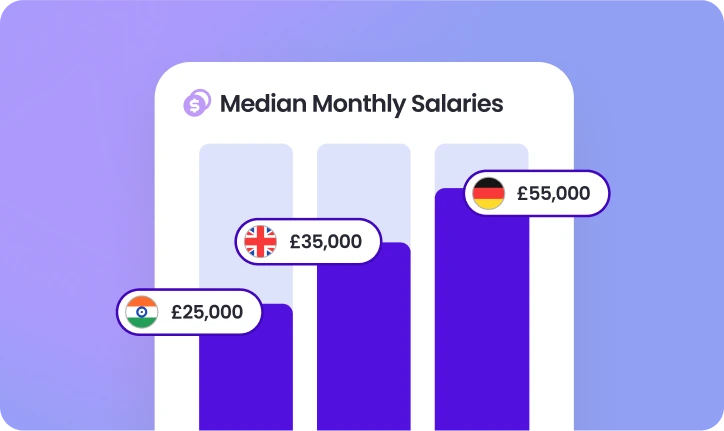
In early 2026, the average gross monthly salary in Saint Vincent and the Grenadines is estimated at around XCD 2,200–2,500 (roughly USD 810–920), which serves as a practical benchmark as you budget for your team. Actual pay varies by experience, sector, and location, with higher wages typically found in financial services, tourism and hospitality management, and professional services such as legal and accounting. You can expect to offer somewhat higher salaries in and around Kingstown and other key economic centers compared with more rural areas when hiring for full-time roles in your company.
Wage levels are shaped by a macroeconomic environment of moderate inflation of roughly 2–4% in late 2025 and into early 2026, which allows you to plan relatively stable annual pay adjustments for your employees. Real GDP growth is projected at about 3–4% for 2025–2026, supported by tourism, construction, and related services, which may gradually increase competition for skilled labor and put upward pressure on salaries. Unemployment is estimated in the high single to low double digits, giving your company access to a reasonably broad pool of talent while still requiring competitive offers to attract and retain qualified staff in specialized roles.

In St Vincent and the Grenadines, you should enforce pre-approval for overtime and maintain accurate records of hours worked to support payroll. In 2026, compliance risk is highest where overtime is not clearly documented or where premiums are applied inconsistently across employees.
- Standard Working Hours: 40 hours per week.
- Overtime Thresholds: Overtime applies beyond the agreed weekly schedule.
- Overtime Pay Rates: Overtime is commonly paid at 1.5 times the regular hourly rate.
- Daily And Weekly Rest Requirements: Weekly rest should be provided and reflected in rosters.
- Night Work Restrictions: Night work should be managed through documented scheduling controls.
- Penalties For Non–Compliance: Exposure includes back pay and enforcement action for wage breaches.

Employment laws in St. Vincent & Grenadines can be intricate, and even unintentional mistakes in contracts, benefits, or termination processes can carry legal and reputational consequences. With an Employer of Record, you gain a local partner that ensures every hire is compliant. The EOR takes care of drafting compliant contracts, processing accurate payroll, managing contributions to statutory benefits, and handling lawful terminations if needed, all according to local employment standards.
This level of protection is especially valuable when expanding into new or unfamiliar regions. Instead of using time and resources to build in-house legal knowledge, you gain immediate access to local expertise. The EOR keeps you ahead of regulatory updates and shields your company from potential compliance gaps, so you can confidently hire and manage employees while minimizing risk. For hiring managers and founders, it's the difference between hiring with uncertainty and building your team on a legally sound foundation.

To run payroll in St. Vincent & Grenadines in 2026, you need to manage PAYE income tax on progressive rates up to 32.5%, calculate and remit NIS social security contributions where employer costs typically add about 5%–7% on top of salary, and keep tight control over monthly filings and payments to the Inland Revenue Department and National Insurance Services. Building a clear payroll calendar, using reliable calculations, and deciding early whether to operate via your own entity or an Employer of Record will keep your team compliant and your employees paid accurately and on time.
- Core Taxes: Withhold PAYE and NIS every pay period and remit them monthly to the IRD and NIS.
- Employer Cost Load: Budget an additional 5%–7% of salary for employer-side contributions and related payroll overheads.
- Processes: Standardise data collection, approvals, and reconciliations for each payroll cycle to reduce errors.
- Governance: Monitor legislative updates from the IRD and NIS so your rates, ceilings, and forms stay current.
- Global Strategy: Use an Employer of Record or specialist payroll partner if you are hiring before setting up a local entity.
When you’re scaling quickly, setting up local payroll systems in each new country slows you down. In St. Vincent & Grenadines, the administrative load can include government registration, benefits management, and accurate, on-time payment delivery. An EOR gives you a plug-and-play solution that handles all of this while your internal team stays focused on growth, not red tape.
Key Ways an EOR Supports Payroll in this country:
- Rapid Payroll Setup: Onboards employees quickly with ready-to-go infrastructure.
- End Administration: Handles salary, tax, and benefits with no extra internal resources.
- Vendor Simplicity: Consolidates payroll across countries for centralized oversight.
- No Entity Required: Operates legally, saving your business the time and resources needed for local incorporation.
Make better business decisions by consolidating global payroll data, while seamlessly syncing your existing payroll operations.
Book a Demo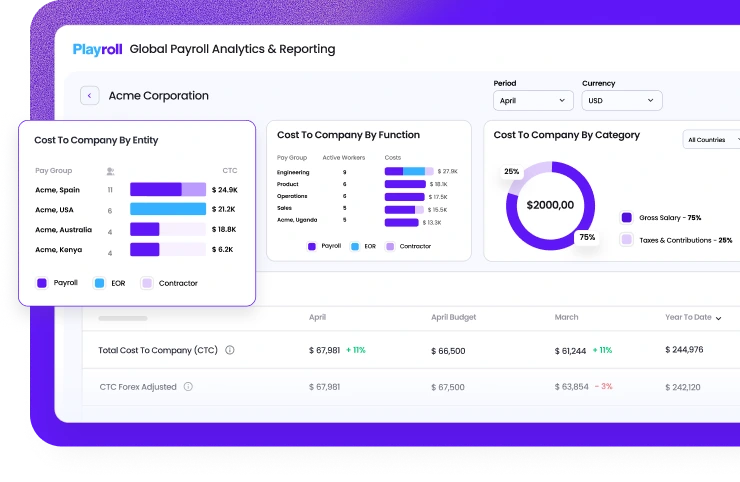
In St. Vincent & Grenadines, foreign nationals who wish to work generally require a Work Permit issued by the Ministry of National Security, often in conjunction with immigration authorities. Depending on nationality and purpose of stay, individuals may also need an entry visa, a Temporary Residence Permit, or permission for short-term business visits before they can legally begin employment.
Employers are expected to sponsor and drive the Work Permit application, demonstrating why a non-national is needed and confirming that local labor is not being displaced unfairly. Employees must provide accurate personal documentation, qualifications, and police and medical clearances where requested. Because rules and processing practices can change, companies should always confirm current requirements with the St. Vincent & Grenadines Immigration Department or a local legal advisor before hiring.
Mandatory Leave Entitlement in St. Vincent & Grenadines
The annual leave entitlement in St. Vincent & Grenadines is 1-3 weeks for a full time worker. These can include public holidays on top of that or within those days, which would otherwise be unpaid.
An Employer of Record (EOR) helps businesses manage annual leave, paid time off (PTO), and local holidays across the globe, including in St. Vincent & Grenadines. By partnering with an EOR, companies ensure full compliance with local labor laws in St. Vincent & Grenadines when it comes to annual leave and time-off management. EOR providers like Playroll offer platforms that simplify tracking and managing employee time off in St. Vincent & Grenadines. By outsourcing this responsibility to Playroll, you can streamline leave management, ensure compliance, and free up time to focus on other business priorities.
Employee benefits in St. Vincent & Grenadines revolve around a small set of statutory protections and a wide space where you can differentiate your offer with voluntary perks. As a global employer, you should think of the legal minimums as the starting point, then layer on supplemental benefits that reflect your company culture and budget.
Because there is no comprehensive social security system, you will not be dealing with payroll social contributions in the way you might in other jurisdictions. Instead, your focus will be on complying with leave and health-and-safety requirements, managing income tax and any private insurance you choose to sponsor, and documenting entitlements clearly in local employment contracts.
- Top mandatory benefits include: paid annual leave, paid public holidays, paid sick leave, maternity leave, and paternity leave.
- Key supplemental benefits include: private health insurance, retirement and savings plans, performance bonuses and allowances, flexible work arrangements, and training and education support.
- Key legal and tax considerations include: compliance with the Labour Act and related regulations, proper calculation and recording of leave and pay, correct withholding and remittance of Pay As You Earn (PAYE) income tax, and accurate treatment of taxable vs non-taxable benefits.
For startups and small teams, managing global employee benefits isn’t just complex, it’s a full-time job. In St. Vincent & Grenadines, understanding what benefits are required, how to deliver them, and how to stay compliant can be overwhelming, especially without local HR expertise. An Employer of Record removes that pressure by taking complete ownership of benefits administration, so you don't have to become an expert in local employment law.
Whether it’s healthcare contributions, pension enrollment, or statutory leave, the EOR ensures everything is delivered accurately and on time. They navigate any country-specific nuances, keep up with legal changes, and ensure each benefit is properly tracked and documented. For founders, that means fewer distractions and more time to focus on growth. Your employees get the security and support they expect from a local employer, and you get to scale your team in St. Vincent & Grenadines without building complex infrastructure or worrying about compliance missteps.
Disclaimer
THIS CONTENT IS FOR INFORMATIONAL PURPOSES ONLY AND DOES NOT CONSTITUTE LEGAL OR TAX ADVICE. You should always consult with and rely on your own legal and/or tax advisor(s). Playroll does not provide legal or tax advice. The information is general and not tailored to a specific company or workforce and does not reflect Playroll’s product delivery in any given jurisdiction. Playroll makes no representations or warranties concerning the accuracy, completeness, or timeliness of this information and shall have no liability arising out of or in connection with it, including any loss caused by use of, or reliance on, the information.

ABOUT THE AUTHOR
Jesse Weisz
Jesse is an experienced R&D Analyst at Playroll, a leading Employer of Record (EOR) provider. With a strong background in data analysis and market research, Jesse specializes in identifying emerging trends and driving innovation in global HR solutions. She is an all-rounder, critical thinker and success-seeker (often inextricably linked to being a late-night tea drinker).

.svg)


.png)

















.webp)




.svg)