.svg)
.svg)

.svg)


.svg)

.svg)
.svg)
.svg)
.svg)
.svg)
.svg)
.svg)
.svg)
Minimum Wage: Somalia does not have a national minimum wage; wages are determined by individual agreements or customary practices.
Working Hours: Standard working week is 48 hours with 8-hour workdays; overtime is limited and compensated at 1.25 times the regular rate, with 1.5 times on holidays.
Payroll Taxes: In Somalia, the formal tax system remains limited due to ongoing political challenges, with employer contributions varying widely across regions.
Average Salary: The average gross monthly salary in Somalia is approximately SOS 1,200,000–1,350,000 (about USD 2,100–2,350) as of early 2026.
Hiring independent contractors has boomed in popularity because of the cost savings and flexibility they offer. It can be a great option if you require niche skills or short-term project support. Contractors allow businesses to access specialized skills quickly, without the time and cost of setting up a local entity.
However, it’s important to know the limits of this model: contractors are not a substitute for full-time employees. Relying on them for ongoing, long-term roles can create serious compliance risks, including employee misclassification, which can lead to fines, back taxes, and reputational damage.
Playroll’s contractor management solutions make it simple to compliantly engage, onboard, and pay contractors around the world. We provide clear visibility into agreements, streamline payments, and reduce compliance risks – so you can focus on getting the work done. And when you’re ready to take the next step, we can help seamlessly convert contractors into full-time employees through our global Employer of Record service.
From compliant contracts to competitive benefits, Playroll’s EOR services keep you aligned with local labor laws and regulations, safeguarding your business, so you can focus on growth.
Book a Demo
Businesses can only operate smoothly in Somalia if they comply with local labor laws including drafting compliant employment contract agreements and meeting taxation and payroll obligations. Learn more about the employment laws and regulations in Somalia below, to avoid any compliance issues.
Onboarding Process
We can help you get a new employee started in Somalia quickly, with a minimum onboarding time of just 1-2 working days. The timeline starts once the employee submits all required information onto the Playroll platform and completes any necessary local authority registrations.
For non-nationals, the Right to Work assessment (if applicable) may add up to three extra days. Additional time may be needed for follow-ups on this assessment.
In Somalia, the average gross monthly salary in early 2026 is estimated at around SOS 1,200,000–1,350,000 (roughly USD 2,100–2,350), which serves as a practical benchmark as you budget for your team. Actual pay varies significantly by experience, industry, and location, with higher salaries typically found in information technology, finance and banking, and energy and utilities. Wages in major cities like Mogadishu, Hargeisa, and Bosaso tend to be above the national average, so your company may need to offer higher pay in these urban centres to attract and retain qualified employees.
As you plan compensation for your workforce, you should factor in a high and volatile inflation environment, which in late 2025 and early 2026 is estimated to be in the range of 5–8 percent annually. Real GDP growth is projected to be moderate at around 2.5–3.5 percent per year over 2025–2026, while broad underemployment and unemployment together are estimated in the low double digits, giving you access to a relatively large pool of jobseekers for your openings. These macroeconomic conditions mean you can expect ongoing pressure for nominal wage increases to protect your employees’ purchasing power, while still operating in a labour market where talent is generally available.

In Somalia, you should keep overtime approvals formal and maintain reliable attendance records, especially where operations require extended hours. In 2026, enforcement and dispute risk is highest where employers cannot demonstrate how overtime was authorized, tracked, and paid.
- Standard Working Hours: Commonly 48 hours per week.
- Overtime Thresholds: Overtime applies beyond the normal weekly schedule.
- Overtime Pay Rates: Overtime should be compensated at a premium above the regular hourly rate.
- Daily And Weekly Rest Requirements: Weekly rest should be scheduled and protected.
- Night Work Restrictions: Night work should be managed through documented safeguards.
- Penalties For Non–Compliance: Exposure includes wage recovery claims and enforcement action where applicable.

Somalia currently has no national minimum wage, reflecting its informal economic structure. Employers must focus on compliance with other labour laws and tax obligations.
- The current rate is No Minimum Wage in Somali Shilling and USD.
- Pay frequency is not applicable due to the absence of a statutory rate.
- No effective date for a minimum wage as it doesn't exist.
- No specific body sets the minimum wage in Somalia.
- There is no formal review cycle for minimum wage.
- Key exemptions include informal sector roles, which are market-driven.
- Penalties for non-compliance are not clearly defined but can include fines.
- Employer contribution rates are not specified due to the informal economy.
Global expansion shouldn't mean losing time to paperwork or dealing with complicated, country-specific HR systems. An Employer of Record helps you keep your focus on talent by handling the operational side of employment in Somalia. That includes onboarding, contract management, payroll processing, and statutory compliance, all aligned with local laws and best practices. The EOR guarantees that employees are legally employed and properly supported from day one.
This streamlined setup allows you to prioritize recruiting the best people and integrating them into your company culture. Your team stays lean, and you avoid getting caught up in the details of local processes or shifting regulations. For founders, global hiring managers, or HR teams working across borders, an EOR multiplies your impact, reducing admin time, preventing errors, and helping ensure that new hires have a smooth experience from the get-go.

To run payroll in Somalia in 2026, you need to manage progressive personal income tax withholding, any contractual pension or social protection contributions, and local payroll levies while keeping accurate records and meeting monthly and annual deadlines. Typical employer contributions add roughly 7% - 15% on top of base salaries, so budgeting for this total cost of employment is essential. Aligning your contracts, payroll system, and compliance calendar with federal and state-level requirements will help your team pay employees accurately and avoid penalties.
- Know Your Structure: Decide between using your own Somali entity or an Employer of Record before hiring and running payroll.
- Map Tax Obligations: Confirm which federal or state authority taxes each employee and what income tax and local levies apply.
- Budget Employer Costs: Factor in an additional 7% - 15% of salary for employer-side contributions and benefits when planning headcount.
- Standardize Processes: Use consistent monthly payroll cycles, clear payslips, and documented approval workflows to reduce errors.
- Track Deadlines: Maintain a calendar for monthly withholdings, pension payments, and annual summaries so filings and payments are always on time.
Hiring in Somalia means taking on local payroll obligations, which often include unique tax rates, contribution rules, and strict documentation. If you're not familiar with the system, or don't have a local entity, it’s easy to make mistakes. That’s where an Employer of Record ccomes in. The EOR manages payroll for your team on your behalf, ensuring every process is accurate, timely, and legally compliant.
Key Ways an EOR Supports Payroll in Somalia:
- Full Legal Compliance: Ensures all payments, deductions, and filings meet country-specific requirements.
- Payroll Setup & Processing: Handles salary calculations, tax withholdings, and local reporting obligations.
- Statutory Benefit Contributions: Pays into required social programs and manages country-mandated benefits.
- Employee Documentation: Generates compliant contracts and manages hiring and termination paperwork.
- Local Currency Payouts: Delivers salaries in local currency, avoiding delays or exchange rate issues for employees.
Make better business decisions by consolidating global payroll data, while seamlessly syncing your existing payroll operations.
Book a Demo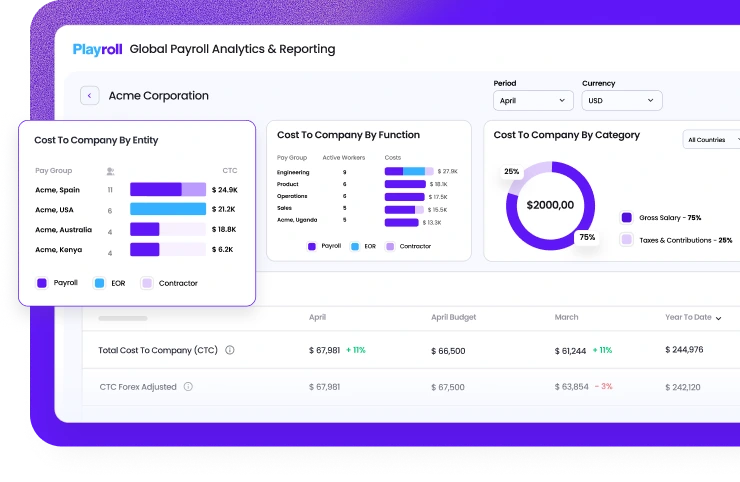
Somalia’s immigration framework is still developing, and formal work authorization is typically handled through a combination of entry visas (such as a Somali business visa or entry visa) and locally issued work or residence permissions coordinated with the Ministry of Interior, Federal Immigration and Naturalization Directorate, and in some cases regional authorities. Foreign nationals usually enter on a visa that matches the purpose of stay (for example, business or NGO work) and then obtain or regularize their work and residence status once in the country.
In practice, employers and international organizations often work closely with local legal or compliance partners to secure a work endorsement or residence permit linked to the specific employer, role, and location. Requirements and procedures can differ between federal and regional administrations, so it is important to confirm the latest rules directly with Somali authorities or a qualified local advisor before assigning staff to Somalia.
The annual leave entitlement in Somalia is 15 days for a full time worker after one year of continuous service. These can include public holidays on top of that or within those days, which would otherwise be unpaid.
An Employer of Record (EOR) helps businesses manage annual leave, paid time off (PTO), and local holidays across the globe, including in Somalia. By partnering with an EOR, companies ensure full compliance with local labor laws in Somalia when it comes to annual leave and time-off management. EOR providers like Playroll offer platforms that simplify tracking and managing employee time off in Somalia. By outsourcing this responsibility to Playroll, you can streamline leave management, ensure compliance, and free up time to focus on other business priorities.
Public Holidays in Somalia
Somalia observes 11 national public holidays, with several dates, such as Eid al-Fitr and Islamic New Year, varying each year according to the Islamic lunar calendar.
Employee benefits in Somalia sit within a relatively light but evolving legal framework, with many obligations derived from the Somali Labour Code of 1972, subsequent regulations, and common market practice. As an international employer, you should assume that core protections such as working time limits, paid annual leave, public holidays, sick leave, maternity protections, and end-of-service entitlements apply, and then build a more comprehensive package on top to remain competitive.
Because enforcement and interpretation can vary across regions and sectors, especially between the public and private sectors and between formal and informal employment, you should always confirm the latest local practice with an in-country advisor. For planning purposes, though, you can treat annual leave, public holidays, maternity leave, basic sick leave and end-of-service indemnity as the core "benefits" foundation, and then layer on voluntary health cover, allowances, and flexible policies to attract and retain talent.
- Top mandatory benefits typically include paid annual leave, paid public holidays, maternity leave and maternity protection, basic sick leave, and end-of-service indemnity or service-related benefits where applicable.
- Top supplemental benefits that help you stand out include private health insurance, transportation or housing allowances, and performance-based bonuses or variable pay.
- Key legal and tax considerations include clear written employment contracts, correct classification of employees vs contractors, proper payroll records for leave and allowances, and basic income tax and withholding compliance where applicable in Somalia.
When hiring across multiple countries, maintaining consistency in how you deliver employee benefits quickly gets tricky. Each country, including Somalia, has its own legal rules, cultural norms, and contribution systems. An Employer of Record helps you strike the right balance between global structure and local compliance. They take over the complexity of delivering benefits that are aligned with Somalia’s legal requirements and competitive with local market expectations.
From ensuring statutory benefits are in place to managing local onboarding timelines and enrollment systems, the EOR provides a seamless experience for both employer and employee. This makes it easier to grow your team across borders without reinventing your benefits process in each new location. You stay in control of your overall benefits strategy, while the EOR takes care of executing it in a way that works legally and culturally in Somalia. It’s a smarter way to scale benefits globally without losing local relevance.
Disclaimer
THIS CONTENT IS FOR INFORMATIONAL PURPOSES ONLY AND DOES NOT CONSTITUTE LEGAL OR TAX ADVICE. You should always consult with and rely on your own legal and/or tax advisor(s). Playroll does not provide legal or tax advice. The information is general and not tailored to a specific company or workforce and does not reflect Playroll’s product delivery in any given jurisdiction. Playroll makes no representations or warranties concerning the accuracy, completeness, or timeliness of this information and shall have no liability arising out of or in connection with it, including any loss caused by use of, or reliance on, the information.

ABOUT THE AUTHOR
Jesse Weisz
Jesse is an experienced R&D Analyst at Playroll, a leading Employer of Record (EOR) provider. With a strong background in data analysis and market research, Jesse specializes in identifying emerging trends and driving innovation in global HR solutions. She is an all-rounder, critical thinker and success-seeker (often inextricably linked to being a late-night tea drinker).

.svg)


.png)

















.webp)


.svg)