.svg)
.svg)

.svg)


.svg)

.svg)
.svg)
.svg)
.svg)
.svg)
.svg)
.svg)
.svg)
Minimum Wage: The statutory minimum wage in Puerto Rico is USD 8.50 per hour and applies across all sectors, reviewed periodically.
Working Hours: In Puerto Rico, the standard work week is 40 hours, usually 8 hours per day; any work over 8 hours in a day or 40 hours in a week must be paid at 150% (time-and-a-half).
Payroll Taxes: In Puerto Rico, employers follow the US federal tax system plus local taxes, contributing 6.2% for Social Security, 1.45% for Medicare, plus unemployment insurance at rates that may differ from mainland US.
Average Salary: The average gross monthly salary in Puerto Rico is approximately USD 2,400–2,600 (about USD 2,400–2,600) as of early 2026.
Hiring independent contractors has boomed in popularity because of the cost savings and flexibility they offer. It can be a great option if you require niche skills or short-term project support. Contractors allow businesses to access specialized skills quickly, without the time and cost of setting up a local entity.
However, it’s important to know the limits of this model: contractors are not a substitute for full-time employees. Relying on them for ongoing, long-term roles can create serious compliance risks, including employee misclassification, which can lead to fines, back taxes, and reputational damage.
Playroll’s contractor management solutions make it simple to compliantly engage, onboard, and pay contractors around the world. We provide clear visibility into agreements, streamline payments, and reduce compliance risks – so you can focus on getting the work done. And when you’re ready to take the next step, we can help seamlessly convert contractors into full-time employees through our global Employer of Record service.
From compliant contracts to competitive benefits, Playroll’s EOR services keep you aligned with local labor laws and regulations, safeguarding your business, so you can focus on growth.
Book a Demo
Businesses can only operate smoothly in Puerto Rico if they comply with local labor laws including drafting compliant employment contract agreements and meeting taxation and payroll obligations. Learn more about the employment laws and regulations in Puerto Rico below, to avoid any compliance issues.
Onboarding Process
We can help you get a new employee started in Puerto Rico quickly, with a minimum onboarding time of just 1-2 working days. The timeline starts once the employee submits all required information onto the Playroll platform and completes any necessary local authority registrations.
For non-nationals, the Right to Work assessment (if applicable) may add up to three extra days. Additional time may be needed for follow-ups on this assessment.
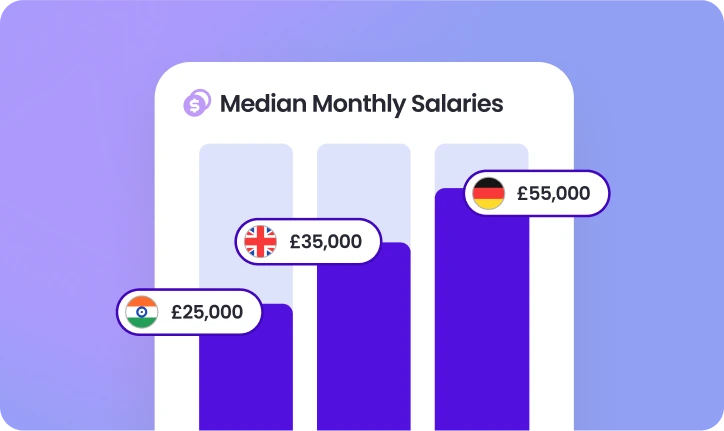
In early 2026, the average gross monthly salary in Puerto Rico is around USD 2,400–2,600, which you can use as a benchmark as you budget for your team. Actual pay varies significantly by experience level, industry, and location, with sectors such as information technology, finance and banking, and pharmaceuticals typically offering higher wages, so your company may need to offer above-average pay in these areas. Wages in major urban centers like San Juan, Bayamón, and Carolina tend to be higher than in smaller municipalities, which will influence what you pay your employees if your workforce is concentrated in these cities.
Macroeconomic conditions in Puerto Rico also shape wage expectations, with recent inflation running at roughly 2–3 percent annually in late 2025 and early 2026, which allows you to plan relatively moderate salary adjustments. Real GDP growth is projected to be modest, at about 1–2 percent per year over 2025–2026, suggesting a gradually expanding economy that can support steady but not rapid wage growth for your company. Unemployment remains elevated at around 6–8 percent, giving you access to a relatively broad pool of talent for your openings while still requiring competitive offers to attract and retain skilled employees.

"
How Playroll Simplifies Employer Responsibilities And Compliance
Expanding your workforce across international borders is an exciting step, but it can be challenging to keep up with ever-changing local labor laws and regulations in different countries. That’s the advantage of using an Employer of Record like Playroll.
- Scale Your Global Team: Legally hire and swiftly onboard new hires in 180+ regions without the red tape by offloading HR administration to Playroll. This helps you explore new markets faster and stay focused on growth.
- Stay Compliant: Built-in compliance checks and vetted contracts help ensure your agreements meet local legal requirements for working hours, overtime regulations, and more. This reduces risk as rules change across jurisdictions.
- Pay Your Team Accurately: Pay international employees and global contractors on time, every time, while centralizing your global payroll processes. This supports consistent, reliable payroll operations as you scale.
"

The current minimum wage in Puerto Rico is USD 10.50 per hour, set by the Departamento del Trabajo y Recursos Humanos. Employers must ensure compliance with this rate and related obligations.
- The current minimum wage is USD 10.50 per hour.
- Pay frequency is hourly.
- The effective date is 1 July 2024.
- The wage is set by the Departamento del Trabajo y Recursos Humanos.
- The review cycle considers inflation and cost-of-living factors.
- Key exemptions include small businesses and apprenticeships.
- Penalties for non-compliance range from USD 500 to USD 5,000 per violation.
- Employer contributions include 0.60% to the Fondo de Incapacidad.
Global expansion shouldn't mean losing time to paperwork or dealing with complicated, country-specific HR systems. An Employer of Record helps you keep your focus on talent by handling the operational side of employment in Puerto Rico. That includes onboarding, contract management, payroll processing, and statutory compliance, all aligned with local laws and best practices. The EOR guarantees that employees are legally employed and properly supported from day one.
This streamlined setup allows you to prioritize recruiting the best people and integrating them into your company culture. Your team stays lean, and you avoid getting caught up in the details of local processes or shifting regulations. For founders, global hiring managers, or HR teams working across borders, an EOR multiplies your impact, reducing admin time, preventing errors, and helping ensure that new hires have a smooth experience from the get-go.

Employers in Puerto Rico take on several mandatory payroll obligations beyond simply withholding taxes from employees. These requirements support compliance with both local and federal laws, and together they add a meaningful cost on top of employee wages. Here’s a clear, skimmable overview:
- Income tax withholding: Employers must withhold Puerto Rico income tax, submit periodic filings to Hacienda, and complete an annual reconciliation each January.
- FICA matching: Employers match employee contributions – 6.2% Social Security and 1.45% Medicare.
- Unemployment taxes: Includes FUTA on the first $7,000 of wages and local unemployment/disability insurance based on experience rating.
- Other potential contributions: Workers’ compensation premiums and municipal taxes may apply depending on business type and location.
- Overall cost impact: These statutory contributions usually add 11.5%–14% to an employee’s gross salary.
Puerto Rico’s general minimum wage is $10.50 per hour, effective since July 1, 2024, and unchanged for 2025. No 2026 increase has been announced, though the Minimum Wage Review Commission may issue future adjustments. Exemptions apply to certain categories such as tipped, youth, or federally covered workers.
Using payroll management software can help employers streamline compliance and avoid costly penalties.
Hiring in Puerto Rico means taking on local payroll obligations, which often include unique tax rates, contribution rules, and strict documentation. If you're not familiar with the system, or don't have a local entity, it’s easy to make mistakes. That’s where an Employer of Record ccomes in. The EOR manages payroll for your team on your behalf, ensuring every process is accurate, timely, and legally compliant.
Key Ways an EOR Supports Payroll in Puerto Rico:
- Full Legal Compliance: Ensures all payments, deductions, and filings meet country-specific requirements.
- Payroll Setup & Processing: Handles salary calculations, tax withholdings, and local reporting obligations.
- Statutory Benefit Contributions: Pays into required social programs and manages country-mandated benefits.
- Employee Documentation: Generates compliant contracts and manages hiring and termination paperwork.
- Local Currency Payouts: Delivers salaries in local currency, avoiding delays or exchange rate issues for employees.
Make better business decisions by consolidating global payroll data, while seamlessly syncing your existing payroll operations.
Book a Demo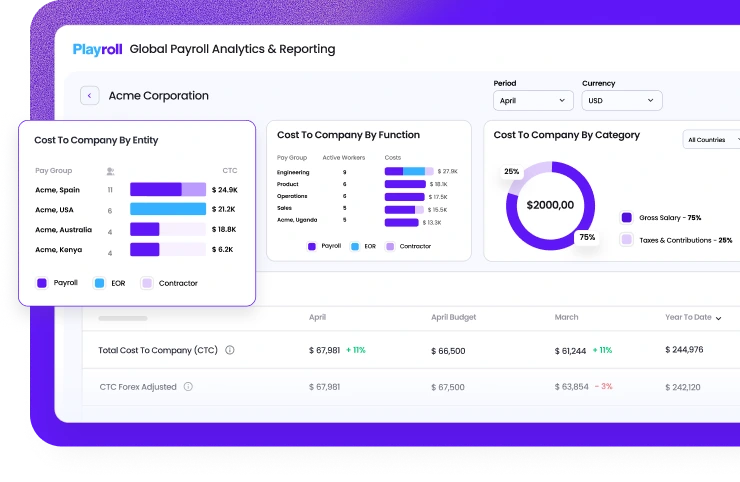
Puerto Rico is an unincorporated territory of the United States, so foreign nationals who are not U.S. citizens or U.S. permanent residents generally follow U.S. federal immigration rules to live and work there. This means that common U.S. work-authorizing classifications such as H-1B specialty occupation workers, L-1 intracompany transferees, E-2 treaty investors, O-1 individuals with extraordinary ability, and employment-based immigrant visas (EB-1, EB-2, EB-3) are used for assignments in Puerto Rico.
Employers hiring foreign talent for roles physically based in Puerto Rico typically sponsor the worker through a U.S. work visa or employment-based green card process, and the employee must maintain valid status throughout their stay. Local labor, tax, and registration rules in Puerto Rico apply in addition to U.S. immigration law, so companies should coordinate closely with immigration counsel and local compliance experts when planning international hires.
Mandatory Leave Entitlement in Puerto Rico
The annual leave entitlement in Puerto Rico is 15 days for a full time worker. These can include public holidays on top of that or within those days, which would otherwise be unpaid.
An Employer of Record (EOR) helps businesses manage annual leave, paid time off (PTO), and local holidays across the globe, including in Puerto Rico. By partnering with an EOR, companies ensure full compliance with local labor laws in Puerto Rico when it comes to annual leave and time-off management. EOR providers like Playroll offer platforms that simplify tracking and managing employee time off in Puerto Rico. By outsourcing this responsibility to Playroll, you can streamline leave management, ensure compliance, and free up time to focus on other business priorities.
Public Holidays in Puerto Rico
Puerto Rico observes 19 national public holidays, with certain dates, such as Memorial Day and Thanksgiving, varying each year based on the U.S. federal calendar.
Employee benefits in Puerto Rico combine robust statutory protections with a growing market for supplemental perks. Your company will need to navigate generous leave entitlements, compulsory insurance, and statutory bonuses, while deciding which additional benefits to offer to stay competitive in the local talent market.
Because Puerto Rico follows its own labor statutes in addition to U.S. federal law, you should treat it as a distinct jurisdiction for benefits design and compliance. Investing time up front to understand mandatory benefits, tax treatment, and common market practices will help you budget accurately and avoid penalties.
- Top mandatory benefits: statutory vacation leave, statutory sick leave, Christmas bonus (where eligible), Social Security and Medicare contributions, and workers' compensation coverage
- Top supplemental benefits: private health insurance, additional paid time off beyond statutory minimums, and retirement or savings plans
- Key legal and tax considerations: Puerto Rico–specific labor laws apply alongside U.S. federal laws, employer contributions to Social Security and Medicare are required, certain benefits like group health coverage and qualified retirement plans may receive favorable tax treatment, and accurate recordkeeping is critical for audits and to verify eligibility for leave and bonuses
When hiring across multiple countries, maintaining consistency in how you deliver employee benefits quickly gets tricky. Each country, including Puerto Rico, has its own legal rules, cultural norms, and contribution systems. An Employer of Record helps you strike the right balance between global structure and local compliance. They take over the complexity of delivering benefits that are aligned with Puerto Rico’s legal requirements and competitive with local market expectations.
From ensuring statutory benefits are in place to managing local onboarding timelines and enrollment systems, the EOR provides a seamless experience for both employer and employee. This makes it easier to grow your team across borders without reinventing your benefits process in each new location. You stay in control of your overall benefits strategy, while the EOR takes care of executing it in a way that works legally and culturally in Puerto Rico. It’s a smarter way to scale benefits globally without losing local relevance.
Disclaimer
THIS CONTENT IS FOR INFORMATIONAL PURPOSES ONLY AND DOES NOT CONSTITUTE LEGAL OR TAX ADVICE. You should always consult with and rely on your own legal and/or tax advisor(s). Playroll does not provide legal or tax advice. The information is general and not tailored to a specific company or workforce and does not reflect Playroll’s product delivery in any given jurisdiction. Playroll makes no representations or warranties concerning the accuracy, completeness, or timeliness of this information and shall have no liability arising out of or in connection with it, including any loss caused by use of, or reliance on, the information.

ABOUT THE AUTHOR
Jesse Weisz
Jesse is an experienced R&D Analyst at Playroll, a leading Employer of Record (EOR) provider. With a strong background in data analysis and market research, Jesse specializes in identifying emerging trends and driving innovation in global HR solutions. She is an all-rounder, critical thinker and success-seeker (often inextricably linked to being a late-night tea drinker).

.svg)


.png)

















.webp)


.svg)