.svg)
.svg)

.svg)


.svg)

.svg)
.svg)
.svg)
.svg)
.svg)
.svg)
.svg)
.svg)
Minimum Wage: The statutory minimum wage in Haiti is HTG 500 per day for export-oriented industries.
Working Hours: Legal working week is 48 hours with 8-hour workdays; overtime is compensated at 1.5 times the regular rate and limited to 80 hours per quarter.
Payroll Taxes: In Haiti, employers are required to make payroll contributions that fund social security, health care, and other statutory employee benefits.
Average Salary: The average gross monthly salary in Haiti is approximately HTG 35,000–40,000 (about USD 260–300) as of early 2026.
Hiring independent contractors has boomed in popularity because of the cost savings and flexibility they offer. It can be a great option if you require niche skills or short-term project support. Contractors allow businesses to access specialized skills quickly, without the time and cost of setting up a local entity.
However, it’s important to know the limits of this model: contractors are not a substitute for full-time employees. Relying on them for ongoing, long-term roles can create serious compliance risks, including employee misclassification, which can lead to fines, back taxes, and reputational damage.
Playroll’s contractor management solutions make it simple to compliantly engage, onboard, and pay contractors around the world. We provide clear visibility into agreements, streamline payments, and reduce compliance risks – so you can focus on getting the work done. And when you’re ready to take the next step, we can help seamlessly convert contractors into full-time employees through our global Employer of Record service.
From compliant contracts to competitive benefits, Playroll’s EOR services keep you aligned with local labor laws and regulations, safeguarding your business, so you can focus on growth.
Book a Demo
Businesses can only operate smoothly in Haiti if they comply with local labor laws including drafting compliant employment contract agreements and meeting taxation and payroll obligations. Learn more about the employment laws and regulations in Haiti below, to avoid any compliance issues.
Onboarding Process
We can help you get a new employee started in Haiti quickly, with a minimum onboarding time of just 1-2 working days. The timeline starts once the employee submits all required information onto the Playroll platform and completes any necessary local authority registrations. For non-nationals, the Right to Work assessment (if applicable) may add up to three extra days. Additional time may be needed for follow-ups on this assessment.
In early 2026, the average gross monthly salary in Haiti is estimated at around HTG 35,000–40,000 (roughly USD 260–300), which serves as a practical benchmark as you budget for your team. Actual pay varies significantly by experience, sector, and location, with higher wages typically found in information technology, banking and financial services, and telecommunications. You can expect to offer higher salaries in major urban centers such as Port‑au‑Prince and Cap‑Haïtien, where competition for skilled employees is stronger and living costs are higher.
Macroeconomic conditions in Haiti will influence how you plan compensation for your workforce, with annual inflation still elevated at roughly 15–20% in late 2025 and early 2026. Real GDP growth is projected to remain modest, around 1–2% per year, reflecting ongoing structural and security challenges that can affect business activity and hiring plans. Unemployment is high, estimated in the 30–40% range, which means you have access to a broad pool of job seekers, but you may need to offer competitive and reliable pay to attract and retain qualified employees in key roles.

Haiti
In Haiti, you should treat overtime as the exception, keep daily and weekly totals visible to managers, and ensure payroll can clearly justify every premium payment. In 2026, enforcement focuses on whether employers exceed the legal workweek, underpay overtime, or fail to provide the required weekly rest day.
- Standard Working Hours: 48 hours per week, typically 8 hours per day over 6 days.
- Overtime Thresholds: Overtime applies beyond 48 hours per week.
- Overtime Pay Rates: Overtime is paid at 1.5 times the regular hourly wage.
- Daily And Weekly Rest Requirements: Weekly rest is typically 1 day per week.
- Night Work Restrictions: Night work should be limited and treated as higher-risk scheduling with appropriate safeguards.
- Penalties For Non–Compliance: Exposure includes back pay for unpaid overtime and enforcement action.

In 2026, Haiti's minimum wage is set at HTG 770.00 per day, established by the Ministère des Affaires Sociales et du Travail. Compliance with this rate is crucial for employers.
- The current minimum wage is HTG 770.00 per day (USD 7.70).
- Pay frequency is daily.
- The effective date is 21 February 2022.
- Set by the Ministère des Affaires Sociales et du Travail.
- Reviewed periodically based on inflation and cost-of-living.
- Key exemptions include apprentices and small businesses with formal approval.
- Penalties range from HTG 5,000 to HTG 50,000 per violation.
- Employer contributions include 6% social security and 3% health insurance.
Growing your team in Haiti is exciting, but it’s not without challenges. Local labor laws are often nuanced, and hiring without the right legal structure or processes can lead to misclassification, non-compliance penalties, or disputes. An Employer of Record removes that risk by acting as the legal employer on your behalf, taking full responsibility for compliance, contracts, payroll, and employee benefits.
This gives you the freedom to scale at your own pace, whether you're adding one employee or building out an entire function, without the burden of setting up and managing a local entity. You remain in control of day-to-day responsibilities and performance, while the EOR ensures every hire is legally protected and properly supported. It's a strategic way to expand globally without spreading your internal team too thin or exposing your business to legal liabilities in unfamiliar markets.

For employers in Haiti, key payroll and employment tax obligations include monthly contributions to social security, health/maternity insurance, accident-insurance, a payroll levy, and progressive PAYE based on income. Employers must accurately calculate, withhold, and file these taxes monthly and conduct annual PAYE reconciliation. Late or incorrect payments can trigger fines.
Using payroll management systems or EOR services like Playroll can consolidate compliance tasks, mitigate risk, and help businesses stay current with Haitian regulations.
Employees expect to be paid accurately, on time, and in full compliance with local standards. When you're hiring in Haiti, providing a smooth payroll experience is critical to retention and trust. An Employer of Record ensures that employees receive what they’re owed, without errors, delays, or confusion about taxes or benefits.
Key Ways an EOR Supports Payroll in Haiti:
- Reliable Salary Payments: Ensures employees are paid promptly in local currency.
- Clear Payslips & Documentation: Provides employees with compliant, understandable records.
- Correct Benefits & Contributions: Delivers legally mandated contributions and any changes in compensation, like bonuses.
- Payroll Setup & Processing: Handles salary calculations, tax withholdings, and local reporting obligations.
- Boosts Employee Confidence: Builds trust with compliant, consistent payroll operations.
Make better business decisions by consolidating global payroll data, while seamlessly syncing your existing payroll operations.
Book a Demo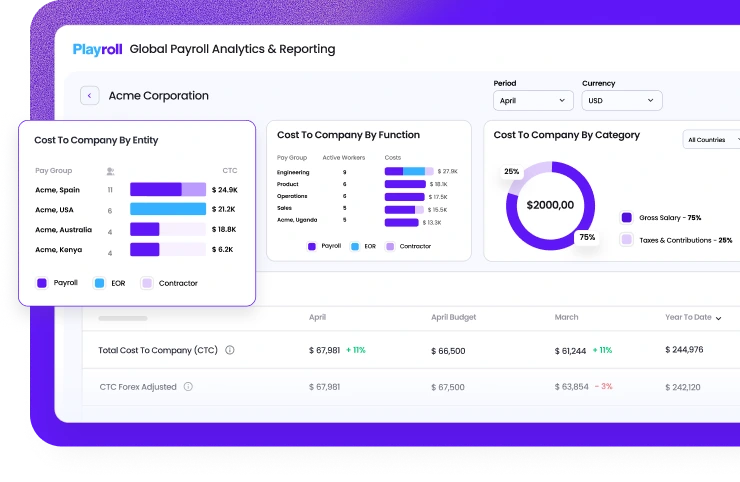
In Haiti, foreign nationals who wish to work generally need both the correct immigration status and authorization from the Ministry of Social Affairs and Labor (Ministère des Affaires Sociales et du Travail, MAST). Long-term employees typically enter on an appropriate entry visa (such as a business or long-stay visa where applicable) and then obtain a Haitian work permit (permis de travail) and, in some cases, a residence permit (carte de résident) to remain in the country lawfully.
Employers are expected to justify the need for hiring a foreign worker, demonstrate that the business is duly registered and compliant with Haitian law, and coordinate the filing of the work permit application with MAST and other relevant authorities. Processing times and exact requirements can vary depending on the applicant’s nationality, role, and supporting documentation, so companies should plan ahead and work closely with local counsel or an in-country partner.
Mandatory Leave Entitlement in Haiti
The annual leave entitlement in Haiti is 15 days for a full time worker after one year of continuous service. These can include public holidays on top of that or within those days, which would otherwise be unpaid. Annual vacation leave increases with years of service: 18 days after 3 years and 21 days after 5 years.
An Employer of Record (EOR) helps businesses manage annual leave, paid time off (PTO), and local holidays across the globe, including in Haiti. By partnering with an EOR, companies ensure full compliance with local labor laws in Haiti when it comes to annual leave and time-off management. EOR providers like Playroll offer platforms that simplify tracking and managing employee time off in Haiti. By outsourcing this responsibility to Playroll, you can streamline leave management, ensure compliance, and free up time to focus on other business priorities.
Employee benefits in Haiti combine a set of legally required protections with a growing range of market‑driven perks. To hire successfully, your company needs to understand the core social security and leave entitlements, then decide which additional benefits will help you compete for talent in a relatively small but dynamic labor market.
Local employees are very aware of their statutory rights, especially around paid leave, public holidays, and social security coverage. If you only meet the legal minimums, you may struggle to attract experienced professionals, so most international employers layer on supplemental health cover, meal or transport support, and clear leave policies that exceed the baseline requirements.
- Top mandatory benefits in Haiti include: affiliation to the national social security and workplace injury system (OFATMA/ONA), paid annual leave, paid public holidays, and maternity protection.
- Other important mandatory elements include: paid sick leave (subject to conditions) and employer contributions to family and medical insurance through the public regime.
- Top supplemental benefits in Haiti include: private medical insurance and clinic access, meal or transport allowances, and performance‑based bonuses or 13th‑month pay.
- Key legal and tax considerations include: correct registration and payment of social security contributions, proper documentation of benefits for payroll and tax reporting, and ensuring benefits policies are applied consistently to avoid claims of discrimination under Haitian labor law.
In Haiti, failing to provide the correct employee benefits can have serious consequences. Mistakes in benefits administration may result in fines and harm your reputation as an employer. An Employer of Record ensures statutory benefits and leave are handled correctly, every time, and provides comprehensive options for extra perks to reward your team.
Beyond just avoiding legal issues, a well-managed benefits program builds trust with your employees. An EOR ensures benefits are set up quickly during onboarding, updated when employee status changes, and fully compliant with national regulations. They also manage communication with employees, so there’s no confusion around what’s offered and how to access it. This combination of legal compliance and positive employee experience is hard to replicate without local infrastructure. With an EOR, you can offer peace of mind to your team (and to yourself) knowing that your benefits program in Haiti is running as it should.
Disclaimer
THIS CONTENT IS FOR INFORMATIONAL PURPOSES ONLY AND DOES NOT CONSTITUTE LEGAL OR TAX ADVICE. You should always consult with and rely on your own legal and/or tax advisor(s). Playroll does not provide legal or tax advice. The information is general and not tailored to a specific company or workforce and does not reflect Playroll’s product delivery in any given jurisdiction. Playroll makes no representations or warranties concerning the accuracy, completeness, or timeliness of this information and shall have no liability arising out of or in connection with it, including any loss caused by use of, or reliance on, the information.

ABOUT THE AUTHOR
Jesse Weisz
Jesse is an experienced R&D Analyst at Playroll, a leading Employer of Record (EOR) provider. With a strong background in data analysis and market research, Jesse specializes in identifying emerging trends and driving innovation in global HR solutions. She is an all-rounder, critical thinker and success-seeker (often inextricably linked to being a late-night tea drinker).

.svg)


.png)

















.webp)


.svg)