.svg)
.svg)

.svg)


.svg)

.svg)
.svg)
.svg)
.svg)
.svg)
.svg)
.svg)
.svg)
Before you even start thinking about hiring employees in Colombia, there are a couple of things you need to know. Colombia’s labor landscape is a highly regulated, employee-protective system under the Código Sustantivo del Trabajo. From your very first hire, you’re expected to issue a written employment contract (in Spanish), apply the national minimum wage, withhold and remit income tax and social security contributions to DIAN, pay mandatory bonuses (prima paid twice yearly, cesantías severance savings plus interest), and register for labor ministry obligations. When it comes to dismissals, strict rules apply, and improper terminations can quickly lead to costly claims.
If you don’t have a local entity, the compliance burden can escalate quickly with permanent establishment tax risks and layered social security rules. In this guide, we’ll walk you through exactly what you need to set up payroll correctly, structure contracts properly, manage statutory leave and benefits, and avoid the early mistakes that lead to penalties or employee claims.
Minimum Wage: Colombia’s statutory minimum wage is COP 1,750,905 per month as of 2026, reflecting a significant year-over-year increase aimed at supporting workers amid rising living costs.
Working Hours: Employees are typically expected to work up to 48 hours in a standard week, which is equivalent to eight hours per day in a six-day work week.
Payroll Taxes: In Colombia, employers are required to make payroll contributions that fund social security, health care, and other statutory employee benefits.
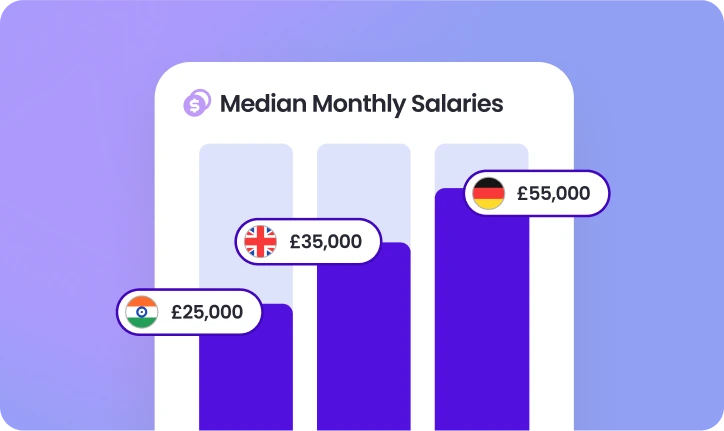
Average Salary: The average gross monthly salary in Colombia is approximately COP 2,900,000–3,100,000 (about USD 730–780) as of early 2026.
Hiring in Colombia for the first time can be overwhelming, especially when navigating unfamiliar employment laws. So, how do you get started? There are three main ways to hire in Colombia: set up your own legal entity, hire independent contractors, or use an EOR service to handle payroll and global HR for you. Below, we’ll walk you through each option in detail.
1. Set Up A Local Entity In Colombia
Setting up a local entity in Colombia is the traditional route for businesses that want to build a long-term presence in a new market. It allows for direct hiring, fine control over operations, and compliance with local labor laws.
That said, the process is rarely simple. It involves navigating complex legal structures, extensive registration procedures, ongoing payroll administration, and local tax obligations. Beyond the administrative burden, the costs of incorporation, maintaining local offices, and hiring compliance experts can quickly add up.
For companies operating with slim margins or testing new markets, these financial and operational commitments often make setting up a local entity an unfeasible option compared to more flexible and cost-effective solutions.
2. Use an Employer of Record in Colombia
If you want to hire in Colombia without setting up a local entity, an Employer of Record (EOR) can act as the legal employer of your team in Colombia. They handle everything from payroll to ensuring compliance with the Código Sustantivo del Trabajo, tax rules, and social security obligations. This allows you to move quickly while ensuring your employment arrangements align with Colombia’s protective labor laws from your very first payroll run.
While Colombia doesn’t have explicit co-employment laws like some countries, authorities can scrutinize arrangements where your company exerts significant control, potentially extending liability for issues like unfair dismissal, unpaid benefits, or labor inspections to your business. It’s important to partner with an EOR that has strong local expertise so contracts are clear, roles are properly defined, and your exposure to risk is minimized.
Cost of Employer of Record vs Setting Up an Entity
If you’re deciding between setting up a Colombian entity or using an EOR, ask yourself two questions: how many employees are you hiring, and how much risk and administrative responsibility are you willing to take on?
Setting up your own entity (such as an SAS or Ltda) involves government fees of approximately COP 1–5 million for registration with the Chamber of Commerce. However, foreign companies typically spend $15,000–$50,000 or more upfront on legal services, translations, notary costs, obtaining a tax ID (NIT), and advisory support to incorporate properly, register for payroll and social security, and ensure initial compliance.
Ongoing costs then include:
- Accounting, bookkeeping, and payroll support: Often $500–$2,000 or more per month
- Annual filings, tax returns, labor ministry reports, and social security declarations
- Internal time managing DIAN remittances, cesantías deposits, prima payments, and compliance obligations
- Full exposure to labor ministry inspections, tutela claims, or unfair dismissal awards (including severance and potential reinstatement)
With an Employer of Record, you skip incorporation entirely. EOR fees in Colombia typically range from $300–$800 or more per employee per month (most commonly $400–$700 for standard services), depending on the provider, employee seniority, benefits administration, and additional services such as visa support. There’s no entity to maintain, no local representative required, no separate DIAN infrastructure to build, and significantly lower risk of missteps with recent reforms or permanent establishment issues.
3. Hire Independent Contractors In Colombia
Hiring independent contractors has boomed in popularity because of the cost savings and flexibility they offer. It can be a great option if you require niche skills or short-term project support. Contractors allow businesses to access specialized skills quickly, without the time and cost of setting up a local entity.
However, it’s important to know the limits of this model: contractors are not a substitute for full-time employees. Relying on them for ongoing, long-term roles can create serious compliance risks, including employee misclassification, which can lead to fines, back taxes, and reputational damage.
Playroll’s contractor management solutions make it simple to compliantly engage, onboard, and pay contractors around the world. We provide clear visibility into agreements, streamline payments, and reduce compliance risks – so you can focus on getting the work done. And when you’re ready to take the next step, we can help seamlessly convert contractors into full-time employees through our global Employer of Record service.
From compliant contracts to competitive benefits, Playroll’s EOR services keep you aligned with local labor laws and regulations, safeguarding your business, so you can focus on growth.
Book a Demo
Businesses can only operate smoothly in Colombia if they comply with local labor laws including drafting compliant employment contract agreements and meeting taxation and payroll obligations. Learn more about the employment laws and regulations in Colombia below, to avoid any compliance issues.
Employment Contract Requirements
In Colombia, it's advisable to create a written employment contract when hiring a new employee. Colombian labor law distinguishes between permanent and fixed-term contracts, with the latter needing written documentation and a maximum duration of three years. The contract should include details such as job description, salary, benefits, total holidays, and any probationary period.
Onboarding Process
We can help you get a new employee started in Colombia quickly, with a minimum onboarding time of just 1-2 working days. The timeline starts once the employee submits all required information onto the Playroll platform and completes any necessary local authority registrations. For non-nationals, the Right to Work assessment (if applicable) may add up to three extra days. Additional time may be needed for follow-ups on this assessment. Please note, payroll cut-off dates can impact the actual start date. Playroll's payroll cut-off date is the 10th of each month unless otherwise specified.
Working Hours in Colombia
Employees are typically expected to work up to 48 hours in a standard week, which is equivalent to eight hours per day in a six-day workweek. They are entitled to one day off each week, usually on Sunday, but they can choose an alternate day off if specified in their employment contract, providing flexibility.
Overtime in Colombia
Overtime work should not exceed two hours per day or a total of twelve hours per week. Compensation for overtime must be at a minimum rate of 125% for daytime work and 175% for work during nighttime or on public holidays.
Probation Period in Colombia
Probationary periods are optional but should not exceed 60 days from the date of employment.
In early 2026, the average gross monthly salary in Colombia is around COP 2,900,000–3,100,000 (roughly USD 730–780), which serves as a practical benchmark as you budget for your team. Actual pay varies significantly by experience level, industry, and location, with sectors such as information technology, finance and banking, and energy and utilities typically paying above the national average. You can expect to offer higher salaries in major urban centers like Bogotá, Medellín, and Cali, where competition for skilled talent is stronger and living costs are higher.
Macroeconomic conditions in Colombia also shape wage expectations for your company, with annual inflation easing to roughly 4–5% in late 2025 and early 2026, allowing you to plan more predictable salary adjustments. Real GDP growth is projected at about 2.5–3.0% for 2025–2026, supporting gradual improvements in labor demand and income levels across your workforce. Unemployment remains relatively elevated at around 9–10%, giving you access to a broad pool of candidates while still requiring competitive offers to secure experienced professionals in high-demand roles.

In Colombia, you should plan workforce capacity around the reduced workweek trajectory and treat overtime as a controlled exception supported by approvals and clean time records. In 2026, enforcement is expected to focus on whether the final weekly cap has been implemented correctly and whether surcharges are applied accurately for night, Sunday, and holiday work.
- Standard Working Hours: 42 hours per week and 8 hours per day under the phased reduction framework.
- Overtime Thresholds: Overtime is capped at 2 hours per day and 12 hours per week.
- Overtime Pay Rates: Overtime surcharge is +25%, night work surcharge is +35%, and Sunday or public holiday work surcharge is +75%, with night Sunday or holiday work commonly totaling +110%.
- Daily And Weekly Rest Requirements: Maintain a weekly rest day and document rest in shift planning and attendance records.
- Night Work Restrictions: Night hours are commonly defined as 21:00–06:00.
- Penalties For Non Compliance: Exposure typically includes labour inspection findings and back pay for miscalculated surcharges.

As of 2026, Colombia’s national minimum wage is COP 1,750,905 per month, with an additional transportation allowance of COP 249,095 for eligible employees. Employers should take into account economic conditions, industry-specific wage norms, and legal requirements to ensure both compliance and fair compensation.
Employers in Colombia must stay up to date with annual minimum wage adjustments, as these changes can have a direct impact on payroll costs and compliance obligations. The 2026 increase represents a substantial step up from 2025, reflecting the government’s efforts to offset inflation and support workers’ financial stability. While the minimum wage provides a legal baseline, employers are encouraged to also consider cost-of-living pressures and market salary trends to remain competitive and retain skilled talent.
Hiring in Colombia puts you in a system where employee protections are robust, indefinite contracts are now the norm post-2025 reforms, and “just cause” under Article 62 is required for termination without severance. Make a mistake and you could find yourself liable for indemnities that can add up fast (e.g., 30 days' salary per year served). Although probation offers some safeguards, all terminations need documentation to avoid disputes.
A properly structured EOR becomes the legal employer in Colombia, managing the compliance framework so you avoid direct exposure to these risks and focus your attention on your team’s output.
Your EOR partner should handle:
- Drafting compliant employment contracts (in Spanish) aligned with the Código Sustantivo del Trabajo
- Assisting with compiling the correct documentation for successful registration with the DIAN and relevant entities for payroll deductions, remitting income tax, social security (health/pension/ARL), and parafiscales
- Managing cesantías funds, prima bonuses, and transportation allowance
- Running monthly payroll, issuing compliant payslips, and preparing annual reports
- Administering statutory entitlements: minimum wage (~COP 1,750,905/month + COP 249,095 transport as of 2026), overtime surcharges, vacation (15+ days), public holidays, and various leaves
- Ensuring proper onboarding/offboarding to reduce risks of labor complaints or unfair termination exposure
- Maintaining records and handling ongoing filings
You keep full control of day-to-day direction and performance. The EOR carries the legal and administrative load. If you’re hiring one or two people to test the market (a developer in Bogotá, a sales rep in Medellín, etc.), scaling slowly, or avoiding reform complexities, an EOR gives you speed, serious risk reduction, and cost certainty without the overhead and learning curve of setting up an entity.
Employer Tax Contributions
Employer payroll contributions are generally estimated at an additional 0% - 39% on top of the employee salary in Colombia.
Employee Payroll Tax Contributions
In Colombia , the typical estimation for employee payroll contributions cost is around 8%-9%.
Individual Income Tax Contributions
In Colombia, employee income is taxed in "units. One tax unit is equal to 49,799 COP.
Pension in Colombia
Colombian workers and their employers are required to make regular contributions to the pension system. These contributions are deducted from employees' salaries and matched by their employers. The pension benefits in Colombia are calculated based on the average salary and the number of weeks or months of contributions. The formula takes into account the individual's average earnings over their career and the number of weeks or months contributed. The more one contributes and the higher their average salary, the larger their pension benefits will be.

Employers in Colombia must navigate a variety of payroll obligations, including contributions to health insurance, pension funds, and labor risk insurance, along with compliance around income tax withholding and parafiscal payments. Understanding these components is essential to maintaining compliance and managing labor costs.
Leveraging payroll management software can help employers consolidate payroll data and stay compliant in Colombia.
Running payroll in Colombia is complex, especially when you're hiring without a local entity. Local laws determine everything from tax withholdings and reporting deadlines to benefit contributions and currency requirements. Missteps can lead to fines, payment delays, or unhappy employees. An Employer of Record takes this burden off your plate by handling the full payroll process. Acting as the legal employer, the EOR ensures you remain compliant with all payroll-related obligations, while still allowing you to manage your team’s day-to-day work and performance.
Key Ways an EOR Supports Payroll in Colombia:
- Compliance Assurance: Ensures payroll aligns with local tax laws, labor regulations, and statutory deadlines.
- Payroll Processing & Tax Management: Calculates salaries, applies correct tax withholdings, and submits required reports.
- Benefits & Social Security Contributions: Manages employer obligations for pensions, health insurance, and other legal entitlements.
- Contract Generation & HR Administration: Drafts compliant employment contracts and supports onboarding, terminations, and HR tasks.
- Currency Payments: Issues timely salary payments in local currency, ensuring employees are paid accurately and on time.
Make better business decisions by consolidating global payroll data, while seamlessly syncing your existing payroll operations.
Book a Demo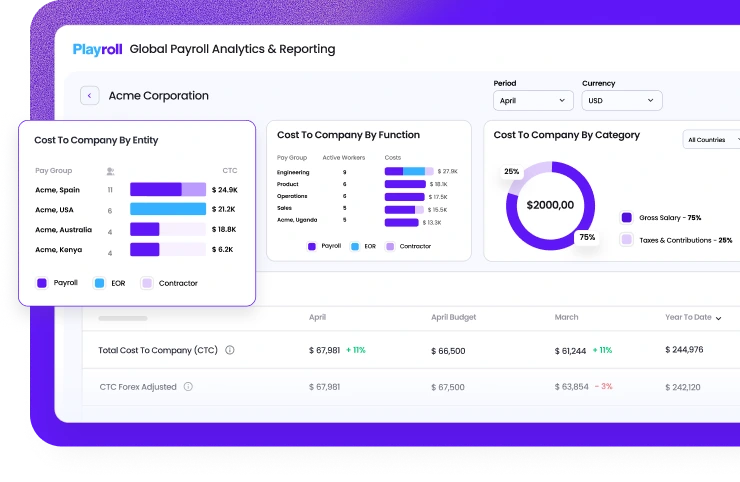
In Colombia, foreign nationals typically work under a type of Migrant (M) visa or Visitor (V) visa that authorizes work, rather than a standalone “work permit.” Common options include the Visa de Migrante trabajador (M work visa for employees), the Visa de Migrante independiente (M independent worker or contractor), and certain Visa de Visitante (V) categories for short-term business or technical assistance. These visas are issued by the Colombian Ministry of Foreign Affairs and are usually tied to a specific employer, role, or project.
Employers must provide corporate documentation, a compliant employment or service contract, and evidence that the role and salary meet Colombian labor standards. Foreign workers must submit personal documents, proof of qualifications, and, in some cases, criminal record certificates or medical insurance. Processing is largely online, but rules and categories can change, so companies should always verify current requirements with the Colombian consulate or the Ministry of Foreign Affairs before sponsoring talent.
Mandatory Leave Entitlement in Colombia
The annual leave entitlement in Colombia is 15 days for a full time worker. These can include public holidays on top of that or within those days, which would otherwise be unpaid.
Public Holidays In Colombia
Colombia has 18 mandatory national public holidays in a year
Paid Time Off in Colombia
Paid leave in Colombia is outlined in the employment contract as a minimum of 15 days paid leave a year, following completion of 1-year service
Maternity Leave In Colombia
Female employees can take 18 weeks of fully paid maternity leave which can start up to two weeks before birth.
Paternity Leave In Colombia
Fathers of newborn children can take 2 weeks of paternity leave.
Sick Leave In Colombia
Every employee is eligible for paid sick leave provided by their employer for the initial two days of leave, equivalent to 100% of their regular pay rate.
Parental Leave In Colombia
In Colombia, there isn't a distinct "parental leave" policy separate from maternity and paternity leave. However, the country has implemented provisions that allow parents to share a portion of the maternity leave. Specifically, mothers can transfer up to six weeks of their 18-week maternity leave to the father, enabling shared caregiving responsibilities.
Bereavement Leave
5 days
Marriage Leave
5 days
Colombia has a structured employee benefits system that links mandatory social security, health, and pension schemes with statutory leave entitlements. Employers must contribute to health insurance, pensions, and other social security components, while also providing paid annual leave, public holidays, and severance arrangements that protect employees in cases of termination. This framework is designed to offer financial stability, healthcare access, and protection against job loss.
Employers that want to differentiate themselves in Colombia often provide supplemental benefits such as private health insurance, flexible work arrangements, transportation or meal stipends, and other allowances. Many mandatory contributions are deductible, but supplemental perks need to be carefully tracked and reported for tax and payroll purposes. Regular reviews of benefits and clear documentation help employers stay compliant while offering attractive, well-rounded compensation packages.
Key takeaways
- Mandatory benefits: Participation in social security, health, and pension systems, plus paid annual leave, public holidays, and severance provisions.
- Supplemental benefits: Private health coverage, flexible work options, and transport or meal stipends.
- Legal and tax considerations: Mandatory contributions are generally deductible; supplemental benefits must be reported correctly for tax and payroll compliance.
Administering employee benefits in Colombia requires more than just offering a standard package. Local labor laws often mandate specific entitlements, from health insurance to paid leave, and the rules can change without warning. Colombia also has unique standards for what an attractive, competitive benefits package looks like. For businesses without in-country expertise, meeting these obligations and expectations can quickly become risky and expensive. An Employer of Record acts as your compliance partner, ensuring all benefits are provided according to the latest legal requirements and without administrative strain on your internal team.
Beyond compliance, an EOR brings clarity and consistency to a process that’s often complex and fragmented. They handle enrollments, ensure accurate employer contributions, manage communications with local providers, and keep everything properly documented. This means employees get what they’re entitled to, and you avoid the headache of navigating benefits systems in a foreign market. Whether you're hiring one person or building a larger team, an EOR provides a clear, dependable structure that lets you offer competitive benefits without taking on unnecessary risk or workload.
Termination Process in Colombia
In Colombia, termination procedures typically adhere to labour laws, unless there are valid reasons for immediate dismissal. Written notice of termination is required and must be sent to the relevant government authorities. Any outstanding payments to departing employees should be settled on their last workday. In Colombia, termination procedures typically adhere to labor laws, unless there are valid reasons for immediate dismissal, like gross misconduct. Written notice of termination is required and must be sent to the relevant government authorities. Any outstanding payments to departing employees should be settled on their last workday. Valid reasons for dismissal include:
- Gross misconduct
- Termination for redundancy or other business reasons
- Termination during the probation period
- Employment termination by default, i.e. in case of a fixed-term contract
- Termination of a specific task or project
Notice Period in Colombia
Employers are only required to give notice to employees when a fixed-term contract is ending without an extension, which has a 30-day notice period. During the first five years of employment, a 30-day notice is mandatory, and it extends to 90 days for employees with more than five years of service.
Severance in Colombia
Severance pay is required if the employee is dismissed without cause .
Disclaimer
THIS CONTENT IS FOR INFORMATIONAL PURPOSES ONLY AND DOES NOT CONSTITUTE LEGAL OR TAX ADVICE. You should always consult with and rely on your own legal and/or tax advisor(s). Playroll does not provide legal or tax advice. The information is general and not tailored to a specific company or workforce and does not reflect Playroll’s product delivery in any given jurisdiction. Playroll makes no representations or warranties concerning the accuracy, completeness, or timeliness of this information and shall have no liability arising out of or in connection with it, including any loss caused by use of, or reliance on, the information.

ABOUT THE AUTHOR
Jesse Weisz
Jesse is an experienced R&D Analyst at Playroll, a leading Employer of Record (EOR) provider. With a strong background in data analysis and market research, Jesse specializes in identifying emerging trends and driving innovation in global HR solutions. She is an all-rounder, critical thinker and success-seeker (often inextricably linked to being a late-night tea drinker).

.svg)


.png)

















.webp)


.svg)