.svg)
.svg)

.svg)


.svg)

.svg)
.svg)
.svg)
.svg)
.svg)
.svg)
.svg)
.svg)
Minimum Wage: Minimum Wage: As of 2026, the minimum wage in Bangladesh remains BDT 12,500 per month for entry-level workers in the ready-made garment (RMG) sector, which is the country’s largest formal employer.
Working Hours: In Bangladesh, weekly working hours are limited to 48 hours, with a limit of 12 hours of weekly overtime and a maximum annual average of 56 hours per week.
Payroll Taxes: In Bangladesh, employers are required to make payroll contributions that fund social security, health care, and other statutory employee benefits.
Average Salary: The average gross monthly salary in Bangladesh is approximately BDT 30,000–35,000 (about USD 270–320) as of early 2026.
Hiring independent contractors has boomed in popularity because of the cost savings and flexibility they offer. It can be a great option if you require niche skills or short-term project support. Contractors allow businesses to access specialized skills quickly, without the time and cost of setting up a local entity.
However, it’s important to know the limits of this model: contractors are not a substitute for full-time employees. Relying on them for ongoing, long-term roles can create serious compliance risks, including employee misclassification, which can lead to fines, back taxes, and reputational damage.
Playroll’s contractor management solutions make it simple to compliantly engage, onboard, and pay contractors around the world. We provide clear visibility into agreements, streamline payments, and reduce compliance risks – so you can focus on getting the work done. And when you’re ready to take the next step, we can help seamlessly convert contractors into full-time employees through our global Employer of Record service.
From compliant contracts to competitive benefits, Playroll’s EOR services keep you aligned with local labor laws and regulations, safeguarding your business, so you can focus on growth.
Book a Demo
Businesses can only operate smoothly in Bangladesh if they comply with local labor laws including drafting compliant employment contract agreements and meeting taxation and payroll obligations. Learn more about the employment laws and regulations in Bangladesh below, to avoid any compliance issues.
Employment Contract Requirements
When hiring in Bangladesh, it's crucial to follow specific formalities outlined by The Bangladesh Labour Act of 2006 and the Bangladesh Labour Rules of 2015. Contracts need to be in writing and signed by both parties. Key aspects include:
- Contracts must be in English (with the option for bilingual agreements)
- Contracts must be signed by both parties involved
- Terms of agreement and compensation
- Position
- Place of work
Onboarding Process
We can help you get a new employee started in Bangladesh quickly, with a minimum onboarding time of just 1-2 working days. The timeline starts once the employee submits all required information onto the Playroll platform and completes any necessary local authority registrations. For non-nationals, the Right to Work assessment (if applicable) may add up to three extra days. Additional time may be needed for follow-ups on this assessment. Please note, payroll cut-off dates can impact the actual start date. Playroll's payroll cut-off date is the 10th of each month unless otherwise specified.
Probation Period in Bangladesh
Probation periods are mandatory. The minimum probation period is 3 months and the maximum probation period is 6 months.
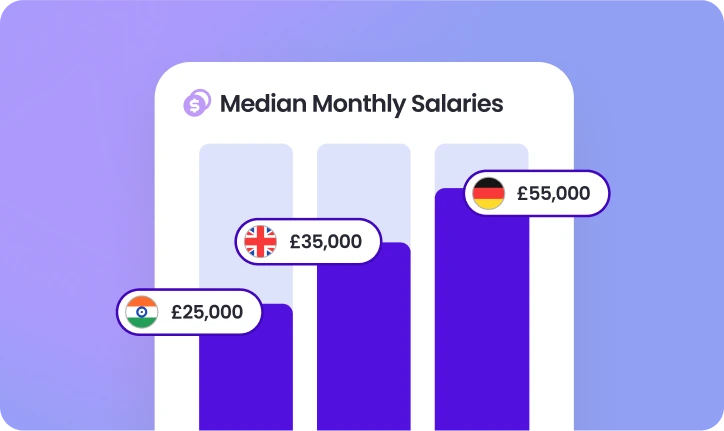
In Bangladesh, the average gross monthly salary in early 2026 is around BDT 30,000–35,000 (roughly USD 270–320), which serves as a practical benchmark as you budget for your team. Actual pay varies significantly by experience, industry, and location, with information technology, finance and banking, and export-oriented manufacturing typically offering higher wages. You can expect to pay more in major urban centers such as Dhaka and Chattogram, where competition for skilled employees is stronger and living costs are higher.
As you plan compensation for your company, you should factor in that annual inflation in Bangladesh is running at roughly 8–9 percent in late 2025 and early 2026, putting upward pressure on wages. Real GDP growth is projected at about 5.5–6.5 percent for 2025–2026, supporting steady demand for labor and gradual salary increases for your workforce. An unemployment rate in the range of 4–6 percent means you have access to a relatively broad pool of talent, but you may still need to offer competitive pay and benefits to attract and retain skilled employees in key roles.

In Bangladesh, weekly working hours are limited to 48 hours, with a limit of 12 hours of weekly overtime and a maximum annual average of 56 hours per week. An employee may work up to 10 hours daily and not more than 60 hours weekly. A standard workday is 8 hours, and the regular workweek lasts 5 days, from Sunday to Thursday. Friday and Saturday is designated as the weekend in the country.
Overtime compensation is mandated at twice the regular hourly wage. For example, if an employee's regular hourly wage is BDT 100, the overtime rate would be BDT 200 per hour. This rate applies to all overtime hours, including those worked on weekends or public holidays.

As of 2026, the minimum wage in Bangladesh remains BDT 12,500 per month for entry-level workers in the ready-made garment (RMG) sector, which is the country’s largest formal employer. Bangladesh does not have a single national minimum wage, and minimum wages for other sectors may differ based on sector-specific wage board decisions. Wage rates are reviewed periodically, rather than annually, by the Minimum Wage Board.
While this wage may be more adequate in rural areas, it generally falls short of the living wage required in urban centres such as Dhaka. Employers should stay informed about wage board reviews, sector-specific requirements, and related tax and compliance obligations to ensure adherence to local labour laws.
Employment laws in Bangladesh can be intricate, and even unintentional mistakes in contracts, benefits, or termination processes can carry legal and reputational consequences. With an Employer of Record, you gain a local partner that ensures every hire is compliant. The EOR takes care of drafting compliant contracts, processing accurate payroll, managing contributions to statutory benefits, and handling lawful terminations if needed, all according to local employment standards.
This level of protection is especially valuable when expanding into new or unfamiliar regions. Instead of using time and resources to build in-house legal knowledge, you gain immediate access to local expertise. The EOR keeps you ahead of regulatory updates and shields your company from potential compliance gaps, so you can confidently hire and manage employees while minimizing risk. For hiring managers and founders, it's the difference between hiring with uncertainty and building your team on a legally sound foundation.
Employer Tax Contributions
Employer payroll contributions are generally estimated at an additional 0% - 5% on top of the employee salary in Bangladesh.
Employee Payroll Tax Contributions
In Bangladesh , the typical estimation for employee payroll contributions cost is around Employees in Bangladesh are not required to make compulsory contributions to social insurance..
Individual Income Tax Contributions
The individual income tax in Bangladesh follows a progressive rate structure, ranging from 0% to 30%. Overarching tax rates may vary according to different factors, including household status and the number of dependents. In addition, the lesser of 450,000 BDT or one-third of the total taxable income is exempt from Income tax. For foreign residents, a flat tax rate of 30% applies.
Pension in Bangladesh
There are no mandatory pension contributions in Bangladesh.

In Bangladesh, employers must manage various payroll and employment tax obligations, including progressive income tax withholding, provident fund contributions, and the Workers Profit Participation Fund (WPPF). Understanding these tax requirements, along with adhering to due dates for submission, is essential for staying compliant and avoiding penalties.
Employers should be aware of the different tax brackets and their associated rates, as well as the additional contributions required for employees' provident funds and profit-sharing schemes.
Using payroll management software can help employers streamline the process by consolidating payroll data, ensuring accurate calculations, and maintaining compliance with Bangladesh's complex tax laws.
When you’re scaling quickly, setting up local payroll systems in each new country slows you down. In Bangladesh, the administrative load can include government registration, benefits management, and accurate, on-time payment delivery. An EOR gives you a plug-and-play solution that handles all of this while your internal team stays focused on growth, not red tape.
Key Ways an EOR Supports Payroll in Bangladesh:
- Rapid Payroll Setup: Onboards employees quickly with ready-to-go infrastructure.
- End Administration: Handles salary, tax, and benefits with no extra internal resources.
- Vendor Simplicity: Consolidates payroll across countries for centralized oversight.
- No Entity Required: Operates legally, saving your business the time and resources needed for local incorporation.
Make better business decisions by consolidating global payroll data, while seamlessly syncing your existing payroll operations.
Book a Demo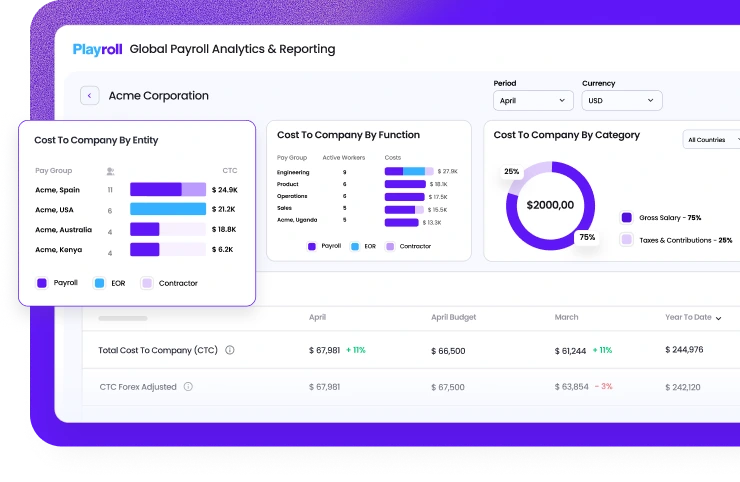
In Bangladesh, foreign nationals typically work under an Employment (E) Visa combined with a separate Work Permit issued by the Bangladesh Investment Development Authority (BIDA) or the relevant regulatory body for the sector, such as the Bangladesh Export Processing Zones Authority (BEPZA) for EPZ-based companies. The visa allows entry and stay, while the work permit authorizes the foreign national to perform specific work for a named employer and role.
Employers must first secure approval for hiring a foreign worker, then the employee applies for the appropriate visa at a Bangladeshi mission abroad. Compliance with local labor, tax, and immigration rules is closely monitored, and permits are usually granted for a limited period (often up to one year at a time) with the possibility of renewal, subject to continued eligibility and regulatory approval.
Mandatory Leave Entitlement in Bangladesh
The annual leave entitlement in Bangladesh is 18 days for a full time worker. These can include public holidays on top of that or within those days, which would otherwise be unpaid.
Public Holidays In Bangladesh
Bangladesh recognizes several national holidays, comprising of:
Paid Time Off in Bangladesh
Employees receive one day of annual leave for every 18 days worked within a calendar year. However, specific industries may have variations in the calculation of leave entitlement.
Maternity Leave In Bangladesh
Female employees qualify for 6 months (180 days) of maternity leave with full pay. The following details are applicable to Bangladesh's maternity leave benefit:
- This benefit is applicable to individuals with a minimum of six months of service.
- Those who have worked for less than six months or already have two surviving children are generally entitled to unpaid leave.
- National employment legislation mandates a prohibition for women to work for eight weeks following the birth of their child.
Paternity Leave In Bangladesh
In Bangladesh, there is no statutory paternity leave although some employers may provide it voluntarily.
Sick Leave In Bangladesh
Employees are entitled to a standard sick leave of 14 days per year. The following details are also applicable:
- This allowance resets annually and any unused days are not being carried forward.
- Employees must provide a medical certificate from a licensed doctor confirming their illness to qualify.
In Bangladesh, employers are legally required to provide several mandatory benefits, including minimum wage compliance, regulated working hours with overtime pay, festival bonuses, and various leave entitlements such as annual, casual, sick, and maternity leave. These benefits ensure employee welfare and align with labor laws.
Additionally, many employers offer supplemental benefits to attract and retain talent, such as flexible working hours, performance-based bonuses, health insurance, and pension plans. Employers must also stay compliant with labor regulations, as failure to adhere to legal requirements can result in penalties. Regular reviews of benefits packages help ensure compliance and competitiveness in the job market.
For startups and small teams, managing global employee benefits isn’t just complex, it’s a full-time job. In Bangladesh, understanding what benefits are required, how to deliver them, and how to stay compliant can be overwhelming, especially without local HR expertise. An Employer of Record removes that pressure by taking complete ownership of benefits administration, so you don't have to become an expert in local employment law.
Whether it’s healthcare contributions, pension enrollment, or statutory leave, the EOR ensures everything is delivered accurately and on time. They navigate any country-specific nuances, keep up with legal changes, and ensure each benefit is properly tracked and documented. For founders, that means fewer distractions and more time to focus on growth. Your employees get the security and support they expect from a local employer, and you get to scale your team in Bangladesh without building complex infrastructure or worrying about compliance missteps.
Termination Process in Bangladesh
In Bangladesh, employers are not permitted to terminate employment at will, except during the probationary period. Termination must be justified by valid reasons. These reasons may include:
- Mutual agreement
- Objective grounds
- Disciplinary dismissal
- Poor work performance
Notice Period in Bangladesh
Employers are obligated to give advance notice to employees being terminated without cause. This notice period varies, extending to 120 days for monthly-rated permanent workers and 60 days for other permanent workers. For temporary workers, the notice period is 30 days for monthly-rated workers and 14 days for others. Alternatively, payment in lieu of notice can be given though this depends on the type of employment.
Severance in Bangladesh
Employees who have served a minimum of one year with an employer are eligible to receive severance pay equivalent to 30 days' wages for each year of service.
Disclaimer
THIS CONTENT IS FOR INFORMATIONAL PURPOSES ONLY AND DOES NOT CONSTITUTE LEGAL OR TAX ADVICE. You should always consult with and rely on your own legal and/or tax advisor(s). Playroll does not provide legal or tax advice. The information is general and not tailored to a specific company or workforce and does not reflect Playroll’s product delivery in any given jurisdiction. Playroll makes no representations or warranties concerning the accuracy, completeness, or timeliness of this information and shall have no liability arising out of or in connection with it, including any loss caused by use of, or reliance on, the information.

ABOUT THE AUTHOR
Jesse Weisz
Jesse is an experienced R&D Analyst at Playroll, a leading Employer of Record (EOR) provider. With a strong background in data analysis and market research, Jesse specializes in identifying emerging trends and driving innovation in global HR solutions. She is an all-rounder, critical thinker and success-seeker (often inextricably linked to being a late-night tea drinker).

.svg)


.png)

















.webp)




.svg)