.svg)
.svg)
.svg)

.svg)


.svg)

.svg)
.svg)
.svg)
.svg)
.svg)
.svg)
.svg)
.svg)

Minimum Wage: Gambia does not have a national minimum wage. Minimum wages are determined by individual agreements or customary practices.
Working Hours: In Gambia, the common work week is 40 hours, Monday to Friday, with Friday often observed as a short day.
Payroll Taxes: In Gambia, employers contribute about 0% in payroll taxes, which typically cover social security, health care, and other statutory benefits.
Average Salary: The average gross monthly salary in The Gambia is approximately GMD 9,000–11,000 (about USD 135–165) as of early 2026.
Hiring independent contractors has boomed in popularity because of the cost savings and flexibility they offer. It can be a great option if you require niche skills or short-term project support. Contractors allow businesses to access specialized skills quickly, without the time and cost of setting up a local entity.
However, it’s important to know the limits of this model: contractors are not a substitute for full-time employees. Relying on them for ongoing, long-term roles can create serious compliance risks, including employee misclassification, which can lead to fines, back taxes, and reputational damage.
Playroll’s contractor management solutions make it simple to compliantly engage, onboard, and pay contractors around the world. We provide clear visibility into agreements, streamline payments, and reduce compliance risks – so you can focus on getting the work done. And when you’re ready to take the next step, we can help seamlessly convert contractors into full-time employees through our global Employer of Record service.
From compliant contracts to competitive benefits, Playroll’s EOR services keep you aligned with local labor laws and regulations, safeguarding your business, so you can focus on growth.
Book a Demo
Businesses can only operate smoothly in Gambia if they comply with local labor laws including drafting compliant employment contract agreements and meeting taxation and payroll obligations. Learn more about the employment laws and regulations in Gambia below, to avoid any compliance issues.
Onboarding Process
We can help you get a new employee started in Gambia quickly, with a minimum onboarding time of just 1-2 working days. The timeline starts once the employee submits all required information onto the Playroll platform and completes any necessary local authority registrations. For non-nationals, the Right to Work assessment (if applicable) may add up to three extra days. Additional time may be needed for follow-ups on this assessment.
In The Gambia, the average gross monthly salary in early 2026 is estimated at around GMD 9,000–11,000 (roughly USD 135–165), which serves as a practical benchmark as you budget for your team. Actual pay varies significantly by experience level, industry, and location, with sectors such as information technology, finance and banking, and telecommunications typically offering higher wages. Your company may need to offer higher pay in these sectors and in major urban areas like Banjul and the surrounding Kombo Saint Mary region, where wages tend to be above the national average.
As you plan compensation for your workforce, you should factor in macroeconomic conditions, including inflation running at roughly 5–7 percent in late 2025 and early 2026, which puts some upward pressure on wages. Real GDP growth is projected at about 4–5 percent for 2025–2026, reflecting a gradually expanding economy that can support modest salary increases for your employees. Unemployment is estimated in the 9–12 percent range, giving your company access to a relatively broad pool of talent while still requiring competitive offers to attract and retain skilled workers.

In The Gambia, you should monitor weekly working time carefully and ensure overtime is approved and recorded accurately. In 2026, labour authorities focus on overtime pay compliance and preservation of weekly rest.
- Standard Working Hours: 48 hours per week.
- Overtime Thresholds: Overtime applies once weekly limits are exceeded.
- Overtime Pay Rates: Overtime is commonly paid at 1.5 times the regular hourly rate.
- Daily And Weekly Rest Requirements: Employees are entitled to at least one weekly rest day.
- Night Work Restrictions: Night work is permitted but subject to oversight and sector practices.
- Penalties For Non-Compliance: Non-compliance may result in enforcement action and back pay.

Setting up a local legal entity in Gambia can be time-consuming and expensive. It often involves complex paperwork, local representation, banking, registrations, and ongoing tax filings, which isn't cost-effective if you're simply looking to hire a few employees or test the market. An Employer of Record removes these barriers entirely. Instead of spending months establishing a presence, an EOR lets you hire and onboard employees within days while staying fully compliant.
This enables faster market entry and greater agility. Whether you’re launching a pilot program, supporting a regional client, or adding specialized talent, you don't need to commit to long-term infrastructure to explore new business opportunities. The EOR handles local employment logistics while you retain day-to-day oversight of your hires. This model lets you scale up or down based on business needs, giving you more flexibility with less overhead and risk.
Payroll Cycle in Gambia
The payroll cycle in Gambia is usually Monthly, with employees being paid as stipulated in employment contract.

In the Gambia, employers must comply with several payroll and employment tax obligations, including PAYE (Progressive Income Tax), social security and provident fund contributions, industrial injury levies, expatriate quota tax, fringe benefit tax, and an environmental levy. PAYE tax rates range from 0% for income up to GMD 36,000 to 25% for earnings exceeding GMD 76,000.
Employers are also required to contribute 10% to the provident fund, 1% to the industrial injury fund, and pay an annual expatriate quota tax of GMD 10,000 for ECOWAS nationals and GMD 50,000 for other foreign nationals. Additionally, fringe benefits such as housing or vehicles are taxed at 27%. Timely filing and payment deadlines, such as by the 15th of the following month for PAYE, are critical for compliance.
Using payroll management software can help streamline processes by consolidating payroll data, ensuring accurate tax calculations, and keeping employers in line with local laws and deadlines.
One of the biggest risks in global hiring is payroll mismanagement. In Gambia, even small errors in tax reporting or social contribution payments can trigger audits, fines, or reputational damage. For companies without in-country expertise, the risk isn’t worth taking. An Employer of Record removes this burden by owning the legal responsibility of payroll, executing every step with built-in compliance.
Key Ways an EOR Supports Payroll in Gambia:
- Mitigates Compliance Risk: Oversees all legal obligations for payroll, tax filings, and recordkeeping.
- Local Regulatory Expertise: Interprets and applies Gambia’s latest labor and tax changes in real time.
- Free Processing: Reduces mistakes in wage calculations and reporting through built
- Payroll Record Management: Maintains compliant payroll audit trails and documentation for each employee.
Make better business decisions by consolidating global payroll data, while seamlessly syncing your existing payroll operations.
Book a Demo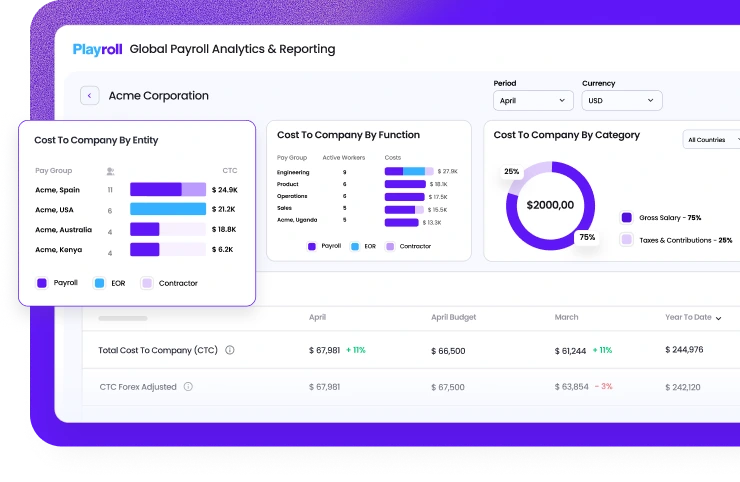
In Gambia, foreign nationals who wish to live and work in the country typically need a combination of the correct entry visa (such as a single-entry or multiple-entry visa, or a business visa) and an authorization to work, most commonly a Work Permit issued through the Department of Immigration in coordination with the Ministry of Trade, Industry, Regional Integration and Employment. Long-term assignees may also need a Residence Permit (Type A, B, or C, depending on their status) to remain in Gambia lawfully while employed.
Employers are usually the driving force behind work authorization, sponsoring the employee’s Work Permit application and providing corporate documentation, while the employee supplies personal documents and qualifications. Processing times and exact requirements can vary by sector, job type, and the applicant’s nationality, so companies should always confirm current rules with Gambian immigration authorities or a local legal adviser before proceeding.
Mandatory Leave Entitlement in Gambia
The annual leave entitlement in Gambia is Contractually dependant for a full time worker. These can include public holidays on top of that or within those days, which would otherwise be unpaid.
An Employer of Record (EOR) helps businesses manage annual leave, paid time off (PTO), and local holidays across the globe, including in Gambia. By partnering with an EOR, companies ensure full compliance with local labor laws in Gambia when it comes to annual leave and time-off management. EOR providers like Playroll offer platforms that simplify tracking and managing employee time off in Gambia. By outsourcing this responsibility to Playroll, you can streamline leave management, ensure compliance, and free up time to focus on other business priorities.
Employee benefits in Gambia combine a set of statutory protections with market-driven perks that help you attract and retain talent. When you hire in Gambia, your company is expected to comply with core legal standards around leave, working time, and basic protections, while competitive employers typically go further with health coverage, allowances, and development opportunities.
Your benefits strategy should balance compliance with the Labour Act and related regulations, and the expectations of skilled workers who may be comparing your offer with regional or international opportunities. Understanding what is mandatory, what is customary, and what is considered a premium perk will help your team budget accurately and design a package that supports both your people and your business goals.
- Top mandatory benefits typically include: annual leave, public holidays with pay, maternity leave, sick leave, and occupational injury protections.
- Other commonly expected mandatory-related protections include: notice-related pay for leave during notice periods and basic workplace health and safety measures.
- Top supplemental benefits often include: private health insurance or medical allowances, transport or meal allowances, and performance-based bonuses.
- Key legal and tax considerations include: ensuring leave entitlements at least meet the Labour Act minimums, properly recording wages and benefits for income tax and social security purposes, and documenting any cash or in-kind benefits provided to employees in Gambia.
In Gambia, benefits play a central role in attracting and retaining top talent. Employees often expect more than just a paycheck – they're looking for stability, healthcare coverage, pension plans, and other perks that show a company is invested in their well-being. If you're not familiar with what’s standard or required, you risk falling short. An Employer of Record helps bridge that gap by administering a locally competitive benefits package that meets both legal requirements and employee expectations.
An EOR doesn't just check boxes, they make sure your employees receive benefits that are timely, properly communicated, and well-managed from the moment they’re onboarded. From managing healthcare contributions to adjusting for regional differences in leave or bonus entitlements, an EOR acts as both a legal and operational partner. The result is a better employee experience, less administrative burden on your internal team, and greater confidence that your offer is aligned with what top candidates in Gambia actually want and need.
Disclaimer
THIS CONTENT IS FOR INFORMATIONAL PURPOSES ONLY AND DOES NOT CONSTITUTE LEGAL OR TAX ADVICE. You should always consult with and rely on your own legal and/or tax advisor(s). Playroll does not provide legal or tax advice. The information is general and not tailored to a specific company or workforce and does not reflect Playroll’s product delivery in any given jurisdiction. Playroll makes no representations or warranties concerning the accuracy, completeness, or timeliness of this information and shall have no liability arising out of or in connection with it, including any loss caused by use of, or reliance on, the information.

ABOUT THE AUTHOR
Jesse Weisz
Jesse is an experienced R&D Analyst at Playroll, a leading Employer of Record (EOR) provider. With a strong background in data analysis and market research, Jesse specializes in identifying emerging trends and driving innovation in global HR solutions. She is an all-rounder, critical thinker and success-seeker (often inextricably linked to being a late-night tea drinker).

.svg)


.png)

















.webp)


.svg)